

You’ll want gear that’s rugged, reliable, and long‑lasting, so pick from five top options: the tiny magnetic LandAirSea 54 for stealthy vehicle or gear mounts, the basic Garmin eTrex 10 for simple waypointing, the map‑rich eTrex 22x for topo and tracks, the ZOLEO two‑way satellite messenger for global texting and SOS, and the Garmin inReach Mini 2 for compact two‑way SOS and weather. Each balances battery life, waterproofing, and ease of use, and I’ll show how to choose the best fit next.
| LandAirSea 54 Magnetic Waterproof GPS Tracker (USA) |

| Discreet Vehicle Tracker | Positioning / Location: Global GPS real-time tracking (updates as fast as every 3 seconds) | Durability / Water Resistance: Waterproof (ultra-compact design) | Battery / Power: Long battery life; motion-activated sleep to preserve battery | VIEW LATEST PRICE | Read Our Analysis |
| Garmin 010-00970-00 eTrex 10 Worldwide Handheld GPS Navigator |

| Budget Rugged Navigator | Positioning / Location: WAAS-enabled GPS receiver (HotFix) with GLONASS support | Durability / Water Resistance: IPX7 waterproof | Battery / Power: Runs on 2 × AA; up to 20 hours | VIEW LATEST PRICE | Read Our Analysis |
| ZOLEO Satellite Communicator — Global Two-Way SOS Messenger |
| Best For Messaging | Positioning / Location: Global Iridium satellite messaging with GPS location | Durability / Water Resistance: IP68-rated rugged design | Battery / Power: Battery life over 200 hours | VIEW LATEST PRICE | Read Our Analysis |
| Garmin inReach Mini 2 Satellite Communicator (Orange) |

| Best For SOS | Positioning / Location: Satellite-based two-way messaging and location sharing (requires active subscription) | Durability / Water Resistance: Water resistant | Battery / Power: Up to 14 days in 10-minute tracking mode | VIEW LATEST PRICE | Read Our Analysis |
| Garmin 010-02256-00 eTrex 22x Rugged Handheld GPS Navigator Black/Navy |

| Best For Backcountry Navigation | Positioning / Location: GPS with GLONASS support | Durability / Water Resistance: Rugged handheld (weather-resistant) | Battery / Power: Runs on 2 × AA; up to 25 hours | VIEW LATEST PRICE | Read Our Analysis |
More Details on Our Top Picks
LandAirSea 54 Magnetic Waterproof GPS Tracker (USA)
If you want a tiny, tough tracker that hides on gear or a vehicle and still gives live locations, the LandAirSea 54 is a smart pick because it combines a strong magnet with waterproof, ultra-compact housing so you can mount it and forget it until you need it. You’ll get real-time tracking and maps through web software and an app, with updates as fast as every three seconds. It sleeps when still to save battery and offers playback up to a year plus geofence alerts. Made in the USA, it has a lifetime warranty and flexible prepaid or month-to-month service.
- Positioning / Location:Global GPS real-time tracking (updates as fast as every 3 seconds)
- Durability / Water Resistance:Waterproof (ultra-compact design)
- Battery / Power:Long battery life; motion-activated sleep to preserve battery
- Two-way Communication / Alerts:Real-time alerts (geofencing and notifications) via app/web
- Mapping / Location Sharing:Web-based mapping and SilverCloud app with historical playback
- Subscription / Service Requirement:Requires subscription (prepaid multi-year or month-to-month)
- Additional Feature:Internal strong magnet
- Additional Feature:Motion-activated sleep
- Additional Feature:Lifetime manufacturing warranty
Garmin 010-00970-00 eTrex 10 Worldwide Handheld GPS Navigator
You’re going to like the eTrex 10 if you want a simple, tough GPS that won’t distract you with bells and whistles and will keep working when the weather turns bad. You hold a rugged handheld made to last, with a clear 2.2-inch monochrome display that stays readable in bright sun. It uses WAAS-enabled GPS and GLONASS for fast, reliable positioning. You can store waypoints, record tracks, and view high and low elevation points to plan your route. It supports paperless geocaching and fits Garmin spine mounts. Powered by two AA batteries, it runs up to twenty hours.
- Positioning / Location:WAAS-enabled GPS receiver (HotFix) with GLONASS support
- Durability / Water Resistance:IPX7 waterproof
- Battery / Power:Runs on 2 × AA; up to 20 hours
- Two-way Communication / Alerts:No two-way messaging (navigation, waypoints, geocaching only)
- Mapping / Location Sharing:Preloaded worldwide basemap; waypoint/track recording
- Subscription / Service Requirement:No subscription required for core GPS/navigation
- Additional Feature:Preloaded worldwide basemap
- Additional Feature:Paperless geocaching support
- Additional Feature:2.2″ monochrome display
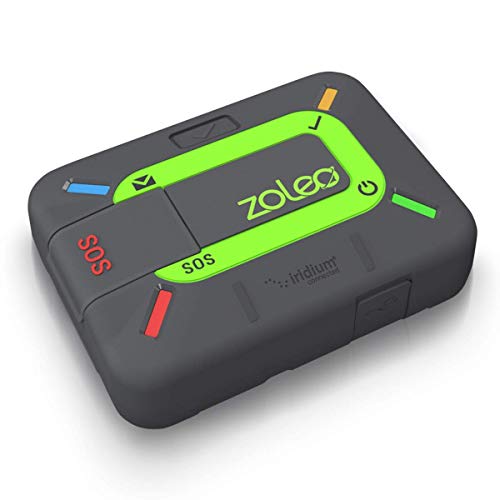
ZOLEO Satellite Communicator — Global Two-Way SOS Messenger
You’ll appreciate the ZOLEO Satellite Communicator when you want reliable two-way messaging and SOS help anywhere on the planet, especially if you hike far from cell coverage and want a simple way to stay in touch. You pair it with your phone and send long texts up to 900 characters through the Iridium network, and it switches to cellular or Wi‑Fi when available. You get a dedicated SMS number and email for contacts to reach you off-grid. You can send unlimited check-ins and SOS alerts with GPS to a 24/7 monitoring center. The rugged IP68 unit lasts over 200 hours and supports weather forecasts and device sharing.
- Positioning / Location:Global Iridium satellite messaging with GPS location
- Durability / Water Resistance:IP68-rated rugged design
- Battery / Power:Battery life over 200 hours
- Two-way Communication / Alerts:Two-way satellite messaging and dedicated SMS/email number; SOS monitoring
- Mapping / Location Sharing:Shares GPS coordinates in messages; unlimited check-ins; location sharing options
- Subscription / Service Requirement:Service plan required for satellite messaging/features (optional Field Rescue add-on)
- Additional Feature:Dedicated ZOLEO SMS number
- Additional Feature:Unlimited check-ins included
- Additional Feature:Supports 900-character messages
Garmin inReach Mini 2 Satellite Communicator (Orange)
For hikers who want a tiny lifesaver that fits in a pocket, the Garmin inReach Mini 2 Satellite Communicator (Orange) is a smart choice because it brings true two-way messaging and interactive SOS coverage anywhere on the globe. You’ll pair it via Bluetooth to your phone or Garmin device, and you can plan trips in the Garmin Explore app. It sends location updates, shares coordinates, and offers TracBack routing to get you back to start. The digital compass helps when you’re stopped. Battery lasts up to 14 days in 10-minute tracking mode, and the unit is water resistant for wet conditions.
- Positioning / Location:Satellite-based two-way messaging and location sharing (requires active subscription)
- Durability / Water Resistance:Water resistant
- Battery / Power:Up to 14 days in 10-minute tracking mode
- Two-way Communication / Alerts:Two-way messaging and interactive SOS (via satellite subscription)
- Mapping / Location Sharing:Share location via MapShare/embedded coordinates; sync with Garmin Explore
- Subscription / Service Requirement:Active satellite subscription required for messaging/SOS features
- Additional Feature:TracBack route navigation
- Additional Feature:Garmin Explore sync
- Additional Feature:Compact lightweight form
Garmin 010-02256-00 eTrex 22x Rugged Handheld GPS Navigator Black/Navy
If you need a simple, tough GPS that won’t quit on a long trail, the Garmin eTrex 22x fits the bill. You’ll hold a compact, rugged navigator that feels steady in cold, wet, or muddy conditions. The 2.2 inch sunlight readable screen and 240 by 320 resolution keep maps clear. It ships with TopoActive maps and lets you add more via microSD. Dual GPS and GLONASS satellites improve tracking when trees or rocks block signals. Buttons work with gloves, Bluetooth pairs to your phone, and two AA batteries run about 25 hours so you can trust it all day.
- Positioning / Location:GPS with GLONASS support
- Durability / Water Resistance:Rugged handheld (weather-resistant)
- Battery / Power:Runs on 2 × AA; up to 25 hours
- Two-way Communication / Alerts:No two-way messaging (navigation, mapping, waypoints only)
- Mapping / Location Sharing:Preloaded TopoActive maps; expandable via microSD; waypoint/course sync
- Subscription / Service Requirement:No subscription required for core GPS/navigation
- Additional Feature:Preloaded TopoActive maps
- Additional Feature:Expandable microSD slot
- Additional Feature:8 GB internal memory
Factors to Consider When Choosing a GPS Tracker for Hiking
When you pick a GPS tracker for hiking, think about battery life and how long the device will stay powered on on multi-day trips. Also check satellite connectivity, mapping and navigation features, size and weight, and whether the unit is durable and weatherproof so it survives rain, drops, and cold. These factors work together to keep you safe and confident on the trail, so weigh them based on the type of hikes you plan to do.
Battery Life
Knowing how long your GPS tracker will actually run keeps you safe and calm on the trail. You should pick a device that covers your trip plus reserve, aiming for at least twice your expected time, or bring spare batteries or a swappable pack. Check battery specs for real use. Continuous tracking with one to ten minute fixes drains power fast, so compare runtime for the interval you’ll use. Prefer trackers that take standard AA or AAA cells or have swappable packs so you can replace power off grid. Also verify powerbank charging and charge time. Remember cold cuts capacity by about twenty to fifty percent, so plan for that. Use motion activated sleep and adjustable intervals to extend life without extra weight.
Satellite Connectivity
Pick a satellite setup that fits your trip and stay calm knowing your device can do what you need off-grid. You’ll choose between positioning GNSS and satellite networks that send texts and SOS. GNSS gives precise location only. Messaging networks let you talk or call for help without cell service. Check coverage maps so you aren’t surprised in polar or deep-woods areas. Also look for network redundancy so one outage won’t leave you stranded. Expect delays and message size limits, so plan short clear messages and patience. Remember satellite use drains batteries fast, so set longer update intervals on multi-day hikes. Finally, verify subscription rules and legal limits where you’ll hike, and activate plans before you go.
Durability & Weatherproofing
You’ve picked a satellite setup that keeps you connected off-grid, and now you’ll want a tracker that can take a beating on the trail. Think waterproof ratings first. Aim for IPX7 or IP68 so rain, river crossings, and mud won’t stop the unit. Next, choose rugged housings with shock-absorbing designs and MIL-STD-810 drop resistance so it survives slips onto rock or hard ground. Check seals and covered ports, and prefer rubber-gasketed battery compartments, especially if you swap cells in wet weather. Also look for corrosion-resistant materials and coated electronics when you expect salt spray, sweat, or long humidity. Finally, verify operating temperature ranges and battery specs so cold or heat won’t leave you stranded.
Mapping & Navigation Features
When you head into the backcountry, reliable maps and clear navigation tools will keep you calm and on track, so choose a tracker or paired device that gives you offline topographic maps and routable trails you can trust without cell service. You’ll want built-in waypoint, route, and track recording so you can save high-resolution breadcrumb trails and mark start, finish, and elevation extremes. Choose multi-satellite support like GPS plus GLONASS and fast position fixes with predictive aids to improve accuracy in canyons or under canopy. Make sure the interface imports and exports GPX and KML and syncs with desktop or mobile mapping for pre-trip planning and post-trip review. Look for digital compass, elevation profile, ETA, distance, and a TracBack-style return route to guide you home.
Size And Weight
Because every ounce matters on a long trail, size and weight should be one of the first things you think about when choosing a GPS tracker for hiking. Aim for a device under 6 ounces so your shoulders and pockets thank you after a long day. Also pick a compact shape roughly under 4 x 2 inches so it fits a pocket or chest strap without snagging on branches. Think about batteries next because AA cells add bulk compared with built in rechargeable packs, which changes both weight and runtime. Remember smaller units may cut screen size or button spacing, so balance lightness with ease of use when you wear gloves or have wet hands. For multi day trips, compare grams per 24 hour operating time to get the best carry efficiency.