
A carry-on that doesn’t fit usually gets checked at the gate, and that can come with an extra fee. A bag that’s too big, too heavy, or blocked by fare rules can cause trouble right before boarding. Late boarding can make things worse because overhead bin space fills up fast. A quick size and weight check before the airport can help you avoid that last-minute hassle.
What Happens If Your Carry-On Won’t Fit?
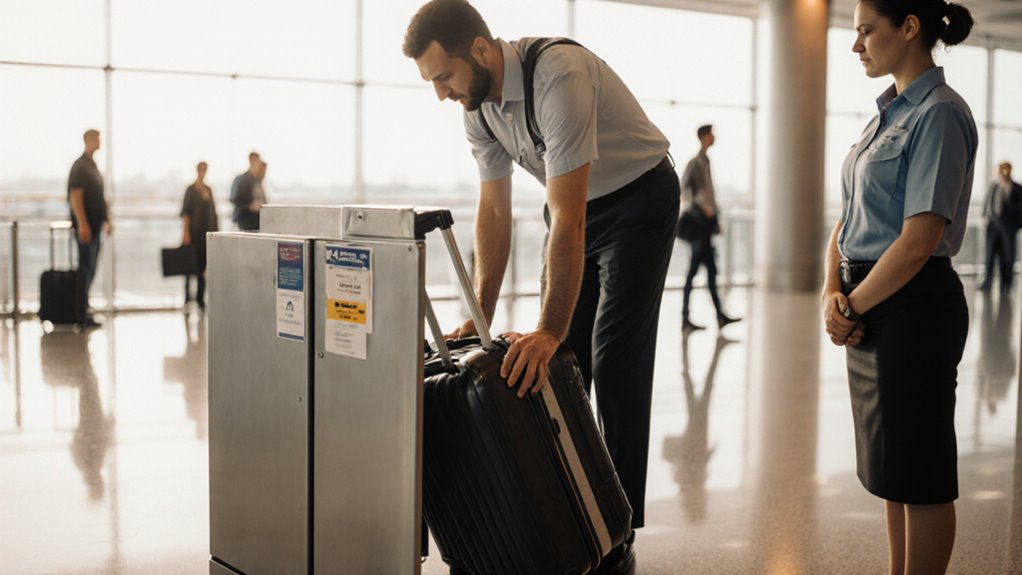
If your carry-on won’t fit in the overhead bin or the airline’s bag sizer, the gate agent will usually stop you before you board and require you to check it.
That’s the heart of the gate process, and it can happen fast. You could step aside, get a bag tag, and hand your suitcase over before entering the plane.
Depending on the airline’s baggage policies, you might also pay a fee, especially on budget carriers or basic economy tickets. Some airlines use strict sizers, while others rely more on the agent’s judgment.
Either way, you’re not being singled out. It’s a routine part of boarding, and many travelers go through it.
When your bag is too large or too heavy, the airline treats it like checked luggage from that point forward at the gate.
What If Your Carry-On Is Slightly Oversized?
When your carry-on is only a little too big, you could still get through, but it often depends on whether it fits in the sizer at the gate.
When it doesn’t slide in easily, a gate agent could make the final call, and that decision can vary across airline, crowd size, and available bin space.
Even a small size issue can lead to a gate check or an extra fee, so it’s smart to know your airline’s rules before you board.
Size Sizer Outcomes
Although a bag might look only a little too big, the sizer decides what happens next, and that moment can turn stressful fast. Whenever your suitcase slides in fully, your bag fitment usually passes. Whenever it sticks out, catches on wheels, or needs force, it likely fails the sizer dimensions test.
That result matters because the bin space standard starts with the frame, not with what your bag looked like in line. Most U.S. airlines use 22 x 14 x 9 inches, including handles and wheels, though some allow more. So even a small bulge can change the result. To protect yourself, measure at home, pack softer edges, and avoid overstuffing outer pockets. You’re not the only one learning this system, and getting it right helps you board feeling prepared and included.
Gate Agent Discretion
Even whenever your bag is only a little over the limit, the gate agent often makes the final call. That means your experience can depend on agent judgment, mood, timing, and how full the flight looks. Should your bag seem close, discretionary enforcement could work in your favor, especially whenever you’re calm, prepared, and easy to help.
- Stay polite and confident, because kindness helps.
- Keep your bag organized so it looks manageable.
- Remove bulky items should you do it quickly.
- Watch overhead bin space, since that shapes decisions.
- Follow directions fast so you seem travel-ready.
Some airlines rely more on agent judgment than hard measuring, especially whenever no sizer is used. You’re not powerless here. Whenever you act respectful and flexible, you signal that you belong in the flow, not in the way of boarding.
Possible Extra Charges
Because size rules turn into money fast, a carry-on that’s only slightly too big can still trigger extra charges the moment you reach the gate. If your bag misses the sizer, the airline may reclassify it as checked luggage and charge a last-minute fee. On low-cost carriers, that can jump far higher than prepaid rates, so you can feel singled out even when your bag barely looks oversized.
Weight can raise the total too. If your bag crosses a 35 to 40 pound limit, overweight bag fees may stack onto the gate-check charge. Basic economy fares can add another surprise because some don’t include full carry-ons at all. Still, you might avoid fees through elite status, military benefits, or premium cabin waivers, which can make the process feel much less frustrating.
When Will Airlines Gate-Check Your Carry-On?
Airlines will gate-check your carry-on whenever it won’t fit the sizer, whenever overhead bins fill up, or whenever you board late and space runs out.
Even though your bag seems close enough, a gate agent can still stop you and tag it on the spot.
That can feel frustrating, but assuming you know these trigger points, you can avoid surprises and move through the gate with less stress.
Overhead Bin Space Limits
When does a carry-on get gate-checked, even though it meets the size rule? It happens when overhead bin availability runs out before you board. Airlines also watch carry on capacity, especially on full flights and smaller planes. So even if your bag follows the rules, you might still hear, “We need to check that for you.” That can feel frustrating, but you’re not singled out. It’s usually a space issue, not a mistake.
- Boarding later often means fewer open bins
- Regional jets have tighter storage than larger aircraft
- Full flights fill bins with surprising speed
- Gate agents may tag bags before final boarding groups
- Medallion, elite, or early boarding can improve your odds
If you want to keep your bag with you, boarding earlier gives you the best chance.
Size Sizer Checkpoints
Even though your bag looks close enough, the real test often happens at the gate sizer, where an agent may ask you to place it inside the metal frame before you board. That quick moment decides whether you stay with your group or hand the bag over. When the wheels, handles, or bulging pockets push past the sizer measurements, agents can rule it too large.
Because checkpoint procedures vary according to airline, you can’t rely on guesswork or what worked last trip. Some carriers use strict frames, while others lean on agent judgment. So measure every part of your bag before you leave home, not just the fabric shell. When it slides in easily without force, you’re usually fine. When you must shove it, expect a gate-check request and possible fees right there.
Boarding Time Gate Checks
Usually, a gate check happens at boarding whenever your bag looks too large, feels too heavy, or there simply isn’t enough overhead bin space left. Even though you passed earlier checks, agents can still step in during boarding. This often happens with later boarding priorities, full flights, or last minute checks once bins fill fast. You’re not being singled out, it’s usually about space and speed.
- Early groups usually get initial access to bin space
- Late boarding raises your chance of a gate check
- Agents can tag bags that look bulky or overweight
- Full flights trigger more last minute checks at the door
- Smaller regional planes force more bags below
Once your bag gets tagged, you’ll hand it over at the aircraft door and pick it up later, sometimes planeside after landing.
Will You Have to Pay a Carry-On Fee?
If your carry-on doesn’t meet the airline’s size, weight, or fare rules, yes, you could have to pay a fee on the spot. That usually happens whenever your bag exceeds limits, your ticket follows strict fare class rules, or your airline charges for anything beyond a personal item. Still, you’re not alone, and some travelers qualify for fee waiver exceptions.
| Situation | What happens | Typical cost |
|---|---|---|
| Oversize bag | Gate check required | $10 to $99 |
| Overweight bag | Added charge | $75 to $100 |
| Basic fare only | Carry-on not included | Gate fee applies |
| Elite or military | Possible waiver | $0 |
Before you travel, measure wheels and handles too. Whenever you’re flying Frontier or Allegiant, paying in advance often costs less than paying at the gate later.
How Boarding Group Affects Carry-On Space
Your boarding group can matter just as much as your bag size, because overhead bin space often fills long before the last passengers reach their rows. Even though your carry-on meets the rules, late boarding order can leave you without a spot nearby. Then your bag might get gate checked simply because bins are full, not because you did anything wrong.
- With first boarding, you usually find open bin space faster.
- Mid-group boarding can mean searching rows away from your seat.
- Late groups often face full bins and last-minute gate checks.
- Families, elites, and premium passengers often benefit from better boarding order.
- Basic fares might board later, so space feels less predictable.
That can feel frustrating, especially while you’re trying to settle in with everyone else. Still, your place in line often shapes your carry-on result.
How to Avoid Carry-On Size Surprises
Because carry-on rules can change from one airline to the next, the best way to avoid a stressful gate surprise is to check the exact size, weight, and fare rules before you leave home. That small step helps you feel prepared and in sync with other confident travelers.
Next, focus on measuring luggage the right way. Include wheels, handles, and side pockets, since agents count every inch. Then compare your bag to your airline’s posted limits, especially should you booked basic economy or a budget carrier with tighter rules.
Smart packing strategies matter too. Use compression cubes, wear bulkier shoes, and keep heavy items low so your bag stays balanced and easier to lift. Should you’re unsure, test your packed bag at home so check-in feels smooth, calm, and drama-free.
Best Backup Plan for an Oversized Carry-On
A smart backup plan can save you money, stress, and that sinking feeling at the gate. Should your bag look tight on size, don’t hope for luck. Build a simple plan before you leave home, so you still feel prepared and in control with everyone else in line.
- Pack a foldable backup bag inside your main carry-on.
- Move heavy items to your personal item if space allows.
- Check airline limits, including wheels, handles, and weight.
- Prepay checked bag fees online if your bag seems risky.
- Use a shipping alternative for bulky extras before travel.
This approach helps you avoid surprise gate fees, especially on strict airlines like Frontier or basic economy fares. You won’t feel singled out. You’ll feel ready, calm, and part of the group moving smoothly through boarding together.
Frequently Asked Questions
Do Wheels and Handles Count Toward Carry-On Size Limits?
Yes. Airlines usually measure the bag at its widest and tallest points, so wheels, handles, and other protruding parts count toward the carry on size limit. Measure the entire bag before you fly to avoid problems at the gate.
Are Musical Instruments Allowed Instead of a Standard Carry-On?
Yes, airlines sometimes let you bring a musical instrument in place of a standard carry on if it meets their size requirements. Check your airline’s specific policy before you travel, because approval depends on available cabin space and your ticket type.
Can Duty-Free Shopping Bags Count as a Personal Item?
Most airlines let you carry a duty free shopping bag along with your personal item, but the exact rule depends on the airline. Check your airline’s duty free and cabin bag policy before boarding so you know what is allowed.
Do International Partner Flights Follow Different Carry-On Rules?
Yes. International partner flights often have different carry on size, weight, and personal item limits. Review the operating airline’s baggage policy before your trip so you can board without issues and avoid unexpected fees.
What Happens if Your Checked Bag Exceeds 62 Linear Inches?
If your checked bag exceeds 62 linear inches, most airlines charge an oversize baggage fee. Check your airline’s size and weight rules before you travel, because some carriers also apply overweight fees or require special handling.