Europe’s old towns blend history, culture, and breathtaking beauty. They are popular destinations, drawing millions of visitors each year.
This guide will take you through some of the most beautiful old towns, highlighting their architectural marvels and unforgettable experiences. The revenue from this tourism helps preserve these best old towns in Europe, ensuring their longevity. Get ready to discover the charm of these historic places, truly some of the most charming towns in Europe!
Key Takeaways
Europe’s old towns offer a special look into history, culture, and beautiful buildings.
Old towns have rich history, amazing architecture, and a timeless charm.
Prague, Bruges, Siena, Carcassonne, and Dubrovnik are some of Europe’s best old towns.
Planning your visit during spring or fall helps you avoid crowds and enjoy better weather.
Exploring early in the morning and visiting local events makes your trip more special.
What Defines an Old Town
You might wonder what truly makes an old town stand out. It’s more than just age; it’s a special blend of elements that transport you to another era. These places offer a unique window into the past.
Historical Significance
An old town’s heart beats with its past. You can feel the rich history in every stone. Many of these areas began during the Roman period, laying foundations for future growth. Later, the Middle Ages saw hundreds of new towns emerge. Planners often designed these with straight streets and organized layouts. Think of places like Munich or Berlin, which started with planned structures. Then, the Renaissance and Baroque periods added their own distinct layers of urban development. These historical layers give each old town its unique story.
Architectural Characteristics
When you walk through an old town, you’ll notice incredible historic architecture. Different eras left their mark, creating a beautiful mix of styles. You might see the sturdy pillars of Romanesque buildings or the soaring pointed arches of Gothic cathedrals. Renaissance architecture brings symmetry and classical orders, while Byzantine styles show off domes and mosaics. Each building tells a part of the town’s journey. For example, you can find Roman arches in Italy or intricate Art Nouveau details in Brussels. This variety makes exploring these places so fascinating.
Enduring Charm
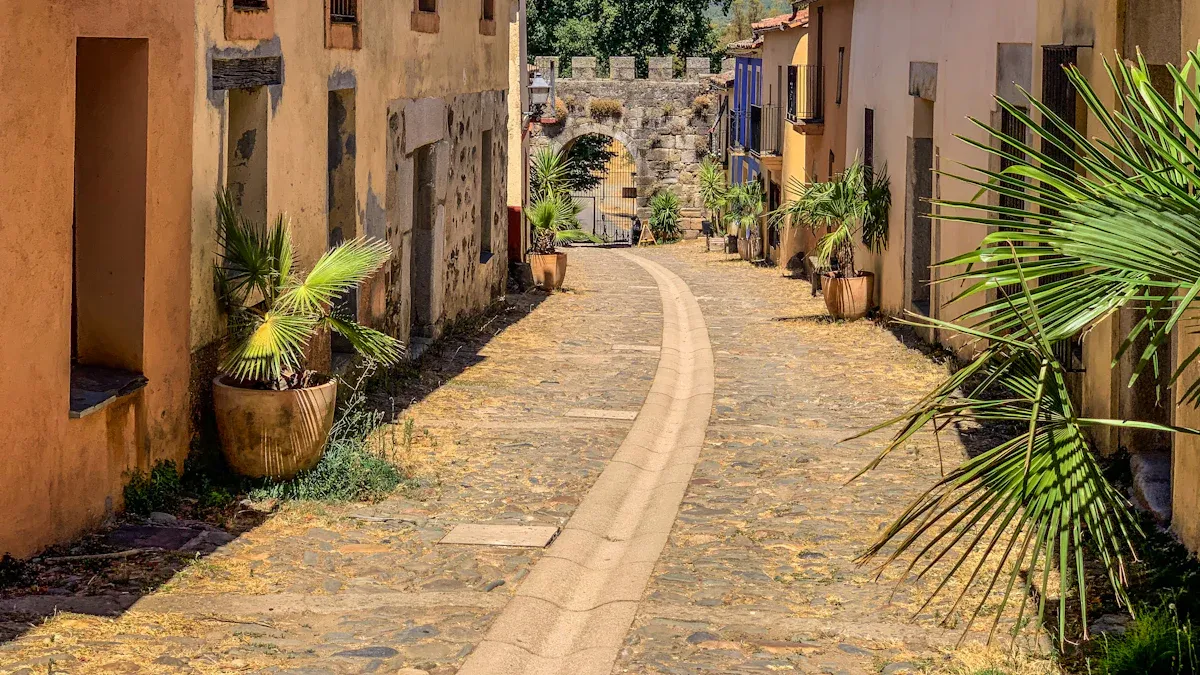
The enduring charm of these places truly captivates you. It’s the feeling of stepping into a living museum. Many of these charming old towns feature pedestrian-friendly areas, inviting you to wander without cars. You can stroll along cobblestone streets, discover hidden courtyards, and enjoy local culture. This sense of timelessness, combined with vibrant community life, makes them unforgettable. These are truly some of the most beautiful old towns you will ever visit, offering a connection to history that modern cities often lack.
Discovering Europe’s Best Old Towns
Now, let’s journey to some of the best old towns in Europe, starting with a true gem.
Prague, Czech Republic
Prague is a city that truly captures your imagination. People call it “The City of One Hundred Spires.” You see countless towers, steeples, and pinnacles everywhere. This creates a strong vertical look. Prague’s historical center is a UNESCO World Heritage site. It’s like a museum of architecture under the open sky. The city avoided major destruction in past wars. This means its Gothic, Renaissance, and Baroque treasures remain intact. You will find it one of the most beautiful old towns you can visit.
Gothic Architecture
Prague’s Gothic architecture is simply breathtaking. The Gothic Age was a golden time for the Kingdom of Bohemia. You see many massive churches built during this period. But Prague also has lots of non-religious Gothic buildings. Think of the Charles Bridge and the Old Town Hall. The Church of Our Lady before Týn is a prime example. Its 80-meter-high towers and 18 pinnacles are stunning. The Old New Synagogue, built around 1270, is another incredible Gothic structure. It’s one of Europe’s oldest active synagogues. You will also find Romanesque elements, like the Rotunda of the Holy Cross. Later, Renaissance and Baroque styles added to the city’s unique look.
Iconic Landmarks
You can’t miss Prague’s iconic landmarks. The Charles Bridge, started after 1357, features the Old Town Bridge Tower. Many consider it one of Europe’s largest and most beautiful Gothic gates. The Prague Orloj, an astronomical clock, first appeared in 1410. It’s the oldest still-operating astronomical clock in the world. These sites are popular tourist spots for good reason.
Key Attractions
When you visit Prague, make sure to explore the Old Town Square. You will see the Church of Our Lady before Týn there. Walk across the Charles Bridge. Visit the Old New Synagogue in the Jewish Quarter. Don’t forget the Powder Gate, built between 1475 and 1484. These places offer stunning architecture and a deep sense of history. Prague should definitely be on your bucket list for the best old towns in Europe.
Bruges, Belgium
Bruges, Belgium, feels like a fairytale. You step into a world where time slows down. This medieval city is famous for its canals and stunning architecture. It’s a place you definitely want on your travel bucket list.
Medieval Canals
The canals are the heart of Bruges. They once connected the city to the sea. Around 1050, the sea access started to disappear because of silting. But then, a big storm in 1134 created the Zwin. This brought sea access back! Damme became a super important port for trade. These waterways helped Bruges become a major trading hub. You can take a boat tour and see the city from a different view.
Market Square
The Market Square, or Grote Markt, is the city’s vibrant center. You will find the Belfry of Bruges here. This square was once the hub of commerce. In 1309, the Bourse opened. Many people think this was the world’s first stock exchange! This made Bruges a top money market in the Low Countries. Italian merchants made Bruges their base. This attracted other European traders. They built amazing structures like the Belfry and City Halls.
Key Attractions
You have so much to see in Bruges. The Flemish cloth industry was huge from the 11th century. It brought many people and wealth. The Dukes of Burgundy often stayed here in the 14th and 15th centuries. This made the city even richer. Artists like Jan van Eyck came to Bruges. You can also learn about the Bruges Matins in 1302. Local militia fought against the French garrison. This showed the city’s strong spirit. You can explore St. John’s Hospital and other historic buildings.
Siena, Italy
Siena, Italy, offers a captivating journey back to the Middle Ages. You will find it nestled in the heart of Tuscany. This city is a true masterpiece of Gothic art and architecture. Its well-preserved historic center is a UNESCO World Heritage site. Siena truly deserves a spot on your travel bucket list.
Gothic Splendor
You will immediately notice Siena’s unique Gothic style. The city uses reddish bricks extensively. You can see this in buildings like Palazzo Sansedoni and the Basilica of San Domenico. These bricks give Siena a warm, earthy feel. You will also find typical Gothic elements here. Look for spires, pinnacles, and pointed arches. The Palazzo Pubblico also shows off many Gothic architectural features. Its facade has intricate details and graceful arches. Delicate sculptures adorn its surfaces. You will also see a symbolic use of black and white marble stripes. This represents harmony between darkness and light.
Piazza del Campo
The Piazza del Campo is Siena’s beating heart. This shell-shaped square is one of Europe’s most famous medieval squares. It was a social gathering place and marketplace even before the 13th century. By 1169, people organized its construction. Peace returned in 1270 after the Battle of Montaperti. This led to a focus on civic pride and public space. The square was fully paved in 1349. Its nine sections symbolize the rule of The Nine, who governed Siena from 1292 to 1355. During medieval times, it hosted public ceremonies, markets, and tournaments. The famous Palio di Siena horse race still takes place here today.
Key Attractions
You have so much to explore in Siena. The Torre del Mangia and the Gothic Palazzo Pubblico stand proudly in the Piazza del Campo. These buildings reflect the medieval era. The Palazzo Pubblico has been the seat of government since the 14th century. You can also admire the Fonte Gaia fountain, built in the 15th century. Wander through the narrow, winding streets. You will discover hidden gems around every corner. Siena offers a truly authentic Italian experience.
Carcassonne, France
You will find Carcassonne, France, a truly spectacular sight. This fortified city looks like it came straight from a storybook. It is a place you should definitely add to your bucket list. Its history stretches back thousands of years.
Medieval Fortress
The history of Carcassonne’s fortress is long and rich. Around 100 BCE, Romans fortified this hilltop. They called it Julia Carsaco, later Carcasum. You can still see parts of these ancient Roman walls today. In 1067, Carcassonne became the property of Raimond-Bernard Trencavel. He built the Château Comtal and the Basilica of Saints Nazarius and Celsus. Pope Urban II even blessed the new cathedral’s foundation stones in 1096. The city faced challenges during the Albigensian Crusades. In August 1209, the crusading army forced its surrender. Simon de Montfort then became the new viscount. He added to the fortifications. Carcassonne became a border fortress for the Kingdom of France in 1247. Edward the Black Prince failed to capture the city in 1355 during the Hundred Years’ War. His troops did destroy the lower town.
Citadel Walls
The citadel walls of Carcassonne are truly impressive. You will see a double ring of fortifications. The city took on its modern appearance in the 13th century. The old Trencavel palace became a grand château comtal. Builders added a second wall, 1,600 meters long. Kings Philip III the Bold and Philip IV the Fair modernized these defenses. They added loopholes and the monumental Porte Narbonnaise. This made the fortress very strong. However, its military importance decreased after 1659. The Treaty of the Pyrenees changed borders. The fortifications were then abandoned. In 1804, Napoleon removed Carcassonne from the list of strongholds. People even started dismantling the walls. Luckily, a decree to demolish the fortress in 1849 sparked a preservation campaign. Jean-Pierre Cros-Mayrevieille and Prosper Mérimée worked to save it. Eugène Viollet-le-Duc led a huge restoration project from 1853 to 1911. He brought this medieval city back to its former glory.
Key Attractions
When you visit Carcassonne, you must explore the Cité de Carcassonne. This is the historic fortified city. Walk along the ramparts. You will get amazing views of the surrounding countryside. Visit the Château Comtal. You can learn about its history and see its impressive architecture. The Basilica of Saints Nazarius and Celsus is also a must-see. Its beautiful stained glass windows are stunning. Wander through the narrow, winding streets. You will feel like you have stepped back in time. This medieval gem offers a unique experience.
Dubrovnik, Croatia
Get ready to be amazed by Dubrovnik, Croatia! This stunning city, often called the “Pearl of the Adriatic,” truly feels like a step back in time. Its ancient stone walls and beautiful buildings make it a must-see destination. You’ll quickly understand why it’s so famous.
Ancient City Walls
You can’t talk about Dubrovnik without mentioning its incredible city walls. These walls are a symbol of the city’s long fight for freedom. A 15-month siege by Saracens in the 9th century showed everyone how important strong defenses were. So, they started building! As the city grew, especially over the Laus islet, these walls expanded too. By the 13th century, the entire city was enclosed. The walls got their final, impressive shape around 1453, during Dubrovnik’s “Golden Age.”
These walls are truly a marvel. They stretch about 1,940 meters (6,360 ft) and can reach up to 25 meters (82 ft) high! You’ll see 14 quadrangular towers, three circular towers, and five bastions reinforcing them. A moat, once armed with over 120 cannons, added even more protection. Look for the Pile Gates, a complex entrance with a stone bridge and a wooden drawbridge. The Gate of Ploče on the eastern side is another major entrance, guarded by the Revelin Fortress. These gates have multiple doors and winding paths to keep the city safe.
Baroque Buildings
After a big earthquake in 1667, much of Dubrovnik needed rebuilding. This led to many beautiful Baroque buildings you see today. You’ll notice grand palaces, churches, and monasteries with ornate details. The Rector’s Palace and St. Blaise’s Church are great examples. Their elegant designs and rich decorations show off the city’s resilience and artistic flair. Walking through the city, you’ll feel surrounded by history and beauty.
Key Attractions
When you visit Dubrovnik, you absolutely must walk along the city walls. The views of the Adriatic Sea and the red-tiled roofs are breathtaking! Explore Stradun, the main street, where you can find shops and cafes. Don’t miss the Rector’s Palace, which was once the seat of the Republic of Ragusa’s government. You should also visit the Franciscan Monastery, home to one of the oldest pharmacies in Europe. Dubrovnik offers an unforgettable journey into a rich past.
Rovinj, Croatia
You will find Rovinj, Croatia, a truly enchanting coastal town. It sits on the Istrian peninsula. This town offers a perfect blend of history, natural beauty, and vibrant culture. You will quickly see why it’s one of Europe’s most picturesque old towns.
Picturesque Waterfront
Rovinj’s waterfront is simply stunning. You will see colorful buildings lining the harbor. These pastel-colored buildings and charming piazzas show strong Venetian influence. Venetian rule from the 13th century significantly shaped Rovinj’s architecture. You can enjoy a coffee at a cafe or watch fishing boats bob in the clear Adriatic waters. The atmosphere is incredibly relaxing.
Hilltop Charm
The Old Town of Rovinj rises from the sea on a small peninsula. It’s a beautiful sight. You can enter its historic heart through the Balbi Arch, which dates back to 1679. This arch serves as a symbolic gateway. As you wander, you will notice tall, closely built houses. This architectural style emerged from the 16th to the 19th century. It reflects the need for dense housing due to population growth. You will discover many picturesque alleys. The Grimaldi Palace showcases a blend of Venetian Gothic and Renaissance styles. Its facades feature elegant windows, ornate balconies, and intricate stonework. These are characteristic of Venetian palaces. You will see multi-foiled windows, decorative cornices, and carved family crests. Local Istrian stone combined with grand Italian design principles is a hallmark here.
Key Attractions
You must climb to the top of the hill. There, you will find the Church of St. Euphemia. Its striking bell tower was inspired by St. Mark’s Basilica in Venice. The views from up there are breathtaking. You can see the entire town and the sparkling sea. Rovinj is one of those hidden gems that truly captures your heart.
Edinburgh, Scotland
You will find Edinburgh, Scotland, a city steeped in history and dramatic beauty. Its Old Town, a UNESCO World Heritage site, offers a captivating journey through centuries. You can explore ancient streets and discover stories around every corner.
Medieval Old Town
Edinburgh’s Old Town began as a defensive settlement near Castle Rock. It grew organically during the medieval period. It became a center for trade and textile manufacturing. By the late 1400s, it was Scotland’s capital. The city prospered under kings like James IV and James V. Building materials shifted from wood to more permanent stone structures. Around 1800, the Old Town became unfashionable. Wealthier residents moved to the New Town. This led to social divisions and economic problems. The Old Town fell into disrepair.
However, an urban renaissance in the late 1800s brought renewed attention. The Edinburgh Improvement Act of 1867 had radical effects. It demolished St Mary’s Wynd, replacing it with the wider St Mary’s Street. Leith Wynd was also demolished, creating Jeffrey Street. East Market Street and Blackfriars Street were built. Chambers Street and Guthrie Street also appeared. By the 1920s, Edinburgh experienced renewed prosperity. After World War II, it further developed, focusing on education and science. In 1995, UNESCO recognized the Old Town’s historical importance. Archaeological excavations have shed light on its past. For example, in 2012, remains of a 16th-century tenement were found at Advocates Close. Excavations in 2008 revealed medieval burgage plots.
Royal Mile
The Royal Mile is the historic spine of Edinburgh’s Old Town. It connects Edinburgh Castle to the Palace of Holyroodhouse. You can walk this famous street and see many historic buildings. Gladstone’s Land is a 500-year-old restored building. It shows you luxury life in Edinburgh’s Old Town. The Palace of Holyroodhouse is the official Royal Residence. You can explore Mary Queen of Scots’ bedchamber there. Makars’ Court is a national literary monument. It features inscribed words of Scottish writers. Riddle’s Close, a mansion from the 1590s, hosted King James VI. Lady Stair’s Close has a striking townhouse from 1622. It now houses the Writers’ Museum. Wardrop’s Close is where Robert Burns stayed. Old Fishmarket Close was first recorded in 1592.
At John Knox’s House, the High Street narrows. This section was once known as the Netherbow. It marked the former city boundary. The Netherbow Port, a fortified gateway, stood here. It was removed in 1764. Parts of the Flodden Wall still survive. The Netherbow Port was a gateway in this wall.
Key Attractions
You have many amazing places to visit in Edinburgh. Explore Edinburgh Castle, an iconic fortress. See the Scottish Crown Jewels there. St Giles’ Cathedral is the mother church of Presbyterianism. It has beautiful Gothic architecture. You can also visit The Real Mary King’s Close. This underground attraction explores hidden streets and Edinburgh’s medieval history. The Museum of Edinburgh tells the city’s story. The Writers’ Museum is dedicated to famous Scottish writers. The Canongate Tolbooth, once a courthouse, now houses the People’s Story Museum. John Knox House is a 16th-century house. The Scottish Parliament is also at the foot of the Royal Mile.
Seville, Spain
You will find Seville, Spain, a city that truly dances with passion and history. This vibrant capital of Andalusia offers a captivating blend of cultures. You can feel the strong influence of its Moorish past everywhere. Seville is a place that will charm you with its stunning architecture and lively atmosphere.
Moorish Influences
The Moorish presence in Seville left an incredible mark. You will see a unique fusion of Islamic artistry and local Spanish techniques. This collaboration created a distinct style. Even after the Christian reconquest, rulers respected and preserved this Islamic art. They integrated it with new elements. You can spot these influences in many ways:
Horseshoe arches: These gracefully curving arches frame doorways and windows.
Azulejos: You will see intricate, vibrant tile work adorning interiors and surfaces. These tiles showcase beautiful geometric patterns and colors.
Water features: Grand fountains and tranquil reflecting pools add serenity. They also mirror the surroundings.
Geometric patterns: These patterns adorn walls, reflecting mathematical precision and spiritual contemplation.
Courtyards: Designers created these spaces to play with light and shadow. They offer both open and intimate areas.
Alcázar and Quarter
The Alcázar of Seville is a prime example of this Moorish heritage. It is a royal palace that will amaze you. The Alcázar features walls adorned with geometric patterns. Its courtyards manipulate light and shadow beautifully. You must visit the Patio de las Doncellas, or “Courtyard of the Maidens.” This area perfectly shows Moorish design. It has a reflective pool, symmetry, columns, arches, and intricate tile work. You can wander through the Santa Cruz Quarter, the old Jewish quarter. Its narrow, winding streets and hidden patios also show a strong Moorish influence.
Key Attractions
When you visit Seville, you have many amazing places to explore. The Seville Cathedral is a must-see. It is the largest Gothic cathedral in the world. You can climb its Giralda tower, once a minaret, for incredible city views. The Plaza de España is another iconic spot. You can rent a rowboat there. Don’t forget to experience a flamenco show. This passionate dance is a core part of Seville’s culture.
Kraków, Poland
You will find Kraków, Poland, a city that truly captivates you. It is a place where history comes alive. This former royal capital offers a rich tapestry of culture and stunning architecture. You will feel like you have stepped into a storybook.
Glorious Architecture
Kraków’s Old Town is a treasure trove of architectural styles. You will see a beautiful mix of designs. These range from Early Romanesque structures to more recent Modernist periods. The city’s buildings reflect its long journey. They show its development from the Middle Ages to the present day. You can admire grand churches and elegant townhouses. Each building tells a part of Kraków’s story.
Market Square
Kraków’s Main Market Square, also known as Rynek Główny, is truly impressive. It is Europe’s largest medieval plaza. This square spans 40,000 square meters. Prince Bolesław V the Chaste established it in 1257. It became central to the city’s urban planning. This square has seen many important Polish historical events. For example, Prince Albrecht Hohenzollern paid homage to King Sigismund the Old here in 1525. The military oath of allegiance to the Constitution of 3 May took place in 1791. Tadeusz Kościuszko took an oath to the nation here in 1794, starting an uprising. The square was a hub of intense commercial activity. Many merchants’ stalls filled it. The Cloth Hall still represents this today. It was also home to historic residences like the Margrabska Tenement House. The square’s deep historical relevance led to its UNESCO World Heritage site designation in 1978.
Key Attractions
When you visit Kraków, you have many amazing places to explore. The Wawel Royal Castle and Cathedral are must-sees. They sit on Wawel Hill. You can also visit St. Mary’s Basilica. Its stunning altar is a masterpiece. Wander through the Jewish Quarter, Kazimierz. It offers a unique atmosphere and rich history. You will find charming cafes and synagogues there. Kraków offers a truly unforgettable experience.
Český Krumlov, Czech Republic
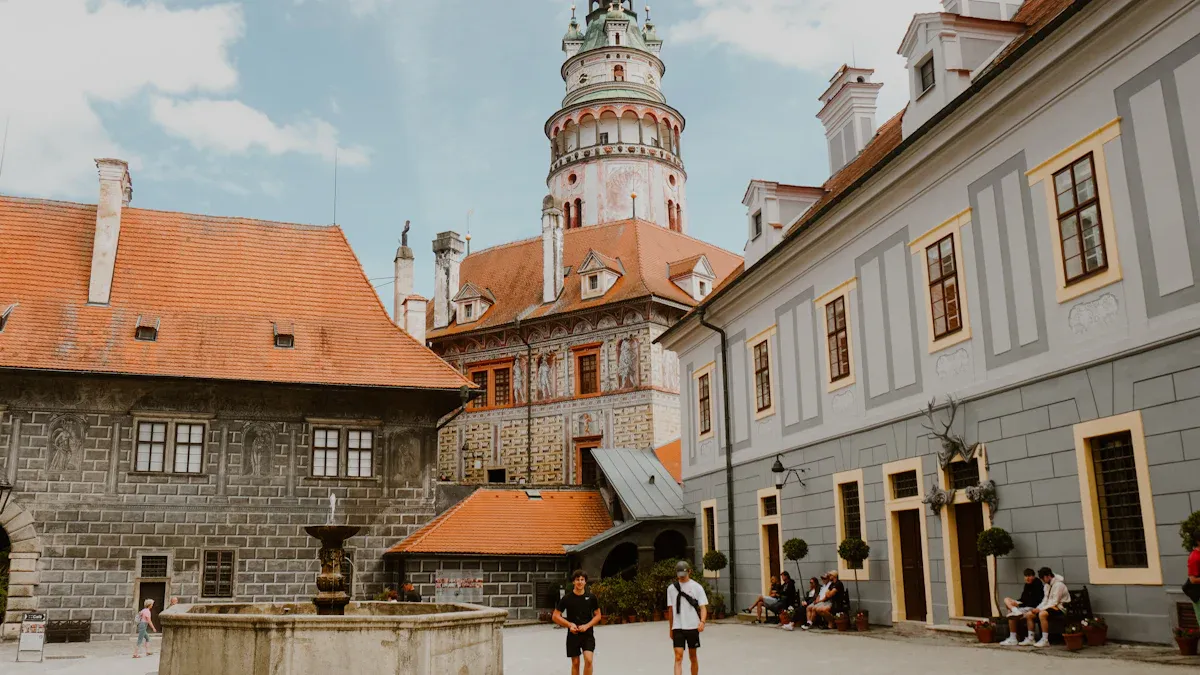
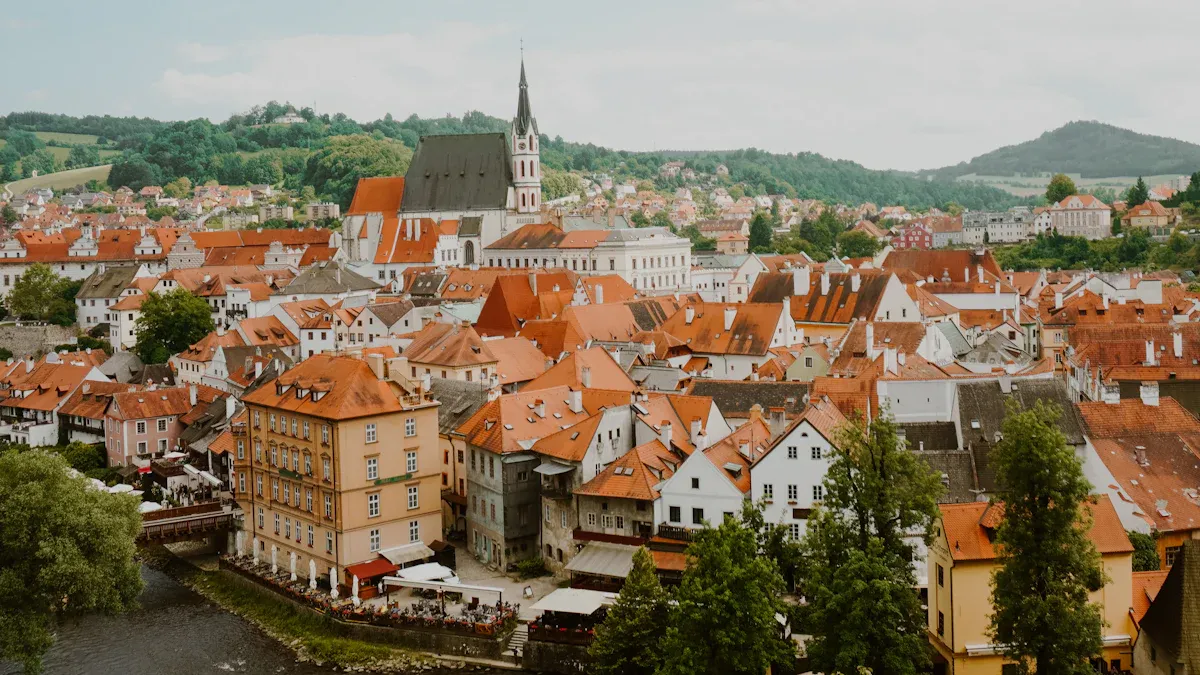
You will find Český Krumlov a truly magical place in the Czech Republic. This town looks like it came straight from a postcard. It sits nestled in a bend of the Vltava River. This makes it one of the most picturesque small towns in Europe. Its old town is a UNESCO World Heritage site. You will quickly see why it is so special.
Enchanting Riverside
The Vltava River winds its way through Český Krumlov. It creates a beautiful, natural moat around the old town. You can enjoy stunning views from almost anywhere. The town’s unique look stayed safe for a long time. Český Krumlov was founded in the 13th century. It was largely forgotten until the 1990s. This meant it escaped the destruction that hit many other European towns during both World Wars. This period of being “forgotten about” helped its unique appearance stay intact. It truly feels like stepping back in time.
Castle Complex
You cannot miss the Český Krumlov Castle complex. It is the second-largest in the Czech Republic. Only Prague Castle is bigger. You will see a mix of Gothic, Renaissance, and Baroque styles. The castle buildings have amazing painted artworks. Artists painted these directly into wet plaster. This made the colors dry into the material itself. This method was a sign of wealth and became very popular. It helped these intricate designs last perfectly for a very long time. You will be amazed by the detailed frescoes and decorations.
Key Attractions
When you visit Český Krumlov, you have many things to see. Explore the castle grounds and climb the castle tower for amazing views. Wander through the narrow, winding streets of the Old Town. You will find charming shops and cafes. Visit the Church of St. Vitus. It has beautiful Gothic architecture. You can also take a raft trip on the Vltava River. This gives you a unique perspective of the town. Český Krumlov offers an unforgettable experience.
Verona, Italy
You will find Verona, Italy, a city where ancient history meets vibrant Italian life. This charming city, nestled in the Veneto region, offers a captivating blend of Roman ruins and Renaissance beauty. You can truly feel the layers of history as you explore its streets.
Roman Heritage
Verona’s Roman heritage is incredibly rich. You can still see many well-preserved structures from that ancient time. Imagine walking on the same paved roads the Romans used! You will find large remains of defensive walls still standing strong. Look for two of the four original monumental doors, Porta Borsari and Porta Leoni; they are remarkably intact. The Arena, a magnificent amphitheater, is a clear monument from the Roman Age. You can also discover remains of a theater from the 1st century B.C.
Beyond these grand structures, you will find traces of daily Roman life. Various noble family houses, called Domus, still show their intricate mosaics. The Ponte Pietra, the old Roman bridge, is considered the oldest construction in Verona. You can also see the Arco dei Gavi, a triumph arch, and remains of the Capitolium, the main temple’s base. Don’t miss the Domus of Piazza Nogara, where you can see the layout and extensive mosaics of a patrician house. These visible traces, like sections of imperial walls in Piazza Mura di Gallieno, truly bring the past to life.
Historic Piazzi
Verona’s historic piazzi, or squares, are the city’s beating heart. You can start at Piazza Bra, home to the impressive Arena. This large square buzzes with activity. Then, wander to Piazza delle Erbe, the ancient Roman forum. It now hosts a lively market. You will see beautiful frescoes on the buildings surrounding it. Piazza dei Signori, also known as Piazza Dante, offers a more elegant atmosphere. It features grand palaces and a statue of Dante Alighieri. These squares are perfect spots to soak in the city’s ambiance.
Key Attractions
When you visit Verona, you have many amazing places to explore. Of course, you must see the Roman Arena. You can even catch an opera there in the summer! Don’t forget to visit Juliet’s House, a popular spot for romantics. Climb the Torre dei Lamberti for panoramic views of the city. You can also explore the Castelvecchio Bridge and Museum. This fortress offers a glimpse into Verona’s past. Verona truly offers an unforgettable journey through history and beauty.
Hallstatt, Austria
You will discover Hallstatt, Austria, nestled perfectly between towering mountains and the serene Hallstätter See. This village looks like it came straight from a postcard. It is truly one of the most charming small towns in Europe. Its unique beauty makes it a must-see destination.
Alpine Lakeside
Imagine colorful houses clinging to a steep hillside. They reflect beautifully in the calm lake waters. You can take a boat ride across the lake. This gives you amazing views of the village and the surrounding Alps. The air here feels fresh and clean. It is a perfect escape into nature’s beauty.
Market Square
The Market Square is the heart of Hallstatt. You will find charming buildings with flower-filled balconies. A statue of the Holy Trinity stands proudly in the center. This square is a great spot to relax. You can enjoy a coffee or a meal at one of the local cafes. It feels like a cozy, welcoming place.
Key Attractions
When you visit Hallstatt, you absolutely must explore its ancient salt mine. This mine is the oldest continuously operating one in the world! Salt mining has shaped Hallstatt for thousands of years. People have exploited these salt mines since the Neolithic period. This led to the settlement of Celts and the famous Hallstatt culture, which thrived from the 8th to 5th centuries BC. The salt even preserved organic materials like textiles and wood, giving us amazing archaeological finds. Hallstatt became a market town in 1311 because of its economic importance. Today, salt production continues, and tourism also plays a major role in the town’s economy. You can take a tour of the mine and learn all about this fascinating history. Don’t forget to visit the Bone House, a unique chapel filled with painted skulls.
Planning Your Visit to Historic Old Towns
You can make your trip to Europe’s historic old towns even better with some smart planning. Knowing when to go and how to navigate crowds helps a lot. You will have a more enjoyable and authentic experience.
Best Travel Times
Choosing the right time to visit makes a big difference. Summer in Europe often gets very busy. Many tourists fill the streets. This makes it less ideal for exploring the old towns in Europe. You might find the shoulder season much better. May and September are often perfect. During these months, you see fewer crowds. Temperatures are not as hot. Prices can also be lower than in the high season. For Mediterranean places like Italy or Croatia, April-May and September-October offer warm weather and fewer people. If you visit Eastern Europe, like the Czech Republic, May and September-October have excellent weather and fewer tourists. This is often the best time to see the best old towns in Europe.
Avoiding Crowds
You can use several tricks to avoid large crowds. Consider visiting less popular towns. These places often have beautiful scenery. They also have significantly fewer people. This gives you a more peaceful experience. You should also start exploring early in the morning. Try to be out at or before sunrise. You will find quiet streets and great photo opportunities. You can also arrive late in the day. This works well in cities cruise ships frequent. Passengers will have reboarded by then. Sometimes, paying for attraction admission helps. Free access often brings bigger crowds. You can also look for “front of the line” offers. These help you skip long queues.
Local Events
Many old towns host amazing local events. These can add a unique flavor to your trip. You might plan your visit around them. For example, Siena, Italy, has The Palio of Siena. This horse race happens on July 2 and August 16. It celebrates the city’s history. Munich, Germany, hosts Oktoberfest. This festival starts in September. It features traditional Bavarian music and food. In Sicily, Italy, you can experience Semana Santa. This religious observance during Holy Week has solemn processions. These events offer a deep look into local culture.
FAQ
What is the best time to visit Europe’s old towns?
You will find the shoulder seasons best. Try May or September. The weather is pleasant. You also see fewer crowds than in summer. Prices can be lower too.
What makes an old town charming?
Charming old towns have preserved historic architecture. You will love their pedestrian-friendly cobblestone streets. They offer a unique cultural heritage. You feel a sense of timelessness there. Many have beautiful medieval roots.
Are these old towns expensive to visit?
Costs vary a lot. Some towns are pricier than others. You can save money. Eat at local markets. Look for free attractions. Consider staying outside the main tourist areas.
How can I avoid crowds in old towns?
You should explore early in the morning. Try to visit during the off-season. You can also find less-known towns. They offer beauty without the crowds.