

You’ll want tools that balance weight, power, and reliability, so pick axes that match your trips and tasks. The Fiskars X25 splits cleanly for firewood, while the X7 hatchet handles kindling and light shelter work. Estwing’s 14″ Sportsman and 26″ Camper give rugged, forged durability and low-vibe grips for long sessions. The RoverTac multitool adds compact versatility for small jobs. Choose by handle length, blade geometry, and how you carry it, and keep learning for gear-fit tips.
| Fiskars X25 28″ Splitting Axe with Sheath |

| Best for Splitting | Primary Use: Wood splitting / firewood | Cutting Head Material: Forged steel blade | Carrying Protection: Protective sheath | VIEW LATEST PRICE | Read Our Analysis |
| Fiskars X7 14″ Lightweight Hatchet Axe with Sheath |

| Best for Camping | Primary Use: Chopping & kindling / campfires | Cutting Head Material: Insert-molded forged steel head | Carrying Protection: Includes sheath | VIEW LATEST PRICE | Read Our Analysis |
| RoverTac 14-in-1 Multitool Camping Axe with Sheath |

| Most Versatile | Primary Use: Multi-purpose camping & survival tasks | Cutting Head Material: High-grade stainless steel components | Carrying Protection: Durable nylon sheath with attachments | VIEW LATEST PRICE | Read Our Analysis |
| Estwing 14″ Sportsman’s Axe Camping Hatchet (E24A) |

| Rugged & Reliable | Primary Use: Chopping limbs/branches & splitting kindling | Cutting Head Material: One-piece forged American steel | Carrying Protection: Heavy-duty ballistic nylon sheath | VIEW LATEST PRICE | Read Our Analysis |
| Estwing 26″ Camper’s Axe with Shock-Reduction Grip |
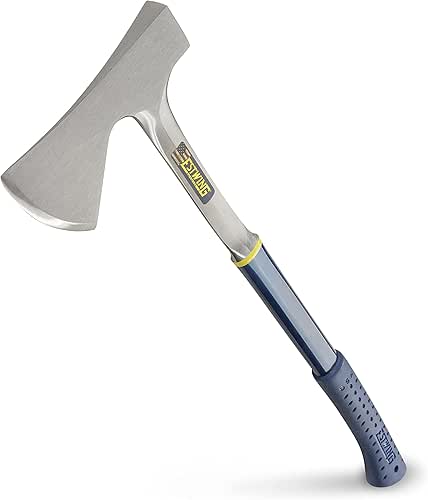
| Best Comfort & Control | Primary Use: Camping chopping & splitting firewood | Cutting Head Material: All-steel forged construction | Carrying Protection: Heavy-duty ballistic nylon sheath | VIEW LATEST PRICE | Read Our Analysis |
More Details on Our Top Picks
Fiskars X25 28″ Splitting Axe with Sheath
If you want an axe that makes splitting firewood feel almost easy, the Fiskars X25 28 inch splitting axe is a smart choice for weekend campers and serious outdoors people alike. You’ll like its forged steel blade and convex bevel that helps the axe bite and pull free on one-strike splits. The 28 inch reach and FiberComp handle give you swing speed and shock absorption, so your arms tire less and you risk overstrike damage less. It’s lightweight yet tough, balanced for power. You also get a protective sheath and a lifetime warranty for peace of mind.
- Primary Use:Wood splitting / firewood
- Cutting Head Material:Forged steel blade
- Carrying Protection:Protective sheath
- Intended Users / Use Context:Campers, yard work, bushcraft
- Warranty / Support:Lifetime warranty
- Shock / Vibration Management (Handle):Shock-absorbing FiberComp handle
- Additional Feature:Advanced convex bevel
- Additional Feature:One-strike splitting
- Additional Feature:FiberComp shock-absorbing handle
Fiskars X7 14″ Lightweight Hatchet Axe with Sheath
You’ll love the Fiskars X7 14″ hatchet if you want a reliable, lightweight tool for camp chores and firewood prep. You get a forged steel head with insert molding that stays solid through heavy use. The blade uses a special grind and low-friction coating so it cuts deeper and sticks less. You’ll notice three times deeper cuts than older models and a balanced power-to-weight design that makes each swing efficient. The FiberComp handle soaks up shock and fits your hand comfortably, cutting fatigue. It comes with a sheath and a lifetime warranty, so you feel covered and confident.
- Primary Use:Chopping & kindling / campfires
- Cutting Head Material:Insert-molded forged steel head
- Carrying Protection:Includes sheath
- Intended Users / Use Context:Campers, outdoor/camping use
- Warranty / Support:Lifetime warranty
- Shock / Vibration Management (Handle):Shock-absorbing FiberComp handle
- Additional Feature:Low-friction blade coating
- Additional Feature:3x deeper cuts
- Additional Feature:Award-winning ergonomic design
RoverTac 14-in-1 Multitool Camping Axe with Sheath
Pick the RoverTac 14-in-1 Multitool Camping Axe when you want one tool that truly does a lot without weighing you down. You’ll get an axe, hammer, knife, saw, screwdrivers, bottle opener, and other handy tools all in one compact unit. The high-grade stainless steel blades stay sharp, and the black anodized aluminum handle feels solid in your hand. Because it’s lightweight and fits a durable nylon sheath, you can clip it to your belt or backpack for quick access. It’s great for camping, hiking, DIY tasks, and makes a thoughtful gift backed by a lifetime warranty and support at [email protected].
- Primary Use:Multi-purpose camping & survival tasks
- Cutting Head Material:High-grade stainless steel components
- Carrying Protection:Durable nylon sheath with attachments
- Intended Users / Use Context:Outdoor enthusiasts, hikers, DIYers
- Warranty / Support:Lifetime warranty against defects
- Shock / Vibration Management (Handle):Black anodized aluminum handle (built for durability; lightweight)
- Additional Feature:14-in-1 toolset
- Additional Feature:Black anodized aluminum handle
- Additional Feature:Nylon sheath with attachments
Estwing 14″ Sportsman’s Axe Camping Hatchet (E24A)
For campers who want a tool that feels like it was built to last, the Estwing 14 inch Sportsman’s Axe delivers steady, no-nonsense performance with a one piece forged head and handle that resists breakage and stands up to heavy use. You’ll feel confidence swinging it at limbs, small trees, and tough firewood. The hand-sharpened 4-inch edge bites cleanly, and the genuine leather grip soothes your hands during long sessions. A ballistic nylon sheath keeps the blade safe and slips onto your belt for quick access. Made in the USA since 1923, this axe gives reliable, rugged service you can trust.
- Primary Use:Chopping limbs/branches & splitting kindling
- Cutting Head Material:One-piece forged American steel
- Carrying Protection:Heavy-duty ballistic nylon sheath
- Intended Users / Use Context:Campers, outdoor enthusiasts, professionals
- Warranty / Support:(Not explicitly listed) — long-standing brand quality (made in USA since 1923) [manufacturer support implied]
- Shock / Vibration Management (Handle):Genuine leather grip (hand-sanded) for comfort/reduced strain
- Additional Feature:One-piece forged head
- Additional Feature:Hand-sharpened 4″ edge
- Additional Feature:Genuine leather grip
Estwing 26″ Camper’s Axe with Shock-Reduction Grip
If you want a reliable, no-nonsense camping axe that feels like it was made to handle real work, the Estwing 26″ Camper’s Axe with Shock-Reduction Grip is a smart pick. You’ll trust its all-steel forged head and pressed steel tubing handle soldered for a permanent bond. It chops logs, small trees, branches, and splits firewood or kindling without drama. The hand-sharpened 4-inch edge cuts clean, and the patented shock reduction grip cuts vibration by about 70%, so your hands stay steadier on long jobs. It comes with a heavy-duty nylon sheath with a belt loop, and it’s made in Rockford, IL.
- Primary Use:Camping chopping & splitting firewood
- Cutting Head Material:All-steel forged construction
- Carrying Protection:Heavy-duty ballistic nylon sheath
- Intended Users / Use Context:Campers, outdoor enthusiasts, professionals
- Warranty / Support:(Not explicitly listed) — made in USA with established brand history (manufacturer support implied)
- Shock / Vibration Management (Handle):Patented Shock Reduction Grip to reduce vibration
- Additional Feature:All-steel forged construction
- Additional Feature:Patented shock-reduction grip
- Additional Feature:Pressed steel tubular handle
Factors to Consider When Choosing Axes For Camping
When you pick an axe for camping, think about weight and balance first so swings feel natural and you don’t tire fast. Pay attention to blade material, head geometry and edge, and handle comfort since those affect cutting power, safety, and how long the tool lasts. Also look for solid construction and durable joins so the whole tool works together and you won’t regret it on a long trip.
Weight And Balance
Pick an axe that feels right in your hands and your pack will thank you. You’ll want a head weight that matches your trip. Light heads around 2 to 3 lb cut with less fatigue on long hikes and let you work on small camp chores fast. Heavier heads 3.5 to 5+ lb give more splitting power but demand more control and energy. Overall tool weight matters too. Compact hatchets of 1 to 2.5 lb suit backpacking. Full size axes of 3 to 5 lb fit car camping. Balance affects how it swings. A head biased axe bites harder. A handle biased one gives more accuracy. Handle length shifts leverage. Longer handles add force. Shorter handles add maneuverability. Look for good power to weight so you get strong cuts without needless bulk.
Blade Material Quality
Because the steel in your axe head decides how it will cut, hold up, and age, you want to choose the right blade material with care. You’ll find high-carbon steel keeps a sharp edge longer and is easier to re-sharpen, but you’ll need to dry and oil it to stop rust. If you camp near water or in damp places, stainless steel resists corrosion and gives peace of mind, though it may need more effort to get a fine edge and may dull sooner. Look for forged heads because they stand up to heavy strikes and resist chipping better than stamped or cast blades. Also check heat treatment and tempering for a Rockwell hardness around HRC 50 to 58. Protective coatings help, but don’t replace good steel and proper heat treatment.
Head Geometry And Edge
If you want an axe that feels right and works reliably at camp, start by thinking about the head shape and edge because those details decide how the tool bites, splits, and pulls free. You’ll want a curved, convex bevel when you plan to split logs. It concentrates force and stops the blade from wedging in. If you need cleaner chops and deeper penetration for limbs, choose a thinner V style edge around 20° to 30° per side. For tough, rocky work pick a thicker 30° to 40° edge to resist chipping. Wider wedge heads force wood apart for splitting, while tapered heads cut and bite into knotty wood. Longer heads with mass toward the bit give more strike energy. Polished finishes and sharp honing keep the blade from sticking.
Handle Comfort Grip
You’ll often notice how much a handle changes your swing and your mood after a long day chopping, so choose one that feels like an extension of your arm. You want ergonomic shaping that fits your hand, like contoured or tapered designs that cut slippage and pain during repeat swings. Pick materials that absorb shock such as composite, fiberglass, or rubber overmolds so your hands stay less tired and more sure. Match handle length and thickness to your size and task, since shorter thicker grips give control and longer slimmer shafts add leverage. Look for textured or tacky surfaces and sealed finishes to keep grip when wet or sweaty. Also confirm a solid head connection so your grip and control never fail.
Durability And Construction
After you find a handle that fits your hand and cuts down on fatigue, look closely at how the axe is built and what it’s made of, since that shapes how long it will last and how safe it feels when you swing. Choose heads forged or made from a single piece of steel because fewer joints mean less chance of failure under hard use. Pick high carbon or alloy steels that hold an edge and resist chipping, and check heat treatment or HRC ratings in the mid 50s to low 60s. Use handles of hickory, fiberglass reinforced polymers, or FiberComp for strength and shock absorption. Inspect the head to handle attachment for through tangs or solid mechanical fastening. Also check coatings or alloy parts to limit rust in wet camps.
Portability And Sheath
Think about how the axe will travel with you, because a tool that’s hard to carry becomes something you leave behind. Pick a length and weight that balance power with packability. For backpacking, shorter handles 12 to 18 inches and heads under 2 to 3 pounds fit better. Choose a durable sheath in leather, ballistic nylon, or molded polymer that locks the blade and protects your gear. Look for belt loops, D-rings, or MOLLE clips so you can attach the axe to a pack or belt for quick access. If you need extra compression, consider disassemblable or folding designs that tuck into tight spaces. Mind weight distribution by placing heavier parts low in the pack and using sheath straps or a sleeve to stop blade movement.
Intended Cutting Tasks
Match the axe to the job so the tool feels right in your hands and gets the work done without tiring you out. Start by naming the jobs you’ll do: splitting large logs, felling small trees, limbing, or making kindling. Each job needs a different head weight, blade shape, and handle length. For splitting firewood, pick a heavier wedge-headed axe with a longer handle so the blade won’t pinch and you’ll get more force. For chopping branches and limbing, choose a lighter hatchet with a slimmer blade and short handle for control and quick work. If you want one tool for shelter building and camp chores, go with a balanced mid-length axe that blends power and manageable swing weight. Also think about how far you’ll carry it; backpacking favors compact gear, car camping allows heavier tools.
Maintenance And Sharpening
Keep your axe ready and safe by making maintenance and sharpening a simple routine you can do each time you use it. Wipe the blade clean and dry to remove sap, dirt, and moisture so corrosion and sticky residue won’t dull the edge. Check the handle and head connection often for cracks, looseness, or rust, and tighten or repair any loose head right away to stay safe. Hone the edge with a fine file or stone, keeping the original bevel angle, usually 20 to 30 degrees per side, for efficient cutting. If you see nicks or a rolled edge, reestablish the bevel with a bastard file or coarse stone, then finish with a finer stone and strop. Lightly oil metal and treat wooden handles with boiled linseed oil.