

I picked the best road‑trip dash cams for 2026 that balance true 4K or QHD clarity, strong low‑light STARVIS sensors, and multi‑camera coverage.
Options include ROVE R2‑4K front and dual variants, a 1296P 70mai M310, and 4K front/rear or 3‑channel systems with GPS and parking modes.
Use high‑endurance UHS‑U3 cards and hardwire for reliable parking recording.
Models with Wi‑Fi and GPS provide mapped playback and easy file transfers.
| ROVE R2-4K Dash Cam with WiFi GPS |
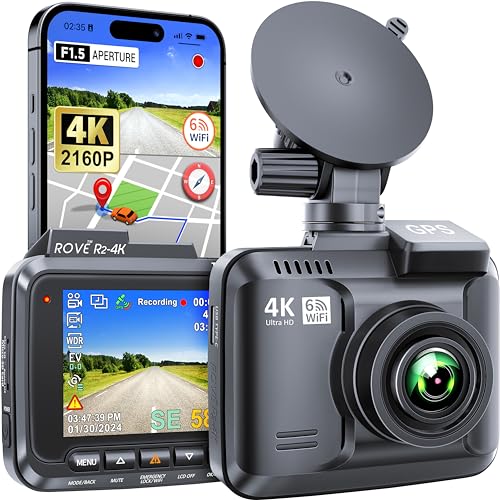
| Reliable Everyday Companion | Resolution: 4K (2160P) front | Night / Low-light Performance: Super Night Vision (SONY IMX335, F1.5, 6-glass lens) | Parking / Motion Monitoring: Parking mode with motion detection; time-lapse parking | VIEW LATEST PRICE | Read Our Analysis |
| ROVE R2-4K Dual Front & Rear Dash Cam |
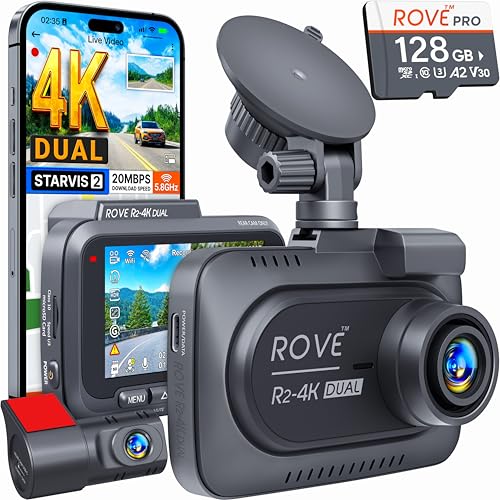
| Best Dual-Channel Performer | Resolution: Front 4K (3840×2160P) / Rear 1080P | Night / Low-light Performance: Super Night Vision (Sony IMX675 STARVIS 2, F1.5 front / F1.8 rear) | Parking / Motion Monitoring: 24-hour custom parking mode (timelapse, motion & collision detection; hardwire required) | VIEW LATEST PRICE | Read Our Analysis |
| 70mai M310 Dash Cam 1296P QHD Front Camera |

| Compact Budget Pick | Resolution: 1296P QHD (2304×1296P) front | Night / Low-light Performance: Night vision with 3D Noise Reduction + WDR | Parking / Motion Monitoring: Parking monitoring (G-sensor triggered); 24-hour with hardwire kit required | VIEW LATEST PRICE | Read Our Analysis |
| 4K Front and Rear Dash Cam with GPS |
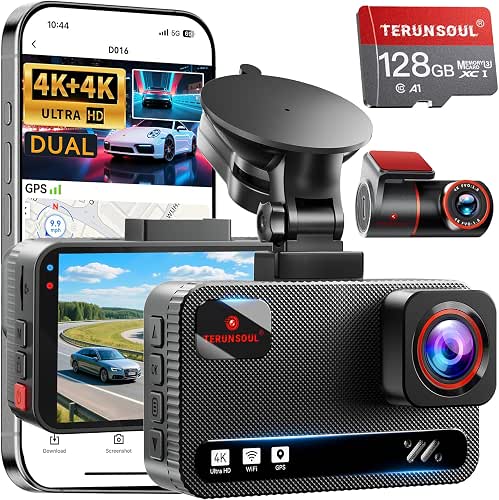
| Best Road-Trip Powerhouse | Resolution: Front 4K / Rear 4K (3840×2160P each) | Night / Low-light Performance: Super Starlight night vision + WDR (F1.5 front / F1.8 rear) | Parking / Motion Monitoring: 24-hour time-lapse parking recording; collision auto-locking during parking | VIEW LATEST PRICE | Read Our Analysis |
| 3-Channel 1080P Dash Cam Front Rear Inside |

| Best for Family Trips | Resolution: 1080P front (triple-channel: front/cabin/rear 1080P) | Night / Low-light Performance: HDR and WDR; cabin IR LEDs for low light | Parking / Motion Monitoring: 24-hour parking monitoring functionality | VIEW LATEST PRICE | Read Our Analysis |
More Details on Our Top Picks
ROVE R2-4K Dash Cam with WiFi GPS
The ROVE R2-4K suits road-trippers who prioritize crisp daytime and low-light footage, offering true 2160p resolution with a Sony IMX335 sensor, F1.5 aperture and six-glass lens for enhanced night clarity. It captures wide 150° views with WDR for balanced contrast, while Super Night Vision improves low-light detail. Recording features include loop cycling, time-lapse, G-sensor emergency lock, parking mode with motion detection, and support for up to 512GB microSD (card not included). Built-in WiFi 6 and the ROVE App enable 4K downloads and OTA firmware updates; GPS logs route and speed. A supercapacitor and one-year warranty enhance reliability.
- Resolution:4K (2160P) front
- Night / Low-light Performance:Super Night Vision (SONY IMX335, F1.5, 6-glass lens)
- Parking / Motion Monitoring:Parking mode with motion detection; time-lapse parking
- G‑sensor / Emergency Lock:G-sensor emergency video lock
- Wi‑Fi / App Connectivity:Built-in WiFi 6 + ROVE app (iOS/Android)
- GPS / Route Data:Built-in GPS (records location/speed; view route via app/GPS Player)
- Additional Feature:Built-in WiFi 6
- Additional Feature:Supercapacitor power
- Additional Feature:OTA firmware upgrades
ROVE R2-4K Dual Front & Rear Dash Cam
Designed for travelers who prioritize crisp daytime footage and reliable rear coverage, the ROVE R2-4K Dual captures 4K front and 1080p rear video simultaneously with wide 150°/140° fields of view. The front uses a Sony IMX675 STARVIS 2 sensor and f/1.5 aperture; the rear is f/1.8, both offering Super Night Vision for improved low-light clarity. Dual-band Wi‑Fi and an app enable viewing and downloads up to 20 MB/s, plus OTA firmware updates. Built-in GPS logs route, speed and compass; a 3″ IPS screen shows live data. Includes 128GB card, supports 1TB, supercapacitor, parking mode, G‑sensor and emergency lock.
- Resolution:Front 4K (3840×2160P) / Rear 1080P
- Night / Low-light Performance:Super Night Vision (Sony IMX675 STARVIS 2, F1.5 front / F1.8 rear)
- Parking / Motion Monitoring:24-hour custom parking mode (timelapse, motion & collision detection; hardwire required)
- G‑sensor / Emergency Lock:G-sensor collision detection and emergency video lock
- Wi‑Fi / App Connectivity:Dual-band WiFi (5GHz/2.4GHz) + app (iOS/Android)
- GPS / Route Data:Built-in GPS (route, location, speed; GPS Player support)
- Additional Feature:Free 128GB microSD
- Additional Feature:Dual-channel simultaneous recording
- Additional Feature:24-hour custom parking
70mai M310 Dash Cam 1296P QHD Front Camera
For road trippers who value clear daytime and low-light evidence without paying for a premium multi-camera setup, the 70mai M310 delivers 1296P QHD footage with a 130° field of view and night-optimized imaging to capture more lanes and reduce blind spots. The 3MP sensor uses WDR and 3D noise reduction for balanced exposure and clearer low-light scenes. It supports loop recording, G-sensor emergency locks, and time-lapse parking mode (compresses 30 minutes to 1 minute at 1 fps). Built-in Wi‑Fi, app control, and microSD support (16–256GB, Class 10+) simplify use. Parking surveillance needs the UP03 hardwire kit (sold separately).
- Resolution:1296P QHD (2304×1296P) front
- Night / Low-light Performance:Night vision with 3D Noise Reduction + WDR
- Parking / Motion Monitoring:Parking monitoring (G-sensor triggered); 24-hour with hardwire kit required
- G‑sensor / Emergency Lock:G-sensor locks emergency videos to folder
- Wi‑Fi / App Connectivity:Built-in Wi‑Fi + compatible app (iOS/Android)
- GPS / Route Data:(Not explicitly built-in) — records driving data; parking/event uses G-sensor (no explicit GPS listed)
- Additional Feature:Compact lightweight design
- Additional Feature:Included lithium battery
- Additional Feature:18-month warranty
4K Front and Rear Dash Cam with GPS
Boasting simultaneous 4K front and rear recording with built-in GPS, the K Front and Rear Dash Cam with GPS suits road-trippers prioritizing crystal-clear evidence and route tracking. Both 3840×2160 cameras offer a 170° front view, F1.5/F1.8 apertures, enhanced WDR and Super Starlight night vision, plus loop recording and a one-touch lock for emergencies. It includes a 128GB card (expandable to 512GB), G-sensor collision locking, and time-lapse parking with auto-lock. Dual-band Wi‑Fi and the Terunsoul app enable live view and downloads; a desktop GPS player overlays route data. Package bundles cables, mounts, charger, and an 18-month warranty.
- Resolution:Front 4K / Rear 4K (3840×2160P each)
- Night / Low-light Performance:Super Starlight night vision + WDR (F1.5 front / F1.8 rear)
- Parking / Motion Monitoring:24-hour time-lapse parking recording; collision auto-locking during parking
- G‑sensor / Emergency Lock:G-sensor automatic collision detection and video locking
- Wi‑Fi / App Connectivity:Dual-band Wi‑Fi + Terunsoul app (iOS/Android)
- GPS / Route Data:Built-in GPS (records route, location, speed; GPS Player desktop)
- Additional Feature:4K rear simultaneous recording
- Additional Feature:21 ft extension cable
- Additional Feature:Terunsoul 128GB included
3-Channel 1080P Dash Cam Front Rear Inside
A 3-channel 1080P setup makes this dash cam ideal for drivers who want continuous coverage of front, cabin, and rear views on long road trips. The triple-channel system pairs a 170° front camera (1080P) with 150° cabin and rear lenses; the rear unit is waterproof. An IPS screen provides clear viewing at wide angles. Recording uses loop overwrite with 1- or 3-minute intervals and includes a 32GB SD card. HDR and WDR enhance image balance; the cabin camera adds four IR LEDs for low-light clarity. A G-sensor locks files on impact, supports 24-hour parking monitoring, and offers plug-and-play installation.
- Resolution:1080P front (triple-channel: front/cabin/rear 1080P)
- Night / Low-light Performance:HDR and WDR; cabin IR LEDs for low light
- Parking / Motion Monitoring:24-hour parking monitoring functionality
- G‑sensor / Emergency Lock:Built-in G-sensor with automatic emergency file locking
- Wi‑Fi / App Connectivity:Built-in Wi‑Fi (app implied for live view/management)
- GPS / Route Data:(Not explicitly listed) — screen shows data; G-sensor and event protection included
- Additional Feature:Triple-channel (front/cabin/rear)
- Additional Feature:Cabin infrared LEDs
- Additional Feature:32GB SD included
Factors to Consider When Choosing a Dash Cam for Road Trip
When I’m picking a dash cam for a road trip, I focus on video resolution and clarity so footage is usable for incidents. I also consider low-light performance, field of view, storage and memory needs, and power and parking options to make sure it records reliably day and night. Those factors together determine whether a camera will actually protect me on the road.
Video Resolution & Clarity
How clear do you want your road-trip footage to be? I recommend at least 1080p so nearby license plates and signs are legible; if you want extra detail or future-proofing, go 4K. Balance resolution with field of view: 120°–170° captures multiple lanes but wider angles warp images and lower per-object pixel density, so higher resolution helps offset that. Look for WDR/HDR and noise reduction to retain contrast where bright sky meets dark road. Remember larger sensors and wider apertures help capture more detail, but they mainly affect low-light performance (covered next). Finally, higher resolution and advanced sensors create big files—use a microSD card rated for the camera’s bitrate and make sure your storage and transfer speed can handle the load to avoid dropped frames.
Low-Light Performance
I often tell readers that low-light performance makes or breaks dash-cam usefulness on night drives, so I prioritize sensors and optics that pull usable detail from dim scenes. I look for STARVIS or backside‑illuminated sensors and lenses with wide apertures (f/1.5–f/1.8) to capture brighter footage. Larger pixel sizes help, but I balance megapixels to avoid noisy 4K at night. Multi‑element glass and strong WDR/HDR tame headlight glare and retain shadow detail. I also value night‑specific processing—3D noise reduction and “super night” algorithms noticeably cut grain. For overnight parking, IR illumination or enhanced low‑light modes plus a parking‑mode time‑lapse (1 fps) extend coverage while keeping file sizes manageable.
Field Of View
Why pick one field of view over another? I choose based on where I need coverage versus detail. Wider FOVs (150°–170°) catch extra lanes and sidewalks, cutting blind spots but adding edge distortion. Narrower FOVs (120°–130°) reduce fisheye and keep license plates clearer at distance, which matters if I need long-range evidence. Remember wider angles spread the same sensor pixels across more area, so fine-detail clarity can drop. For multi-camera setups I pair a wide front lens with narrower rear or cabin cameras to balance scene coverage and resolution. Finally, match FOV to your driving: urban routes benefit from wide angles; highway trips often favor narrower lenses for better distant detail.
Storage & Memory Needs
Every trip demands storage you can trust, so I size and spec my microSD cards around resolution, recording length, and how I use parking mode. I always pick Class 10 or UHS‑U3 cards and prefer high‑endurance models built for constant writes. Estimate usage: 4K@30fps burns roughly 20–30GB/hour, 1080p@30fps about 3–6GB/hour, then multiply by expected driving hours to choose 128–512GB capacities. For loop recording, confirm your cam supports folder lock or G‑sensor protection so incidents aren’t overwritten. If I plan extended parking surveillance or timelapse, I move to 256–512GB and verify the camera’s max card recommendation. Finally, I back up or swap cards regularly to avoid failures on multi‑day trips.
Power & Parking Options
After sizing cards and planning backups, you’ll want to think about how the camera stays powered when you’re parked. I recommend models with a supercapacitor or a high-quality battery rated for wide temperature ranges so heat or cold won’t kill recording reliability. For overnight or long stops, I hardwire with a kit that lets me set a low-voltage cutoff (around 11.8–12.0V) to protect the car battery while keeping parking mode active. Confirm which parking modes a camera offers—continuous time-lapse (1 fps), motion detection, or collision-triggered events—and understand their impact on power draw and storage. Also check max microSD capacity and whether low-frame-rate timelapse is supported. If you want Wi‑Fi access while parked, expect higher power use.
Connectivity & GPS Features
Although connectivity and GPS might seem like extras, I treat them as essential tools on a road trip: built-in GPS logging gives precise route, speed, and location data that you can overlay on video for a clear timeline or legal evidence, while dual-band Wi‑Fi and faster wireless let you stream live view and download high-resolution footage to your phone far quicker than single-band connections. I look for OTA firmware updates via a companion app so navigation, GPS accuracy, and bug fixes stay current without removing the camera. Real-time on-screen telemetry—speed, compass, coordinates—helps me monitor trip data and embeds it in files. Tight smartphone app integration for map playback and exporting GPS-tagged video makes reviewing and sharing incidents straightforward.