

You’ll want five compact, rugged hotspots that keep your camp connected and double as power when needed: TP‑Link AX1500 for fast Wi‑Fi 6 local sharing and USB‑C power; SIMO Solis Hero for lifetime 4G data and a built‑in power bank; Solis Pro for 5G, Wi‑Fi 6E and an 8,000 mAh pack; RoamWiFi global hotspot with built‑in plans for easy short trips; and the RoamWiFi no‑SIM model for instant global roaming. Pick by battery, coverage, device count, and security to match your group, and you’ll be set for stable camp internet — keep going to learn setup and usage tips.
| TP-Link AX1500 Ultra-Portable Travel Wi‑Fi Router |

| Best Portable Router | Network Type: Wi‑Fi 6 (AX1500) router (not cellular hotspot) | Battery / Portable Power: USB‑C powered (no internal battery; runs from PD/QC power banks) | Global / Travel Use: Portable travel router for use with public Wi‑Fi / tethering (suitable for travel) | VIEW LATEST PRICE | Read Our Analysis |
| SIMO Solis Hero 4G LTE Global Hotspot (Lifetime Data) |
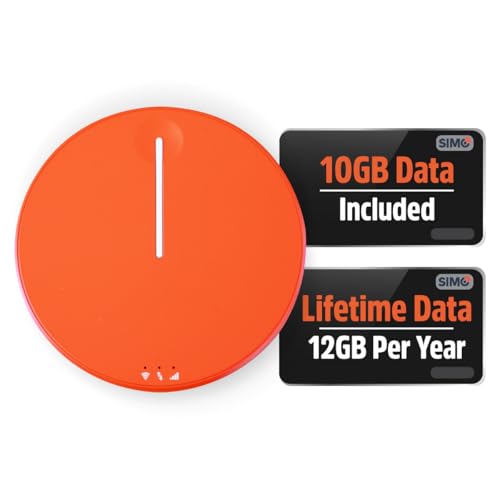
| Best Battery Hotspot | Network Type: 4G LTE mobile hotspot | Battery / Portable Power: Built‑in 5250 mAh battery (also powerbank) | Global / Travel Use: Global coverage in 140+ countries (no SIM required) | VIEW LATEST PRICE | Read Our Analysis |
| RoamWiFi 4G LTE Portable Global Mobile Hotspot |

| Best Global Coverage | Network Type: 4G LTE mobile hotspot | Battery / Portable Power: Built‑in Lithium Polymer battery (included) | Global / Travel Use: Worldwide coverage (160–170+ countries claimed) | VIEW LATEST PRICE | Read Our Analysis |
| RoamWiFi 4G LTE Portable Travel Hotspot (No SIM) |
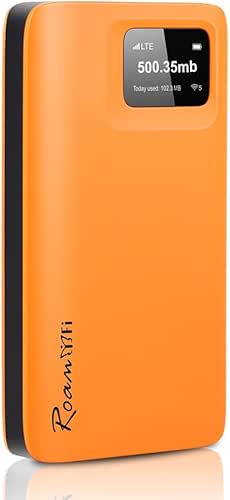
| Best Easy Setup | Network Type: 4G LTE mobile hotspot | Battery / Portable Power: Built‑in Lithium Polymer battery (included) | Global / Travel Use: Global coverage in 170+ countries (no SIM required) | VIEW LATEST PRICE | Read Our Analysis |
| Solis Pro 5G Hotspot & Power Bank Bundle |
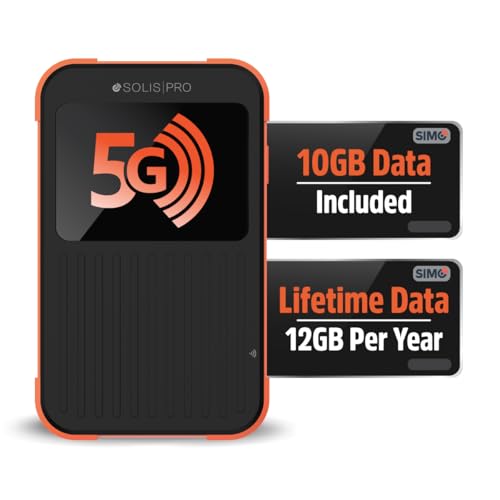
| Best Performance Pack | Network Type: 5G mobile hotspot (Wi‑Fi 6E hotspot technology) | Battery / Portable Power: Built‑in 8,000 mAh power bank | Global / Travel Use: Global coverage in 140+ countries (multi‑carrier access) | VIEW LATEST PRICE | Read Our Analysis |
More Details on Our Top Picks
TP-Link AX1500 Ultra-Portable Travel Wi‑Fi Router
If you want reliable Wi‑Fi at the campsite without hauling heavy gear, the TP‑Link AX1500 is a great choice for solo campers, families, and small groups who still need steady internet for maps, streaming, or work. You’ll like its Wi‑Fi 6 speeds, with 5 GHz up to 1201 Mbps and 2.4 GHz up to 300 Mbps, so multiple devices stream and game smoothly. It’s tiny and durable, powered by USB‑C from common PD or QC power banks. You can use router, extender, hotspot, or client modes, share a USB drive, tether phone data, and manage it easily with the Tether app.
- Network Type:Wi‑Fi 6 (AX1500) router (not cellular hotspot)
- Battery / Portable Power:USB‑C powered (no internal battery; runs from PD/QC power banks)
- Global / Travel Use:Portable travel router for use with public Wi‑Fi / tethering (suitable for travel)
- Multiple Device Support:Supports simultaneous devices via dual‑band Wi‑Fi (for streaming/gaming)
- No Long‑Term Contract / Flexible Data:Uses existing networks / tethering; no carrier contract required
- Included Data or Sharing Options:USB drive file sharing and USB tethering to share phone data
- Additional Feature:USB‑C powered flexibility
- Additional Feature:Multi‑mode operation
- Additional Feature:Captive‑portal conversion
SIMO Solis Hero 4G LTE Global Hotspot (Lifetime Data)
You’ll love the SIMO Solis Hero if you want reliable global WiFi and a handy powerbank in a single pocket-sized gadget, especially when you camp off-grid or travel to remote parks. You get a 2-in-1 device that shares 4G LTE with up to 10 devices while offering a 5250 mAh powerbank. SignalScan AI hunts the strongest carrier signal so you stay connected across 140+ countries and 300+ carriers. No SIM or contracts mean less hassle. It includes 1 GB per month for life and a one-time 10 GB boost. It’s light, compact, and travel-ready.
- Network Type:4G LTE mobile hotspot
- Battery / Portable Power:Built‑in 5250 mAh battery (also powerbank)
- Global / Travel Use:Global coverage in 140+ countries (no SIM required)
- Multiple Device Support:Up to 10 devices simultaneously
- No Long‑Term Contract / Flexible Data:No SIM required, no locked‑in contracts (lifetime data model)
- Included Data or Sharing Options:Lifetime included data: 1 GB/month + one‑time 10 GB
- Additional Feature:Built‑in 5250 mAh powerbank
- Additional Feature:SignalScan AI carrier switching
- Additional Feature:Lifetime 1 GB/month
RoamWiFi 4G LTE Portable Global Mobile Hotspot
The RoamWiFi 4G LTE Portable Global Mobile Hotspot is a great pick for campers who want reliable internet without juggling local SIMs, and it shines when you need steady connection for maps, calls, or streaming around a campfire. You’ll like its pocketable size and light weight, so it slips into your pack. It supports up to 10 devices and works in 160 plus countries, so friends can join easily. Built in plans give you short term data without contracts, and it auto connects on power on. The long battery life and 24/7 support keep you relaxed on the road.
- Network Type:4G LTE mobile hotspot
- Battery / Portable Power:Built‑in Lithium Polymer battery (included)
- Global / Travel Use:Worldwide coverage (160–170+ countries claimed)
- Multiple Device Support:Up to 10 devices simultaneously
- No Long‑Term Contract / Flexible Data:No SIM required, no contract required (built‑in data plans)
- Included Data or Sharing Options:Built‑in data plans: 10 GB local (US/CA/MX) + 1 GB global (30‑day validity)
- Additional Feature:Automatic network selection
- Additional Feature:Long battery runtime
- Additional Feature:10 GB US local plan
RoamWiFi 4G LTE Portable Travel Hotspot (No SIM)
Grab reliable internet on the trail with the RoamWiFi R10, a pocket-sized 4G LTE hotspot that’s built for campers who need steady connections without fuss. You’ll like that it works in 170 plus countries and needs no SIM or contract, so you can power up and connect quickly. It shares high-speed data with up to ten devices, handles video calls and remote work, and includes one GB across the US Canada and Mexico for thirty days. The battery is light and long lasting, and the device picks the best network automatically. If issues arise you’ve got 24 7 support.
- Network Type:4G LTE mobile hotspot
- Battery / Portable Power:Built‑in Lithium Polymer battery (included)
- Global / Travel Use:Global coverage in 170+ countries (no SIM required)
- Multiple Device Support:Up to 10 devices simultaneously
- No Long‑Term Contract / Flexible Data:No SIM required, no contract required (built‑in data)
- Included Data or Sharing Options:Built‑in data: 1 GB local (US/CA/MX) with 30‑day validity
- Additional Feature:Pocketable compact size
- Additional Feature:Auto connect on power‑on
- Additional Feature:1 GB 30‑day local
Solis Pro 5G Hotspot & Power Bank Bundle
If you want fast, reliable internet and a backup battery while you’re off the grid, Solis Pro 5G is built for campers who need both without fuss. You get a 2-in-1 hotspot and 8,000 mAh power bank that keeps phones and small devices charged. It uses Wi-Fi 6E and serves up to 20 devices, so friends can stream or work while you set camp. SignalScan AI finds the strongest carrier across 140 plus countries and 300 plus carriers, no physical SIM or contract needed. It includes 1 GB monthly forever and a one-time 10 GB global pack.
- Network Type:5G mobile hotspot (Wi‑Fi 6E hotspot technology)
- Battery / Portable Power:Built‑in 8,000 mAh power bank
- Global / Travel Use:Global coverage in 140+ countries (multi‑carrier access)
- Multiple Device Support:Up to 20 devices simultaneously
- No Long‑Term Contract / Flexible Data:No physical SIM required, no locked‑in contracts (lifetime data option)
- Included Data or Sharing Options:Lifetime included data: 1 GB/month + one‑time 10 GB
- Additional Feature:Wi‑Fi 6E hotspot tech
- Additional Feature:8,000 mAh powerbank
- Additional Feature:Supports up to 20 devices
Factors to Consider When Choosing a Hotspot for Camping
When you pick a hotspot for camping, start by checking battery life and signal reliability so you won’t lose power or connection when you need them most. Look at coverage maps and data allowance next, because a strong plan and enough data keep you online without surprise charges. Also think about device durability and how it handles bumps and weather, since a tough unit will give you peace of mind on rough trails.
Battery Life
Battery life matters a lot when you camp, and you’ll want to pick a hotspot that keeps you connected without causing stress. Check the battery capacity in mAh and estimate runtime by dividing mAh by the device’s average current draw in mA. For example, 5,000 mAh at 500 mA gives about 10 hours. Remember real-world drains: weak networks, many devices, and streaming cut runtime. Look for power-saving modes like sleep, auto-disconnect, or lower transmit power and use scheduled off times to stretch uptime. If you need multiple days, choose 5,000 to 8,000 mAh batteries or ones that accept USB-C PD power banks for fast charging. Also plan for cold weather since low temps can cut capacity by 20% or more.
Signal Reliability
Because a steady connection can turn a frustrating trip into a relaxed one, you’ll want a hotspot that keeps signal reliability front and center. Check for multi band support so your device can use low bands like 700 to 900 MHz and mid bands 1700 to 2600 MHz. Lower bands travel farther and cut through trees and tents better. Prefer hotspots with automatic multi carrier roaming and smart network selection so the unit switches to the strongest network as you move between campsites. Look for external antenna ports or built in high gain antennas and use a directional antenna when signals are weak. Test real world upstream and downstream speeds under poor signal, and factor battery life and power options since low signal drains batteries faster.
Coverage Maps
If you want reliable service at your campsite, start by studying carrier coverage maps with a clear plan in mind. You should check both 4G LTE and 5G bands because rural spots often have 4G but limited 5G. Next, toggle band layers to see low band versus mid and high band. Low band LTE at 700 to 900 MHz cuts through trees and terrain better, so it often gives steadier signals in forests and valleys. Compare overlays for several carriers because one carrier’s dead zone may be another’s strong spot. Also look for real world speed indicators and good average poor markers, since usable speeds matter for calls and video. Finally, consult crowd sourced heatmaps and prepare backup options if coverage looks marginal.
Data Allowance
When planning data for a camping trip, start by estimating how much you and your group will actually use each day so you don’t get stuck without service when you need it most. Count devices and activities: light web use and email may need 1 to 3 GB per day, streaming or video calls 3 to 8 GB. Multiply by trip length and add a 20 to 30 percent safety margin for surprises. Prefer plans with rollover or recurring monthly allowances if you camp often, so unused data isn’t wasted. Check for per-session, daily, or monthly caps and for throttling after a threshold. Also pick a hotspot or plan that offers one-time top-ups or emergency add-ons of 5 to 10 GB for quick boosts.
Device Durability
Toss your phone on the table and take a hard look at the hotspot you plan to bring, because how well it stands up to bumps, weather, and repeated use will decide whether your connection survives the trip. Pick a model with a ruggedized, impact resistant enclosure and rubber bumpers so drops on trails won’t end your day. Check IP54 or higher ratings for dust and splash protection, since campsites get dirty and wet fast. Favor solid state designs with no moving parts to cut failure points in heat, cold, or vibration. Read the operating temperature and humidity ranges to match your campsite climate. Finally, choose a hotspot with a long life battery and reinforced USB ports to tolerate frequent charging and rough handling.
Power Options
You’ll want a hotspot that keeps going as long as you need it, because nothing kills a great night under the stars like a dead battery and no signal. Pick a model with at least 5,000 to 8,000 mAh or one that accepts external power so you can run days without hunting outlets. Look for USB‑C PD or Quick Charge input and output so common power banks and solar panels revive it fast. Some hotspots double as power banks or offer pass‑through charging, so you can top your phone while the hotspot stays online. If you drive between sites, choose a unit that accepts 9V or 12V car power. Finally, verify real runtime and whether sleep timers and lower transmit power extend battery life.
Connection Limits
Battery life matters, but so does how many devices your hotspot can handle at once. You’ll want to check the maximum simultaneous connections, usually between 5 and 20 devices, so your group’s phones, tablets, cameras, and streaming gadgets stay online. Think about per device bandwidth too, since video calls or streaming need several Mbps each. Also verify whether the hotspot slows speeds or limits connections when many devices are active, because some models prioritize traffic or cap throughput after a threshold. Account for background updates and IoT devices by keeping extra headroom beyond active users. If you expect heavy use, pick a hotspot with higher concurrent client support and modern Wi Fi standards like AC or AX to keep everyone happy.
Security Features
When you’re picking a camping hotspot, security should feel like a trusted campmate, quiet, reliable, and always watching your back. Pick devices that use WPA3 or at least WPA2 AES so your traffic stays private and you avoid simple brute force attacks. Choose hotspots with guest networks or separate SSIDs so friends connect without touching your main devices or file shares. Make sure admin access uses a unique password and, when available, two factor authentication for remote control. Prefer models that support VPN passthrough or include a VPN client so you can tunnel traffic over unknown cell links. Finally, check firmware update capability and vendor patch frequency so security fixes reach you fast and keep your gear safe.
Frequently Asked Questions
Can Hotspots Work as Emergency Phone-Call Devices?
Yes — if the hotspot supports voice calling or you tether to a phone app, you can make emergency calls; you’ll need sufficient cellular signal, power, and appropriate service; otherwise, consider a satellite messenger or satellite phone.
Do Hotspots Drain Campsite Solar Power Quickly?
Yes — hotspots can drain campsite solar quickly if you’re streaming, tethering multiple devices, or using weak panels. You’ll conserve power by lowering brightness, limiting data-heavy apps, enabling power-saving modes, and charging selectively at peak sun.
Can I Tether a Satellite Phone to These Hotspots?
Like a bridge over a river, yes — you can tether a satellite phone to many hotspots if the hotspot supports USB or Bluetooth tethering and the phone allows it; you’ll need compatible hardware, correct settings, and sometimes carrier permission.
Are There Recurring Subscription Fees After Purchase?
Yes — some hotspots require recurring subscription fees for cellular or satellite service after purchase, while others work with pay-as-you-go plans or no ongoing fees; you’ll want to check each device’s carrier and plan options before buying.
Do Hotspots Interfere With Park Wildlife Sensors?
No, hotspots generally won’t interfere with park wildlife sensors because they use different frequencies and low power; you should still check local rules and avoid placing devices directly on sensors, and keep transmissions minimal near monitoring sites.