
The best seats on the Pikes Peak Cog Railway are usually on the left side for the ride up, where the mountain views feel wide open and photo-friendly. The right side brings steeper drop-offs and a more dramatic look down the slope. Front seats feel the most immersive, while middle and rear cars shift the view a bit. Here’s how the 9 scenic seat options rank so you can pick the one that fits your style.
Best Seats on Pikes Peak Cog Railway
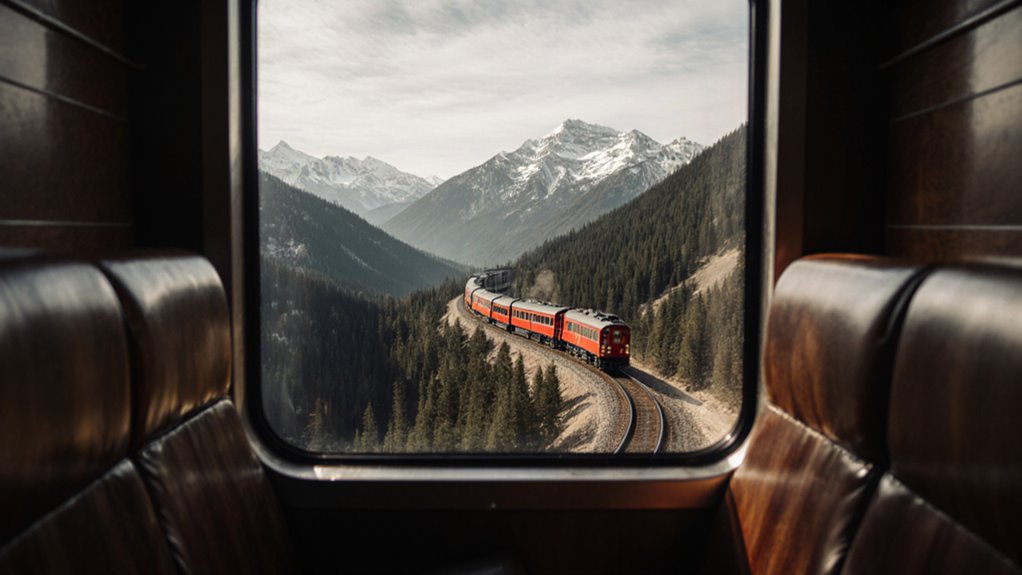
Should you want the best seats on the Pikes Peak Cog Railway, choose the left side, which is the three-seat side with A, B, and C seats, because it gives you the strongest views on both the way up and the way down. Since the train uses the same tracks both ways, you’ll feel glad you picked the side most riders hope for.
For the clearest experience, aim for a window on that side, especially near the earliest or last row. That choice helps you feel part of the group that planned ahead well.
A seat reservation matters whenever you want that exact spot, and ticket pricing reflects it. Reserved seats cost more, but you gain peace of mind, easier seat selection online, and a better chance at the views you came to share.
Right-Side Seats for Dramatic Drop-Offs
Should you want the most dramatic drop-offs, you’ll want to watch the right-side seats closely.
At the right time in the ride, you can catch steep canyon vistas that make your stomach flip in the best way.
That timing matters, so your row direction can change how big those views feel.
Steep Canyon Vistas
While the left-side three-seat section gets most of the praise for broad mountain views, the right-side D and E seats can feel more intense in the best way. You don’t just watch the scenery here. You feel tucked into it, like you’re in on a wilder part of the ride with everyone else who loves a little drama.
As the train climbs, your view pulls tight against canyon walls, then suddenly opens to sharp drop-offs that make your stomach flutter. You notice rock strata stacked like pages, giving the route a rugged, storybook look.
Because you’re closer to the two-seat side windows, the terrain can seem nearer and steeper, which makes each bend feel vivid.
Should you want scenery that feels raw, close, and thrilling without losing that shared family-trip magic, these seats deliver beautifully every time.
Best Right-Side Timing
Because the train runs on the same track both ways, right-side D and E seats shine most whenever timing matters more than pure width of view. You trade a broader panorama for sharper moments, which can feel thrilling when the drop-offs suddenly open beside you. If you care about timing outbound or timing return, this side can reward you with quick, dramatic looks that make your group gasp together.
- On the climb, you can catch those heart-racing edge views at just the right second.
- On the way down, timing return can feel even bolder because the same slopes hit differently.
- Should you want to share that wow moment with your people, these seats help you feel part of it.
Left-Side Seats for Forest and Creek Views
Although every seat on the Pikes Peak Cog Railway gives you something special to look at, the left side is the one most riders want for the richest forest and creek views. You’ll feel tucked into the mountain scene, with tall pines, shaded slopes, and quick forest glimpses that make the ride feel more intimate.
As the train climbs, this side often gives you the clearest look at rushing water and memorable creek crossings. That’s why so many returning riders ask for the left side initially.
You’re not just watching scenery pass. You’re sharing the view that makes fellow passengers smile, point, and lean toward the glass together.
Should you want a seat that feels connected, calm, and full of Colorado character, the left side helps you settle in fast and feel like you picked wisely.
Mid-Train Seats for the Most Balanced Views
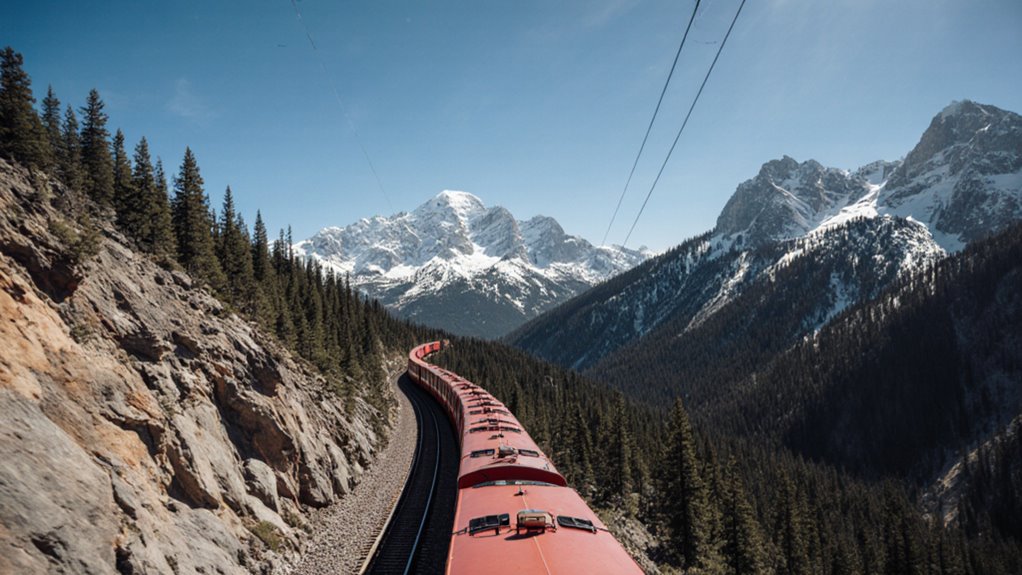
Should the left side gives you that close-to-the-mountain feeling, mid-train seats give you the most balanced look at the whole ride. You don’t feel tucked too tightly against one scene, and you won’t feel removed from the action either. Instead, you settle into a balanced viewpoint that lets forests, creeks, and wide alpine views share the spotlight. That midway comfort helps you relax, stay present, and enjoy the rhythm of the climb with everyone around you.
- You feel part of the group, not isolated at an extreme.
- You catch changing angles on both the ascent and descent.
- You get a calm, steady experience that feels easy to share.
Should you want scenery without overthinking every turn, the middle feels welcoming, social, and wonderfully well judged for most riders.
Front Seats for the Best Forward Views
As soon as you want the most dramatic look straight ahead, the front seats are the ones to chase. You feel part of the action, especially in the engineer’s row, where the front window opens up the climb like a moving postcard. Because you’re closest to the lead view, rocks, trees, and sweeping grades feel bigger and more immediate.
| Front-seat perk | Why you’ll love it |
|---|---|
| engineer’s row | Widest forward sightline |
| front window | Big, open mountain view |
| first car | Most immersive position |
| row 1 | Least blocked scenery |
| reserved booking | Best chance to claim it |
That makes the front ideal provided you want a shared wow moment with everyone leaning forward together. For the strongest experience, book in advance and aim for row 1 in the initial car provided you can.
Rear Seats for the Best Descent Views
If you want the best descent views, you should look hard at the rear seats.
On the way down, you’ll catch wide valley panoramas, clear switchback views, and some of the best photo angles on the train.
That means you can enjoy the return trip with a front-style view that feels open, exciting, and easy to love.
Wide Valley Panoramas
For the widest valley panoramas, the rear row is a smart pick because it gives you that front-row feeling on the way down. You settle in, the train begins its descent, and suddenly the world opens.
From here, you feel connected to everyone leaning toward the glass, sharing that same quiet wow. The rear row helps with valley overlook timing, so broad scenes arrive naturally instead of slipping past too fast. You also get a strong look at open horizon ridgelines, which makes the scenery feel bigger and more welcoming.
- You feel included in the best part of the view.
- You share the moment as valleys spread beneath you.
- You carry home that warm, proud feeling of having chosen well.
If you want scenery that feels expansive and communal, this spot delivers every time.
Clear Switchback Views
Rear seats take that wide-open valley feeling and sharpen it into something more lively, because they give you the clearest look at the switchbacks on the way down. As the train descends, you can follow the track alignment ahead and actually see how each bend connects to the next. That makes the ride feel shared, almost like everyone around you is in on the same secret.
Because the railway returns on the same route, rear seats become the strongest descent choice. You get better curve visibility, especially provided that you’re on the left, three-seat side. In the last row, you can watch the train lead you into each turn instead of guessing what’s coming. That added clarity helps you feel settled, included, and more tuned in to the mountain’s rhythm on every winding section below.
Best Photo Angles
From the back of the car, your camera gets one of the most exciting angles on the whole trip down Pikes Peak. Because the train returns on the same tracks, rear seats become your front-row photo spot on descent. You’ll capture open rails, steep drop-offs, and wider mountain layers without heads blocking the frame.
When you want side scenery too, choose the left three-seat side near the last row for extra depth.
- You feel like you’re sharing the best secret in the car while those descent views suddenly open up.
- You can chase golden hour angles that make every ridge glow like your group found the perfect timing.
- You’ll have fewer window reflections when you press close, angle your lens slightly, and wait for quiet moments between passengers.
Best Seats for Photos and Less Glare
How do you get the clearest photos on the Pikes Peak Cog Railway without fighting window glare the whole way? Choose a window seat on the left, or three-seat, side, especially A or C. You’ll angle your lens past reflections more easily, and your photo composition feels cleaner because you’re not shooting across other riders. Whenever possible, book the first or last row for extra space to steady your camera and stay in the moment with everyone chasing that same perfect shot.
| Seat choice | Feeling |
|---|---|
| Left window | You feel included in the best views |
| A or C | Your photos look calmer, cleaner |
| First row | You feel thrilled and ready |
| Last row | You feel relaxed, less crowded |
| Reserved seat | You belong with prepared travelers |
Best Seats for Summit Views
Should sharp photos matter to you, summit views take that same seat choice and make it even more rewarding. As soon as you reach the top, the left side, especially A, B, or C by a window, helps you feel fully part of the moment. You get a wider summit panorama and a cleaner look across the peak horizon, not just a partial glance.
- Choose the initial or last row on the left side as soon as you want that open, shared wow feeling.
- Pick a window seat so you can settle in, breathe deep, and watch the world open around you.
- Reserve beforehand should this view matter most, because the best seats help your group feel like insiders.
You won’t feel left out with other seats, but these make the summit arrival feel truly special.
Best Seats by Season
Because the views change with snow cover, sun angle, and how bright the day feels, the best seat for season usually stays on the left side in A, B, or C, but the exact row can make your trip feel even better.
In winter, you’ll love rows near the front or rear on that scenic side, since winter visibility often feels sharper and those unobstructed angles help you catch snowy slopes and distant ridges.
In spring and summer, mid-car left side seats can feel more balanced, especially when bright light shifts across the windows.
Then, as fall arrives, you’ll want that same left side for the richest autumn colors, with row choice depending on whether you prefer looking ahead or alongside.
Should you book soon, you can match the season to the view that feels most like you.
Frequently Asked Questions
How Much Do Reserved Seats Cost Compared With General Seating?
Reserved adult seats are $68 compared with $58 for general seating, while reserved children seats are $58 compared with $48 for general seating. In both cases, reserved seating costs $10 more before any booking fees, giving you a confirmed spot.
Can You Choose Your Exact Seat When Booking Online?
Yes, you can usually pick your exact seat online during seat selection. Some booking systems may limit the available choices before checkout.
Are There Child Ticket Discounts for Reserved and General Seating?
Yes. Child fare applies to both reserved and general seating. For children under 12, the fare is $58 for reserved seating and $48 for general seating.
Which Rows Face Forward on the Way Up?
Forward facing rows on the way up are odd numbered rows 1 through 7, even numbered rows 8 through 18, and the front row. These seats point uphill, giving you the clearest line toward the climb and a direct view ahead.
Is the Engineer’s Front Row Available Without Advance Booking?
No, the engineer’s front row is rarely open without booking ahead. A reserved seat gives you the strongest chance, and arriving early may still help if spaces are limited.