

You’ll want a compact kit that covers wide to telephoto so you’re ready for streets, portraits, landscapes, and distant wildlife. Start with a 24–70mm f/2.8 or 24–105mm for day-to-day shots, add a 50mm f/1.8 for low light and creamy backgrounds, then pick a lightweight 70–300mm or 55–210mm for reach and stabilized handheld long shots. Check mount fit, stabilization, weather sealing, close-focus, and AF speed so your gear stays reliable on the road — keep going to see exact models and why they pair well.
| Sony E 55-210mm F4.5-6.3 Lens for Sony E-Mount Cameras (Black) (SEL55210/B) |

| Best Budget Telephoto | Mount: Sony E-mount | Focal Type (Fixed vs Zoom): Zoom (55–210mm) | Aperture / Max Aperture: f/4.5–6.3 (variable) | VIEW LATEST PRICE | Read Our Analysis |
| Sony – FE 50mm F1.8 Standard Lens (SEL50F18F/2) Black |

| Best Everyday Prime | Mount: Sony E-mount (FE, full-frame) | Focal Type (Fixed vs Zoom): Prime (50mm) | Aperture / Max Aperture: f/1.8 (fixed) | VIEW LATEST PRICE | Read Our Analysis |
| Tamron 70-300mm F/4.5-6.3 Di III RXD Lens |

| Best Lightweight Zoom | Mount: Sony E-mount | Focal Type (Fixed vs Zoom): Zoom (70–300mm) | Aperture / Max Aperture: f/4.5–6.3 (variable) | VIEW LATEST PRICE | Read Our Analysis |
| Sony Alpha ZV-E10 APS-C Mirrorless Vlog Camera Kit |
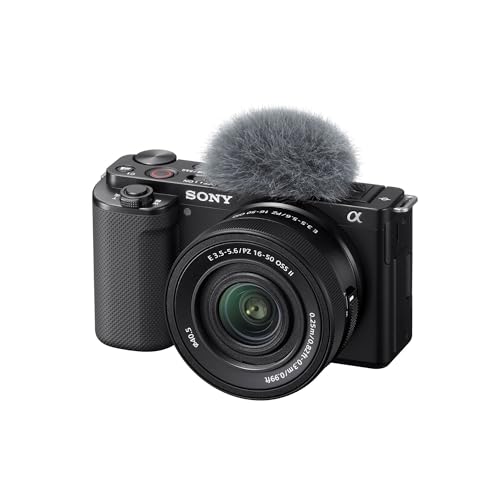
| Best Vlogger Starter | Mount: Interchangeable-lens (Sony E-mount compatible kit) | Focal Type (Fixed vs Zoom): Camera kit (interchangeable-lens system; supports both primes and zooms) | Aperture / Max Aperture: Camera body (supports lenses; no built-in lens aperture specified in kit summary) | VIEW LATEST PRICE | Read Our Analysis |
| Sony FE 24-70mm F2.8 GM Standard Zoom Lens |

| Best Professional Standard | Mount: Sony E-mount (FE) | Focal Type (Fixed vs Zoom): Zoom (24–70mm) | Aperture / Max Aperture: f/2.8 (constant) | VIEW LATEST PRICE | Read Our Analysis |
More Details on Our Top Picks
Sony E 55-210mm F4.5-6.3 Lens for Sony E-Mount Cameras (Black) (SEL55210/B)
If you travel with a compact mirrorless camera and want reach without heavy gear, this Sony E 55-210mm F4.5-6.3 is a strong choice. You’ll get 55 to 210mm that feels like 82 to 315mm on full frame, so you can capture sports, nature, and distant scenes without stepping closer. It focuses internally and won’t spin the ring during autofocus, and you can grab manual focus when you want control. Optical SteadyShot gives about four stops of stabilization, helping low light and video. It’s quiet, lightweight, uses 49mm filters, and fits Sony E mounts.
- Mount:Sony E-mount
- Focal Type (Fixed vs Zoom):Zoom (55–210mm)
- Aperture / Max Aperture:f/4.5–6.3 (variable)
- Intended Use / Strength:Telephoto for sports, nature, distant subjects
- Image Stabilization / Video Suitability:Optical SteadyShot (claimed ~4 stops); video-friendly
- Physical / Build Notes:Black finish, 49mm filter thread, internal focusing, non-rotating AF ring
- Additional Feature:35mm equivalent 82–315mm
- Additional Feature:Optical SteadyShot (4 stops)
- Additional Feature:49mm filter thread
Sony – FE 50mm F1.8 Standard Lens (SEL50F18F/2) Black
You’re going to love the Sony FE 50mm F1.8 if you want a simple, lightweight lens that delivers great portraits and everyday photos without weighing you down. You’ll enjoy the bright F1.8 aperture for low light and tight subject isolation, and the seven-blade circular aperture gives smooth bokeh that flatters faces. The aspherical element keeps edges sharp and tames spherical aberration and coma. The double-Gauss layout reduces field curvature and distortion, so your images look honest. It’s compact and easy to carry, so you’ll grab it for streets, travel, and casual portraits when you want reliable, beautiful results.
- Mount:Sony E-mount (FE, full-frame)
- Focal Type (Fixed vs Zoom):Prime (50mm)
- Aperture / Max Aperture:f/1.8 (fixed)
- Intended Use / Strength:Standard/portrait, low-light and subject isolation
- Image Stabilization / Video Suitability:No optical IS stated; compact prime suitable for low-light/video bokeh
- Physical / Build Notes:Compact, lightweight, black finish
- Additional Feature:Full-frame FE mount
- Additional Feature:Aspherical element included
- Additional Feature:Double-Gauss optical design
Tamron 70-300mm F/4.5-6.3 Di III RXD Lens
Choose the Tamron 70-300mm F/4.5-6.3 Di III RXD when you want a travel telephoto that stays light in your bag and still delivers sharp images. You’ll appreciate its 70–300mm reach for distant subjects and the close-focus ability for creative tight shots. It’s made for Sony E mount full-frame and APS-C bodies, so it fits your kit easily. The 15 elements in 10 groups give clear results, and the lightweight, moisture-resistant build means you’ll shoot more without strain. You’ll also like the quiet RXD motor, the black finish, and the reassuring Tamron 6 year limited USA warranty.
- Mount:Sony E-mount
- Focal Type (Fixed vs Zoom):Zoom (70–300mm)
- Aperture / Max Aperture:f/4.5–6.3 (variable)
- Intended Use / Strength:Telephoto travel/portable telephoto shooting
- Image Stabilization / Video Suitability:No in-body lens stabilization listed; lightweight for handheld telephoto (moisture-resistant)
- Physical / Build Notes:Lightweight portability, black finish, moisture-resistant construction
- Additional Feature:15 elements in 10 groups
- Additional Feature:Wide close-focus (31.5 cm)
- Additional Feature:Moisture-resistant construction
Sony Alpha ZV-E10 APS-C Mirrorless Vlog Camera Kit
For travelers who want a small, flexible kit that handles great video and stills, the Sony Alpha ZV-E10 is a strong pick because it pairs a 24.2MP APS-C sensor with an interchangeable-lens mirrorless design that keeps weight and size low while letting you swap lenses for any scene. You’ll love the clean 4K from 6K oversampling and full-pixel readout that keeps details sharp. You can flip background defocus on with one button and use Product Showcase to shift focus smoothly from your face to objects. Stream easily over USB without extra gear. The compact vlog kit feels friendly, quick, and travel-ready for varied shooting.
- Mount:Interchangeable-lens (Sony E-mount compatible kit)
- Focal Type (Fixed vs Zoom):Camera kit (interchangeable-lens system; supports both primes and zooms)
- Aperture / Max Aperture:Camera body (supports lenses; no built-in lens aperture specified in kit summary)
- Intended Use / Strength:Vlogging, video, streaming, product showcase
- Image Stabilization / Video Suitability:Camera offers video features (4K oversampled, live streaming); stabilization depends on lens/body combo
- Physical / Build Notes:Compact mirrorless body, black finish, vlog-oriented kit
- Additional Feature:24.2MP APS-C Exmor sensor
- Additional Feature:4K oversampled from 6K
- Additional Feature:Product Showcase focus mode
Sony FE 24-70mm F2.8 GM Standard Zoom Lens
If you travel with a Sony full-frame camera and want one lens that can handle landscapes, portraits, and street scenes without sacrificing image quality, the Sony FE 24-70mm F2.8 GM is a top pick you’ll appreciate. You’ll find the constant f2.8 aperture gives low light control and creamy backgrounds. The XA and aspherical elements, plus ED glass and Nano AR coating, boost sharpness and cut flare. Autofocus is quick with DDSSM and you can switch to manual easily. It lacks built-in stabilization, so pair it with a stabilized body. The build, hood, and case feel pro and reliable.
- Mount:Sony E-mount (FE)
- Focal Type (Fixed vs Zoom):Zoom (24–70mm)
- Aperture / Max Aperture:f/2.8 (constant)
- Intended Use / Strength:Professional standard zoom for high resolution and versatility
- Image Stabilization / Video Suitability:No optical stabilization in lens (relies on camera IBIS if available); optimized for video/photo AF
- Physical / Build Notes:Robust build with lens hood, case included, black finish, 9-blade aperture
- Additional Feature:XA extreme aspherical element
- Additional Feature:Nano AR coating
- Additional Feature:Includes hood and case
Factors to Consider When Choosing Travel Lens For Sony
When you’re picking a travel lens for your Sony camera, think about focal length versatility so you can cover wide landscapes and tight portraits without swapping glass. Also weigh aperture and low-light performance against size and weight, because a fast lens helps in dim scenes but can add bulk you’ll carry all day. Don’t forget image stabilization and autofocus speed since steady, sharp shots matter when you’re moving quickly and chasing moments.
Focal Length Versatility
You’ll often want a single travel lens that handles wide streets, sweeping landscapes, and quick portraits without making you switch glass every few minutes. Pick a focal range that spans roughly 24–35mm on the wide end to about 70–200mm on the long end so you cover scenes, details, and faces. Versatile zooms like 24–70mm or 24–105mm simplify packing by replacing multiple primes and still give common travel views. If you use an APS-C body, remember the 1.5x crop so a 50mm acts like 75mm for portraits and distant shots. Think about extra reach to 200–300mm only if you expect wildlife or distant detail, since it adds weight. Balance reach with size so you’ll enjoy shooting all day.
Aperture And Low-Light
You’ve picked a versatile focal range, so now think about how bright that glass needs to be for the light you’ll face. If you plan dusk walks or dim cafes, choose a wider aperture like f/1.8 to f/2.8. That keeps shutter speeds fast, cuts motion blur, and lowers the need for high ISO. Wider apertures also give creamy bokeh, so your subject stands out in crowded scenes. Remember autofocus works better with more light coming through the lens, so faster apertures mean snappier focus in low light. If you pick f/4 to f/6.3, expect to raise ISO or slow shutter speed unless you use good stabilization. Good stabilization and a steady hand can make smaller apertures usable on the go.
Size And Weight
Because every gram adds up on a long trip, size and weight matter more than you might think for a travel lens on a Sony body. You’ll notice less fatigue when you pick smaller, lighter lenses, especially those under 500 to 700 grams. Think about dimensions too. A collapsible or pancake design slips into a daypack and saves space in your carry on. Balance matters as well. A compact lens on a light Sony body feels steadier in your hands and makes handheld shooting less tiring. Choose wide to tele zooms to cover many scenes so you carry fewer lenses. Remember accessories. Filters, caps, a padded case and straps add grams, so include them when you total your travel load.
Image Stabilization Importance
You already thought about size and weight, but shake can undo all that careful packing if your shots come out soft. You want a lens with optical image stabilization because it gives several stops of shake reduction, so handheld shots stay sharp at slower speeds. That matters more on telephoto zooms where small movements blur your subject. For video, choose stabilization that is smooth and quiet, and pairs with steady internal focus to avoid jitter and focus wobble. In low light, good stabilization lets you use lower ISO or slower shutter speeds for cleaner images. If your Sony body has IBIS, lens stabilization still helps by reducing long telephoto roll and works with IBIS for better overall steadiness on the move.
Autofocus Performance Needs
When you’re choosing a travel lens for your Sony, autofocus matters as much as focal length and weight because it decides whether you catch the moment or miss it. You should prioritize fast AF systems so moving subjects in street scenes, wildlife, or sports stay sharp. Also look for quiet, smooth internal focusing and responsive AF for vlogging and handheld clips to avoid noisy recordings and focus hunting. Check for full-time manual override or direct manual focus so you can tweak focus quickly when AF slips. Consider how stabilization and AF work together since effective stabilization can help AF lock in low light by allowing slower shutter speeds. These factors tie together to keep your shots reliable and your mind at ease.
Close‑Focus Capability
If you want to get intimate with subjects while traveling, close-focus capability can be just as important as zoom range and weight. You should check minimum focus distance, like 0.3 to 1.0 m, so you know how near you can get for tight shots and small details. Also compare maximum magnification ratios, for example 0.2 to 1.0x, to judge how large subjects appear on the sensor for near life size or macro style images. Look at how close focus behaves across the zoom range because some lenses focus much closer at wide angles than at telephoto, and that affects versatility. Prefer lenses with internal focusing and non rotating front elements so filters and handling stay consistent when you work close. Closer focus also boosts background blur and subject isolation.
Weather Sealing Durability
Because travel throws a lot at your gear, weather sealing and build quality should be near the top of your lens checklist. You want explicit weather or moisture resistant construction. Look for gasketed mounts and sealed switches so light rain, dust, or snow won’t ruin a shoot. Check exterior materials next. Metal or high grade polycarbonate and reinforced mounts mean the lens handles bumps and long trips better. Also consider coatings and internal sealing on elements to prevent fungus and corrosion in humid or coastal places. Pay attention to mechanical durability. Smooth, well damped zoom and focus rings and solid helicoids resist wear and play. Finally, favor compact designs with internal zoom or focus. They’re easier to protect in a bag and less likely to be damaged.
Lens Mount Compatibility
Even though mounts can feel technical, matching a lens to your Sony camera is one of the simplest decisions that saves you headaches on the road. First, confirm your mount type, like full-frame E-mount or APS-C E-mount, so the lens fits and covers your sensor. Next, check whether the lens is for full-frame or APS-C, because an APS-C lens on a full-frame body may vignette or force crop mode. Also verify electronic communication so autofocus, aperture control, image stabilization, and EXIF work as expected. Make sure the lens supports your camera focus and stabilization systems to avoid slow AF or lost stabilization synergy. If you plan to adapt lenses, look up mount-specific adapters and which features you keep or lose.
Frequently Asked Questions
Can I Use Smartphone Lenses Instead of Sony Lenses for Travel?
You can use smartphone lenses instead of Sony lenses for travel, but they’ll limit image quality, depth control, low‑light performance, and versatility; they’re lightweight and cheap, so they’re fine for casual shots and packing light.
Are Third-Party Lens Warranties Honored Internationally?
Sometimes they are, but it depends on the manufacturer and region; you’ll need to register the lens, keep receipts, and check the warranty terms—some brands honor international coverage, while others limit service to the purchase country.
How Do I Clean Lens Elements on the Go Safely?
You should blow off dust with a blower, brush gently with a soft brush, use a microfiber cloth for fingerprints, and apply minimal lens-cleaning solution sparingly. Don’t touch coatings; keep caps, store in a padded case, and stay careful.
Which Travel Lenses Are Best for Astrophotography With Sony?
Imagine stars pouring through glass: you’ll want a fast wide prime like the Sony 20mm f/1.8 or 24mm f/1.4, or Samyang/Rokinon 24mm f/1.4, handheld or on a tracker for sharp, low-noise frames.
Do Sony Travel Lenses Work Well With Filters and Adapters?
Yes — most Sony travel lenses work well with filters and adapters; you’ll need slim or threadless filters for wide angles, step-up rings for odd sizes, and check flange/back focus with adapters to maintain autofocus and avoid vignetting.