You know Arizona for its stunning Grand Canyon and the red rocks of Sedona. But the true magic of Arizona often hides beyond those popular destinations. Imagine discovering authentic, less-crowded experiences and unique beauty. We invite you on a journey into Arizona’s secret desert spots, charming underrated towns, and one-of-a-kind attractions. These are the hidden places to visit in Arizona. You will find many hidden gems in Arizona. We will guide you to these best-kept secrets, unlocking true gems for your off-the-beaten-path adventures. Prepare for off-the-beaten-path exploration and unforgettable adventures!
Key Takeaways
Arizona has many secret places beyond popular spots like the Grand Canyon. These include hidden desert areas, small towns, and unique attractions.
You can explore natural wonders like Aravaipa Canyon and White Pocket. These places have amazing landscapes and wildlife.
Visit charming towns like Bisbee and Jerome. They offer rich history and vibrant local cultures.
Discover unique attractions such as Biosphere 2 and the Titan Missile Museum. These spots provide one-of-a-kind experiences.
Plan your trip carefully for remote areas. Always carry water, food, and navigation tools. Follow Leave No Trace rules to protect nature.
Secret Desert Spots: Natural Wonders of Arizona
You know Arizona for its iconic sights, but this state holds many more secrets. Beyond the well-trodden paths, you’ll discover some of the most breathtaking natural wonders of Arizona. These places offer unique geological features, lush oases, and deep historical significance. They truly are some of the best hidden gems in Arizona.
Arizona’s diverse desert wilderness areas boast incredible geology. You find everything from volcanic pinnacles to ancient petroglyphs.
Wilderness Area | Geological Characteristics |
|---|---|
Chiricahua National Monument | Unusual pinnacles and balancing rocks; volcanic past. |
Kofa National Wildlife Refuge | Undisturbed saguaro forests; remnants of mining activity. |
Sonoran Desert National Monument | Rich desert plant communities, including rare cacti and wildflowers. |
Aravaipa Canyon Wilderness | Vertical canyon walls; permanent stream creating a riparian oasis. |
Painted Rock Petroglyph Site | Basalt boulders covered with petroglyphs. |
Cabeza Prieta National Wildlife Refuge | Volcanic peaks, sand dunes, and creosote flats. |
Organ Pipe Cactus National Monument | Dense stands of organ pipe cactus; unique flora. |
Vermilion Cliffs National Monument | Swirling sandstone formations; visible layers showing millions of years of geological history. |
Castle Dome Mountains and Mine Museum | Rugged desert peaks; historical mining landscape. |
This table shows you just how varied Arizona’s landscapes are. Now, let’s dive into some specific spots.
Aravaipa Canyon Wilderness
Imagine a lush, green ribbon cutting through the desert. That’s Aravaipa Canyon Wilderness. This place is a true oasis, a stark contrast to the surrounding arid lands. You’ll find towering vertical canyon walls here, and a permanent stream, Aravaipa Creek, flows year-round for 20 miles. This creek creates a vibrant riparian habitat.
What makes Aravaipa so special?
Perennial Water Source: Aravaipa Creek flows consistently, supporting life in the canyon.
Diverse Aquatic Life: Seven native desert fish species, including the threatened spikedace and loach minnow, call this creek home.
Abundant Wildlife: Over 200 bird species, like Bell’s vireo and peregrine falcon, thrive here. You might also spot mountain lions, black bears, or desert bighorn sheep.
Varied Plant Communities: You’ll see sycamore, cottonwood, and willow in low areas. Mesquite trees grow above the floodplain. Higher up, you find Sonoran desertscrub and evergreen woodland. Spring brings beautiful wildflowers like lupine and columbine.
Visiting Tips: This wilderness area is remote. You need a permit to enter, and the Bureau of Land Management (BLM) strictly limits visitor numbers. Plan your trip well in advance. You should be prepared for stream crossings and rugged terrain. It’s best to visit in spring or fall to avoid extreme temperatures.
White Pocket
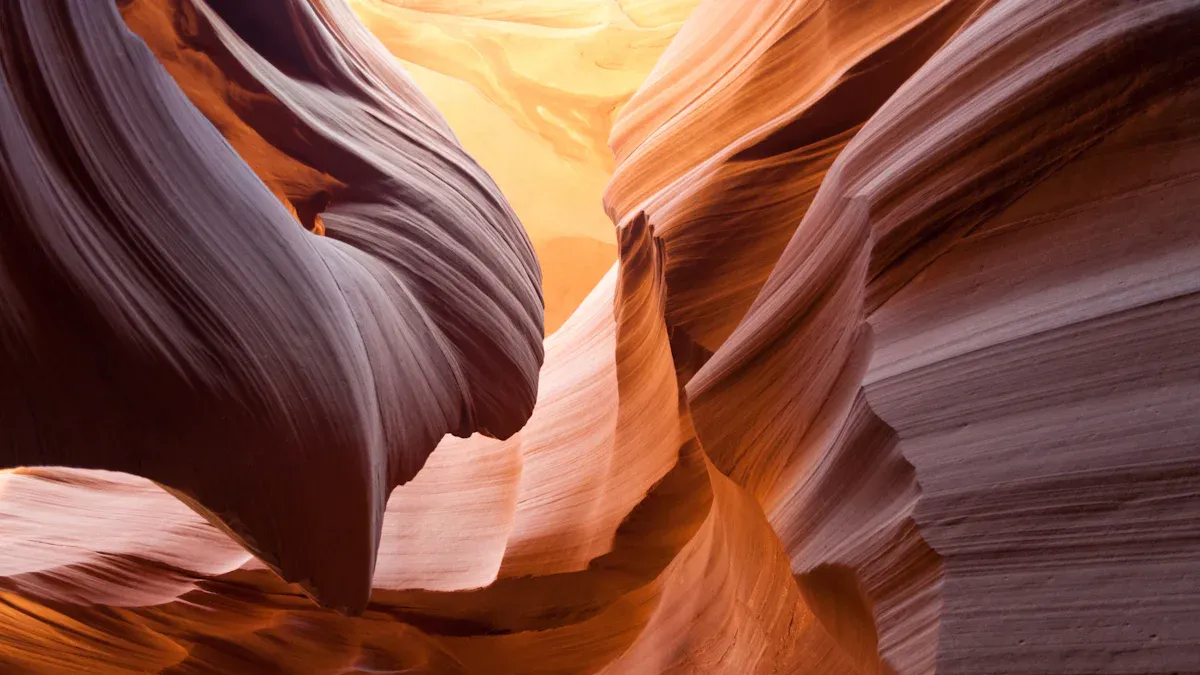
Prepare for a landscape that looks like it’s from another planet when you visit White Pocket. This remote area in northern Arizona offers some of the most surreal geological formations you’ll ever see. You’ll find swirling patterns of white and red sandstone, looking like waves frozen in time.
The geology here is truly unique:
Swirling patterns of white and red sandstone, resembling waves frozen in time.
Hoodoos: tall, thin spires of rock formed by differential erosion.
Natural arches: formed by selective erosion of sandstone.
Petrified wood: fossilized wood found scattered throughout the area.
Domes.
Gullies.
Potholes.
These multicolored formations of Navajo sandstone create an incredible visual feast.
Visiting Tips: White Pocket is very remote. You absolutely need a high-clearance 4×4 vehicle and excellent navigation skills to reach it. The roads are unpaved and sandy. Consider hiring a local guide if you’re not experienced with off-road driving. There are no facilities, so bring all your water, food, and supplies. The best time to visit is spring or fall.
Canyon de Chelly National Monument
Step back in time at Canyon de Chelly National Monument. This place is not just a natural wonder; it’s also rich in human history. It has been continuously inhabited for over 5,000 years. You’ll find ancient Puebloan cliff dwellings nestled into the towering sandstone walls. These historical hidden gems tell stories of past civilizations.
Two prominent cliff dwellings you can see are:
White House: This dwelling sits within a 500-foot sandstone cliff. People lived here between 1060 A.D. and 1275 A.D. It gets its name from the white plaster on the back wall of its upper section. You can view it from the White House Overlook or hike a 2.5-mile round-trip trail to get closer.
Mummy Cave: This is the largest ancient Puebloan village in Canyon de Chelly. It’s 300 feet above the canyon floor and has nearly 70 rooms. You’ll see living and ceremonial rooms with walls decorated in white and pale green plaster. People lived here until around 1300. You can view it from the Mummy Cave Overlook.
Visiting Tips: You can drive the rim roads and stop at overlooks on your own. However, to enter the canyon floor, you must have a Navajo Park Ranger or an authorized guide. This protects the cultural sites and ensures your safety. Consider a guided tour to learn more about the rich history and culture of the Navajo people.
Tonto Natural Bridge State Park
Discover the world’s largest travertine arch at Tonto Natural Bridge State Park. This impressive natural wonder of Arizona stands 183 feet high above Pine Creek. Its opening averages about 140 feet in width, and it stretches 400 feet from one side to the other. An estimated 300 million cubic yards of travertine deposits form this massive structure.
How did it form? Lime-rich springs flowed into the valley from the east. These springs deposited travertine as the water evaporated. Over countless years, these springs continuously washed over and deposited material. This process increased the travertine’s width until it spanned the deep gorge, creating this magnificent natural bridge.
Visiting Tips: The park offers several hiking trails that lead to viewpoints and down to the bridge itself. You can walk under the bridge and explore the area. Wear sturdy shoes, as some trails can be steep and slippery. The park has picnic areas and a historic lodge. It’s a great spot for a day trip, offering beautiful landscapes and a unique geological formation.
Labyrinth Slot Canyon
For those seeking thrilling adventures, Labyrinth Slot Canyon offers an unforgettable experience. This secluded canyon is a true gem, hidden away on Lake Powell. It’s a place where you combine boating with hiking and swimming through narrow, winding passages.
Navigating Labyrinth Slot Canyon presents specific challenges:
Access: You need a boat, kayak, or jet ski to reach it. It’s about 11 miles from Antelope Point Marina, the closest entry point.
Moderate Challenge: The hike and swim inside the canyon are moderately challenging. You might encounter boulders and mud, depending on water levels and weather.
Fluctuating Water Levels: Water levels change significantly. Low levels might prevent swimming, while high levels could submerge parts of the canyon.
Narrow Passages: The canyon can become very narrow. You might need to leave your kayak or paddleboard and proceed by swimming or walking.
No Defined End: There isn’t a clear endpoint. You go as far as you can or wish, often encountering impassable boulders.
Essential Gear:
Comfortable footwear (water shoes are a good idea).
Weather-appropriate clothing.
Sun protection.
A hydration system and snacks.
Navigation tools.
A first aid kit and a multi-tool.
For kayaking: a properly fitting life jacket, dry bags, and a paddle leash are crucial for safety.
This adventure offers a unique way to explore the stunning landscapes of Arizona.
Underrated Towns: Arizona’s Hidden Communities
Arizona offers more than just its famous natural wonders. You can discover charming, overlooked communities, truly some of the best underrated towns in Arizona. These small towns hold unique stories, vibrant local cultures, and unforgettable experiences. They are perfect for anyone looking for authentic gems beyond the usual tourist spots. Let’s explore these historical hidden gems and see what makes them so special.
Bisbee
Bisbee, a former mining boomtown, sits nestled in the Mule Mountains of southern Arizona. You will find a rich history here, combined with a thriving arts scene. The town’s prosperity came from its copper mines.
Let’s look at Bisbee’s significant mining operations:
Mining Operation | Key Developments & Impact |
|---|---|
Copper Queen Mine (1877-1880) | Discovered in 1877, it began production in September 1880 with rich oxide ores (23% copper). Its success led to further development in the area. |
Atlanta Mine (1881-1884) | Phelps, Dodge & Company bought it in 1881. It discovered rich ore in 1884, leading to a merger with Copper Queen. |
Copper Queen Consolidated Mining Company (1885) | This company formed from the merger of Copper Queen and Atlanta mines. Phelps, Dodge & Company later fully acquired it. This consolidation was crucial for large-scale operations. It led to new smelters and the Arizona and South Eastern Railroad. |
Sacramento Pit (1911-1931) | This pit developed using large-scale open-pit methods for disseminated sulfide ore. Commercial production started in 1923, yielding significant amounts of copper ore. |
Calumet and Arizona Mining Company (1899-1931) | It acquired Irish Mag property in 1899. It developed Junction, Oliver, and Cole mines. It discovered a large high-grade deposit at the Campbell property. It merged with Phelps Dodge in 1931. |
Lavender Pit (1940s-1974) | This pit developed as a low-grade ore body. Initial stripping happened in 1951. Commercial production began in 1954. It was a major open-pit operation until its closure in 1974 due to depletion and economic factors. |
Shattuck Mine (1974-1975) | Phelps Dodge purchased it. However, exploration failed to find additional reserves, leading to its closure. |
Underground Mines (1880-1975) | These mines produced about 53 million tons of copper ore. It averaged 6% copper, with some oxidized ores reaching 12-23% copper. |
Leaching Operations (1975-2002) | After commercial mining, dump and in-situ leaching methods recovered copper from waste dumps and the Lavender Pit. This extended copper production in the area. |
Today, Bisbee thrives as an artistic community. You can explore its charming streets, visit art galleries, and browse unique boutiques. Take a tour of the Copper Queen Mine to learn about its past. You can also stay in historic hotels. Bisbee offers a blend of history and modern creativity.
Jerome
Jerome, perched precariously on a 30-degree slope of Mingus Mountain, was once a booming copper mining town. It earned the nickname “America’s Most Vertical City.” Mining started in the 1850s. The town grew rapidly, boasting many hotels, bars, and entertainment venues. William A. Clark, one of the “Copper Kings,” bought Jerome’s United Verde mine. It became the richest privately-owned copper mine in the world.
Jerome faced challenges. Fires in 1894 and 1899 destroyed much of the town. The Great Depression slowed production in 1930. A powerful blast even caused the famous “sliding jail” due to the town’s unstable slope. World War II briefly revived the mines. However, by 1953, after 70 years and $800 million in copper, the mines closed. This led to a mass exodus of residents. Jerome became a near ghost town.
The remaining residents recognized the town’s potential. They formed the Jerome Historical Society in 1953. Its motto was “Our past is our future.” The society opened the Mine Museum. It branded Jerome as a “Ghost City” to attract visitors. In the late 1960s, artists and “hippies” moved to Jerome. They were drawn by its frontier-like freedom and low rent. They renovated homes and opened galleries and shops. This created a renaissance of the arts.
Today, Jerome is a designated National Historic Landmark. It is a living piece of Arizona history. You can explore its historic structures and mining equipment. You will find a bustling tourist industry and a vibrant arts community.
Oatman
Step back in time on Historic Route 66 when you visit Oatman. This small town is a true Route 66 treasure. It sits nestled in the Black Mountains of Western Arizona. The old road loops north from the I-40 freeway, between Kingman and the California border. Westbound drivers follow the well-signed Historic Route 66 west from Kingman, exit 44 off I-40, to reach Oatman. The Route 66 stretch from Kingman to Oatman starts flat and straight. It later features many switchbacks.
Oatman’s main attractions are its wild burros. They roam freely through the streets. These burros are descendants of those brought by miners in the early 1900s. You can feed them “burro chow” available at local shops. The town also features old-west gunfights staged in the street. You can explore unique shops and enjoy a meal at a historic diner. Oatman offers a fun, quirky glimpse into the past.
Globe and Miami
Globe and Miami are two historic small towns in central Arizona. They share a rich mining heritage. The development of Miami is closely linked to Globe. Both towns emerged from the same rich copper deposits. The Old Dominion Mine was a prominent feature in Globe. The town’s prosperity directly tied to its copper production. By the late 1870s, many small mines in Globe extracted copper ore. The Old Dominion Copper Company was established in 1880. This led to a decade of significant prosperity. Copper ore, ranging from 10-12% purity, was processed in furnaces in both Globe and Miami.
For over a century, the Globe/Miami region was a significant mining hub. Silver initially spurred population growth. However, copper proved more abundant. It drove community development through infrastructure and commerce. After the Old Dominion Mine ceased operations in the late 1920s due to flooding, the local economy shifted. It began to support businesses for mines and establish the area as a major housing center.
Today, you can explore their historic downtowns. You will find unique architecture and local shops. The area also offers outdoor recreation opportunities. You can visit the Besh-Ba-Gowah Archaeological Park. It features ancient Salado pueblo ruins. These small towns are working to leverage their historical character for tourism.
Peach Springs
Peach Springs holds significant importance as the tribal capital of the Hualapai Nation. It is the headquarters and most vital community within the Hualapai Reservation. Historically, Peach Springs was the territory of the Yi Kwat Pa’a (Lower Peach Springs band). It continues to be the administrative headquarters of the Hualapai Reserve.
The economy of the Hualapai is significantly based on tourism. Peach Springs is a key location for this industry. It provides access to the Grand Canyon West Rim, the Hualapai Lodge, and the Grand Canyon Skywalk. This makes it a central hub for visitors.
As the Hualapai Nation’s capital, Peach Springs is home to the Hualapai Cultural Center. This center dedicates itself to the preservation and education of Hualapai culture. It features various facilities like a library and lab space. This highlights its importance as a cultural hub within the nation. You can learn about Hualapai traditions and history here. Peach Springs offers a unique cultural immersion. It is a true gem among the hidden gems in Arizona.
Unique Attractions: One-of-a-Kind Experiences
Arizona offers more than just stunning landscapes and charming towns. You can find truly unique attractions that provide one-of-a-kind experiences. These spots do not fit neatly into other categories. They offer a glimpse into science, history, and visionary ideas.
Biosphere 2
Imagine stepping into a giant glass enclosure that holds entire ecosystems. That is Biosphere 2. This amazing facility, run by the University of Arizona, dedicates itself to understanding our planet. It looks for solutions to the global climate crisis. This meso-scale Earth science facility covers 3.14 acres. It houses five synthetic ecosystems inside a glass and metal frame. You can see the world’s largest controlled systems of tropical rainforest, desert, savanna, mangrove, and ocean here.
Scientists at Biosphere 2 conduct important research. For example, they are revitalizing the ocean system. This helps them study coral reef restoration. The rainforest system helps them understand how plants respond to climate change. This research informs how we can adapt. The Landscape Evolution Observatory (LEO) is the world’s largest indoor Earth science experiment. It helps scientists understand how rainwater moves in dry, mountainous areas. This includes how it flows downstream for people to use and how its quality changes. LEO uses 1,800 sensors to watch millions of pounds of volcanic rock. They track how nonliving soil turns into rich soil that can support life.
Biosphere 2 also has other cool projects. You can see a prototype Lunar Greenhouse. This project aims to grow vegetables on the Moon or Mars. It develops a system that recycles water through plants. A Vertical Farming Project works on growing plants indoors using special LED lights. This project wants to use less water, create no farm runoff, and avoid pests. They even have a Space Analog for the Moon and Mars. This habitat studies technology for human space missions. You can take a guided tour to explore these fascinating ecosystems and learn about the cutting-edge research happening here.
Titan Missile Museum
Step back in time to the Cold War at the Titan Missile Museum. This is a truly unique place in Arizona. It shows you the dramatic remains of the Cold War between the U.S. and the former Soviet Union. This museum is the only remaining Titan II Intercontinental Ballistic Missile (ICBM) complex. There were 54 of these complexes on alert between 1963 and 1987.
You can relive a time when the threat of nuclear war was very real. The museum was preserved as a monument to the Cold War. You get to go underground and see the missile in its silo. You can even experience a simulated launch sequence! It is a powerful reminder of a tense period in history. This museum offers a chilling, yet educational, look at a critical part of our past.
Mystery Castle
In Phoenix, you will find Mystery Castle. This is one of those historical hidden gems that truly stands out. A man named Boyce Luther Gulley built it for his daughter. He had no formal training in design or construction. His design is a basic organic architectural style. It harmonizes with its natural surroundings in both shape and materials. He built it incrementally, without a plan, letting it organically blend into the mountain.
This castle is a great example of vernacular architecture. Its construction used natural materials from the area and many found objects. You will see fieldstone, brick, telephone poles, and even automobile parts. He used old railroad tracks, spent shell casings, and saguaro cactus skeletons. Tons of rock hold it all together with mortar that even contained goat’s milk! People even brought him unwanted materials. You can spot old telegraph poles as beams and reused bricks as pillars. Look for old windows from torn-down buildings and slate chalkboards in the floor. Inside, you will find prehistoric Native American metates, Venetian glass fruit bowls, and semi-precious stones. You can take a guided tour to hear the fascinating story behind this unique home and explore its many quirky rooms.
Arcosanti
Arcosanti is an experimental town in Arizona. It is a vision of the future. Architect Paolo Soleri started this project. He wanted to combine architecture and ecology. This idea is called arcology. The core principle is to integrate urban social interaction with sound environmental practices. This means using minimal resources and having access to nature. Soleri envisioned vertically integrated, self-sustaining communities.
Arcosanti uses unique construction methods. They use tilt-up concrete panels made from local silt. These often include artwork and blend with the landscape. Buildings face south to get the most natural light and heat in winter. Roof designs minimize sun exposure in summer. Apse-shaped structures serve practical purposes while looking beautiful. Arcosanti focuses on a pedestrian environment, not cars. It aims for dense, efficient urban spaces. They integrate urban agriculture to connect people with food production. They also promote efficient water and energy use. You can take a tour to see the unique buildings, workshops, and famous bronze bells made on-site. It is a living laboratory for sustainable urban living.
Grand Canyon Caverns
Deep beneath the surface of Arizona, you will find the Grand Canyon Caverns. These are the largest dry caverns in the United States. They are truly one of the most fascinating attractions you can visit. You descend 21 stories into the earth by elevator. Once inside, you will see amazing geological features.
The caverns feature colorful rock formations. You can also spot “cave popcorn,” which are small, knobby mineral deposits. You will explore extensive limestone cavernous veins. The air down here is very dry and stays at a constant 56 degrees Fahrenheit. It is so dry that things like food and even a mummified bobcat have been preserved for centuries. You can take a walking tour to explore the main chambers. For a truly unique experience, you can even stay overnight in the underground hotel room! It is a dark, quiet, and unforgettable adventure.
Planning Your Off-the-Beaten-Path Adventures
Embarking on off-the-beaten-path adventures in Arizona promises unforgettable experiences. To make your journey smooth and safe, you need to plan carefully. These hidden places to visit in arizona offer unique landscapes, but they also require preparation.
Best Time to Visit
Choosing the right time to visit Arizona’s hidden gems makes a big difference.
Winter is often the best season for desert hikes. Temperatures are cool, usually in the 50s to 70s °F (10-25 °C). This is ideal if you prefer cooler weather.
Autumn brings moderate temperatures, often in the 80s with some low 90s, and pleasant evenings.
Monsoon Season (July-September) can be warm, but cooling thunderstorms often drop temperatures below 100°F.
Spring can be windy, which some find annoying.
Navigating Remote Areas
Exploring remote areas in Arizona requires caution. Help can be far away. Self-rescue is often your primary option. Cellular coverage is unreliable.
Always carry extra water and food.
Bring a whistle, headlamp, and a first aid kit.
A satellite communication device is highly recommended.
Leave a detailed itinerary with someone reliable.
Contaminated water is a risk. Carry two ways to treat water, like a filter and chemicals.
Dehydration is a serious threat. You might need a gallon of water daily.
Watch for heat exhaustion and heat stroke. Symptoms include chills, clammy skin, or even unconsciousness.
Hypothermia is possible, even in the desert. Carry an emergency blanket.
Flash floods kill several people each year. Stay aware of weather and terrain. Avoid dry washes during rainy seasons.
Lightning is a danger during monsoon season. Seek low, treeless spots.
Most animals are shy. Keep your camp clean. If you see mountain lions or bears, make noise and back away. If bitten by a rattlesnake, stay calm and get medical help.
For navigation, consider these tools:
Garmin Tread XL Overland: It has preloaded topographic maps and satellite communication.
onX Offroad GPS App: This app offers detailed trails and offline maps.
Magellan TRX7 CS PRO: It includes 2D topography and 3D base maps.
Garmin Montana 700i: This rugged unit has routable maps and satellite communication.
Essential Packing List
Pack smart for your Arizona adventures.
Sun protection is crucial. Bring sunglasses, high-SPF sunscreen, and UV-resistant long-sleeves. A wide-brimmed hat is also a good idea.
Three-season layers are a must. Temperatures can swing from 80s during the day to 30s at night.
Shelter is important. A tarp or bivy can protect you from weather and bugs.
Personal care items include sunscreen, SPF chapstick, and body glide to prevent chafing.
Electronics like a headlamp, smartphone with navigation apps, and a power bank are essential. A Garmin InReach Mini helps with communication where phone service is spotty.
Breathable hiking clothing that wicks moisture and offers UV protection is best.
Hydration packs are vital. You need to stay hydrated.
Footwear for rugged terrain is key. Choose hiking shoes or boots with good grip and ankle support.
Responsible Exploration
When you explore Arizona’s natural beauty, remember to protect it. Follow Leave No Trace principles:
Plan Ahead & Prepare: Know the area and weather.
Stick to Trails: Stay on paths to protect plants and animals.
Trash Your Trash: Pack out everything you pack in.
Leave What You Find: Take only pictures, not souvenirs.
Be Careful With Fire: Use designated fire pits. Keep fires small.
Respect Wildlife: Observe animals from a distance.
Share the Outdoors: Be considerate of other visitors.
Engaging with Locals
Talking to locals can enrich your trip. They often know the best spots and local stories. You can learn about the culture and history of the area. This helps you connect with the community.
You have now seen the profound rewards of venturing beyond Arizona’s popular tourist destinations. Discovering these hidden gems in arizona offers so much more. You found secret desert spots, charming towns, and unique attractions. These diverse gems provide unforgettable adventures. Embrace your spirit of curiosity. You will create lasting memories. Plan your own Arizona journey today. Experience the authentic magic of Arizona responsibly.
FAQ
What makes Aravaipa Canyon Wilderness unique?
Aravaipa Canyon is a lush oasis in the desert. A permanent stream flows through it. You will see towering canyon walls and diverse wildlife. It is a vibrant riparian habitat. You need a permit to visit this special place.
What can you experience in Bisbee?
Bisbee is a historic mining town with a lively arts scene. You can explore charming streets and art galleries. Visit unique boutiques. Take a tour of the Copper Queen Mine. You can also stay in historic hotels.
What is the main purpose of Biosphere 2?
Biosphere 2 helps scientists understand our planet. It looks for solutions to climate change. You can see five different ecosystems inside a giant glass enclosure. Scientists study coral reefs and how plants respond to climate change here.
What is the best time to visit Arizona’s hidden gems?
Winter is often best for desert hikes. Temperatures are cool. Autumn also brings moderate temperatures. Spring can be windy. Avoid summer’s extreme heat for outdoor activities.