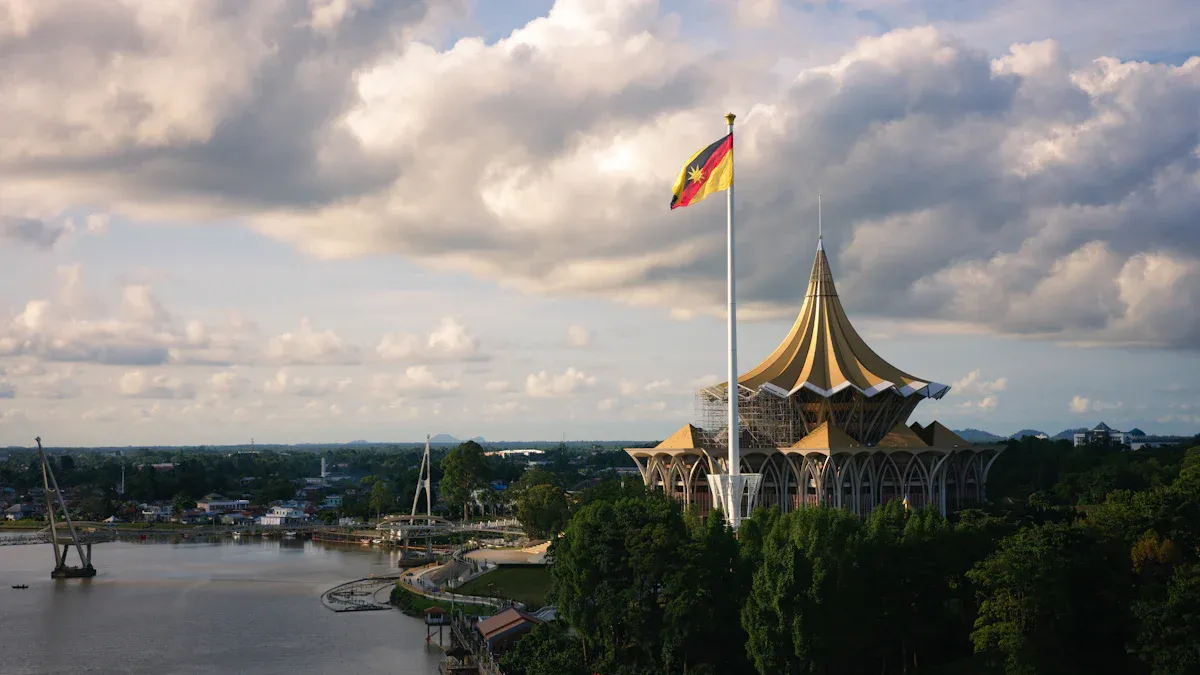
Borneo offers a truly unique travel experience. This island gem captivates you with its incredible nature, diverse wildlife, and rich cultural experiences. You will encounter rare creatures like orangutans and proboscis monkeys. You can also explore ancient rainforests and stunning beaches.
Many visitors find Borneo is worth visiting for its adventure activities, from climbing Mount Kinabalu to exploring vast cave systems. Preparing for your trip ensures a smooth and enjoyable travel adventure.
This guide provides essential information for what to know before visiting Borneo. It helps you navigate Borneo’s diverse regions and plan your unforgettable experiences. Use this destination guide as your primary resource for planning. It covers all the things to know before visiting Borneo.
Key Takeaways
Borneo is divided into Malaysian, Indonesian, and Brunei regions. Each part offers different experiences, from developed tourism in Sabah to cultural immersion in Kalimantan.
The best time to visit Borneo is from April to September. This period has less rain and is ideal for outdoor activities and wildlife viewing.
Travel insurance is important for your trip. It protects you from unexpected events like medical emergencies or lost luggage.
Borneo is famous for its wildlife. You can see orangutans, proboscis monkeys, and many other unique animals in its rainforests.
Practice responsible tourism. Respect local customs, avoid feeding wildlife, and choose eco-friendly tour operators to protect Borneo’s nature and culture.
Borneo’s Geography and Divisions

Borneo is the third-largest island in the world. It is politically divided among three nations. You will find parts belonging to Malaysia, Indonesia, and the independent sultanate of Brunei. Understanding these divisions helps you plan your trip. Each region offers unique experiences.
Malaysian Borneo: Sabah and Sarawak
Malaysia controls the northern part of Borneo. This area consists of two states: Sabah and Sarawak. Both states are popular tourist destinations. They offer different types of adventures.
Sabah is known for its developed tourism infrastructure. It caters to many visitors. Sarawak focuses more on eco-tourism and cultural experiences. It offers a more adventurous feel.
Here is a comparison of their tourism infrastructure:
Feature | Sabah | Sarawak |
|---|---|---|
Tourism Focus | More developed, caters to mass tourism, well-established infrastructure. | Less developed, focuses on eco-tourism and cultural experiences, more adventurous. |
Accommodation | Wide range from luxury resorts to budget hotels, many international chains. | Fewer luxury options, more boutique hotels, homestays, and longhouse stays. |
Transportation | Better road networks, more frequent flights to major cities, easier to get around. | Less extensive road networks, more challenging to access remote areas, fewer direct flights. |
Attractions | Mount Kinabalu, Sipadan Island (diving), Sepilok Orangutan Rehabilitation Centre, Kinabatangan River. | Mulu Caves, Bako National Park, Sarawak Cultural Village, Semenggoh Wildlife Centre. |
Activities | Diving, snorkeling, island hopping, mountain climbing, wildlife cruises, city tours. | Caving, jungle trekking, cultural immersion, river safaris, longhouse visits. |
Accessibility | Generally easier to navigate independently, more organized tours. | Requires more planning for independent travel, often relies on local guides and specialized tours. |
Crowd Levels | Can be crowded in popular tourist spots, especially during peak season. | Generally less crowded, offering a more tranquil and authentic experience. |
Cost | Can be more expensive due to higher demand and more developed facilities. | Generally more affordable, especially for accommodation and local experiences. |
Infrastructure Quality | Higher standard of tourist facilities, more modern amenities. | More rustic and basic facilities, emphasizing natural and cultural preservation. |
Target Audience | Appeals to a broader range of tourists, including families and those seeking comfort. | Appeals to adventurous travelers, nature lovers, and those interested in cultural immersion. |
Internet/Connectivity | Generally good in urban areas and popular tourist spots. | Can be limited or non-existent in remote areas. |
Food & Dining | Diverse culinary scene with international and local options, many restaurants. | More focus on local cuisine, fewer international options, often found in smaller eateries. |
Shopping | More shopping malls and souvenir shops in major cities. | Limited shopping options, mostly local handicrafts and markets. |
Nightlife | More vibrant nightlife in major cities like Kota Kinabalu. | Quieter nightlife, focused on local pubs and cultural shows. |
Health Facilities | Better access to private hospitals and clinics in major cities. | More limited health facilities, especially in rural areas. |
Language | English is widely spoken in tourist areas, along with Malay and local dialects. | English is less common outside of tourist areas, Malay and local dialects are prevalent. |
Safety | Generally safe for tourists, but always exercise caution. | Generally safe, but remote areas may require more awareness. |
Overall Vibe | More commercialized, bustling, and convenient. | More authentic, laid-back, and adventurous. |
Indonesian Borneo: Kalimantan
Indonesia governs the larger southern part of Borneo. This region is called Kalimantan. It is less explored by international tourists compared to Malaysian Borneo. Kalimantan offers vast rainforests and unique Dayak cultures. You will find rich traditions and intricate rituals here.
Consider these cultural differences between Kalimantan and Malaysian Borneo:
Cultural Aspect | Malaysian Borneo | Kalimantan |
|---|---|---|
Languages Spoken | English (widely used), Malay, Chinese | Indonesian, Less English Speakers |
Indigenous Cultures Highlighted | Iban indigenous cultures (e.g., Mulu National Park) | Dayak Communities (rich traditions, intricate rituals) |
Brunei: A Brief Overview
Brunei is a small, independent sultanate. It sits on the northwest coast of Borneo. Brunei is known for its oil wealth and Islamic culture. You can visit grand mosques and royal palaces. It offers a glimpse into a different side of Borneo.
Essential Borneo Travel Planning
Planning your trip to Borneo requires careful thought. You need to prepare for a smooth and enjoyable adventure. This section covers all critical pre-trip preparations. It provides essential travel information for your journey.
Best Time to Visit Borneo
Choosing the right time to visit Borneo greatly enhances your experience. The best time to visit Borneo is generally from April to September. During these months, you will find decreased rainfall. This period also often sees peak flora, making the rainforests vibrant.
Borneo experiences rain throughout the year. However, some months are much wetter than others. January is typically the wettest month across Borneo. It receives an average rainfall of 443mm.
The island generally experiences about 220mm of rain each month. Some areas can get over 4,000mm annually. The peak rainfall period usually occurs between November and March. Yet, rain can be unpredictable even then.
You will notice regional differences in weather patterns. In Sarawak, wet and dry seasons are more distinct. January has the highest rainfall. June and July see the lowest rainfall. Coastal areas near Kuching have a clear drier season from April to September. You can almost guarantee rain in December and January there. Inland Sarawak generally experiences high rainfall all year. It has a slight dip from June to August. This area receives some of the highest rainfall in Malaysia.
Sabah has two main seasons. A wetter season runs from September to January. A drier season lasts from February to August. However, the difference between these seasons is not very strong. Weather patterns remain unpredictable. Sabah generally receives less rainfall than Sarawak.
Southern Sabah experiences lower and more evenly distributed rainfall. It sees a slight decrease between February and April. Across Borneo, December records the most precipitation. It also has the highest number of rain days, with 20 days. August experiences the least amount of rain. It gets only 6.0 mm of precipitation and the fewest rain days.
Essential Travel Information: Visas and Health
You need to understand visa & entry requirements before you travel. This ensures a smooth entry into Borneo.
For Malaysian Borneo, you must complete the Malaysian Digital Arrival Card (MDAC) upon arrival. Permanent residents, long-term pass holders, and diplomatic passport holders are exempt. Your passport must be valid for at least six months beyond your entry date. It also needs at least two blank pages. Upon arrival, officials usually stamp a ‘social visit pass’ in your passport. This pass allows many nationalities to stay for up to 90 days.
Extensions are possible but not guaranteed. When you travel to Sabah and Sarawak, even on domestic flights from other parts of Malaysia, you must show your passport. You show it upon entry and exit. U.S. citizens who register for MDAC can use autogates at some Malaysian airports. This means you might not receive an entry stamp. Be ready to explain this to authorities if they ask for proof of legal entry.
For Indonesian Borneo, most visitors can get a visa on arrival. Citizens of certain countries are visa-exempt for up to 30 days. This includes all ASEAN member states, Brazil, Colombia, Hong Kong, Peru, Suriname, and Turkey. All visitors must hold a passport valid for at least six months. You also need a valid return ticket. Some countries require you to get a visa in advance from an Indonesian diplomatic mission.
Additionally, a ‘Calling Visa’ is necessary for nationals from countries with specific vulnerabilities or risks. These include Afghanistan, Israel, Liberia, Nigeria, North Korea, and Somalia. These nationals need special approval from the Directorate General of Immigration in Jakarta before applying for a visa.
Your health is also a priority. Consider these health & safety tips. For most short-term travelers to Borneo, recommended vaccinations include protection against common childhood diseases. These are Tetanus, Diphtheria, Measles, Mumps, and Rubella. You should also consider vaccinations for food and waterborne diseases. These include Typhoid and Hepatitis A. If you plan trekking or extended stays in Borneo, consider vaccinations for Hepatitis B and Rabies. Malaria Prophylaxis may also be necessary. This depends on your specific travel itinerary. Always consult your doctor before your trip for personalized health advice.
Travel Insurance: A Non-Negotiable
Travel insurance is a non-negotiable part of your travel documents & essentials for Borneo. It protects you from unexpected events. These events include medical emergencies, trip cancellations, or lost luggage. You invest in peace of mind when you buy travel insurance.
For a week-long trip, travel insurance for US citizens typically costs between $50 and $200. This represents about 5% to 8% of your total trip cost. Trip cancellation insurance for a 15-day trip costing $1,000 can start as low as $24. Travel medical insurance for travel outside the US can begin at $20 for a month of coverage. The cost varies based on your age, coverage level, and trip duration.
Coverage Type | Plan Name | Age 20 (approx.) | Age 40 (approx.) | Age 60 (approx.) | Age 70 (approx.) |
|---|---|---|---|---|---|
Trip Cancellation (15-day trip, $1,000 cost) | Safe Travels Protect | $24 | $32 | $39 | $74 |
Pathway Essential | $24 | $33 | $53 | $76 | |
Pathway Plus | $32 | $43 | $70 | $98 | |
Travel Medical (1-month coverage, $50,000 max) | Atlas Essential International | $20 | $40 | $86 | $263 |
Safe Travels Outbound | $26 | $77 | $168 | $296 | |
Atlas International | $27 | $54 | $117 | $212 | |
VisitorSecure | $29 | $34 | $55 | $96 |

Currency and Budgeting for Your Trip
Understanding currency & payments is vital for your Borneo travel tips. In Malaysian Borneo (Sabah and Sarawak), you will use the Malaysian Ringgit (MYR). In Indonesian Borneo (Kalimantan), the currency is the Indonesian Rupiah (IDR). Brunei uses the Brunei Dollar (BND). You can exchange major currencies at airports and banks. ATMs are widely available in urban areas.
Budgeting for your trip helps you manage expenses. A suggested backpacker budget for Malaysia, including Borneo, ranges from $25 to $45 a day. This budget covers basic accommodation, food, and local transport. However, this budget needs to increase if you plan many tours.
Jungle treks, cave tours, or hiking Mount Kinabalu add significant costs. For example, a 2- or 3-day guided trek up Mount Kinabalu can easily cost several hundred dollars. Example expenses range from $340 to $940. A 2-day jungle river expedition in Kinabatangan Park starts at around $90. Plan your activities and budget accordingly.
Getting Around and Top Experiences in Borneo

You will find many ways to explore Borneo. This section focuses on key activities and how you access them. Prepare for incredible Borneo adventures. You will discover top destinations & experiences. These are must-see attractions.
Flights and Local Transportation
Navigating Borneo requires understanding its transportation options. Distances are vast. Roads are not always developed.
Domestic Flights: You often use domestic flights to travel between major cities. These flights are common due to long distances. They are also relatively inexpensive. You can book them in advance.
Buses and Minibuses: These offer affordable public transport in cities like Kota Kinabalu, Sandakan, and Tawau. Long-distance buses connect major towns. Minibuses serve shorter routes within cities. Costs range from RM1.50–RM3.00 for minibuses in Kota Kinabalu. Longer distances, like Kota Kinabalu to Sandakan, cost RM50–RM80. Major operators include North Borneo Express.
Taxis: Taxis are convenient for short city trips. They are faster. You often need to negotiate fares. Meters are not typically used. Short trips in Kota Kinabalu cost around RM10–RM20. Airport transfers cost RM30–RM40.
Ride-Hailing Services: Grab dominates major urban areas in Malaysia, like Kota Kinabalu, Sandakan, and Tawau. It offers transparent pricing. Maxim also operates in some parts of Sabah, Malaysia. Short trips cost RM5–RM25. Airport transfers cost RM25–RM35.
Car Rental: Renting a car gives you flexibility. It is ideal for exploring rural areas. Consider Mount Kinabalu, the Tip of Borneo, or Sepilok Orangutan Rehabilitation Centre. Daily costs range from RM150–RM300. Operators include Sabah Rent A Car.
Motorbike Rentals: This is a cost-effective option for budget travelers. You can navigate towns or explore scenic rural routes. Daily costs are RM30–RM80.
Private Car and Driver: This option is quick, easy, and flexible. You use it for both long and short distances. Tour operators often include transfers.
Boats: Boats are essential for reaching paradise islands. You navigate rivers like the Kinabatangan. They access areas not reachable by road.
Bikes: You can hire bikes in rural areas. This offers eco-friendly exploration at a relaxed pace.
Wildlife Encounters: Orangutans and Rainforests
Borneo is a premier destination for wildlife. You will find incredible biodiversity. The rainforest teems with life.
For guaranteed orangutans sightings, visit Sepilok in Sabah, Malaysia. The Sepilok Orangutan Rehabilitation Centre is highly recommended. This is especially true if you have limited time.
The best time to visit Borneo for orangutans sightings is during the dry season. This runs between March and October. To avoid crowds, consider the shoulder months: March, April, September, or October.
Beyond orangutans, Borneo’s rainforest holds many unique creatures:
Proboscis Monkey: This primate has a peculiar appearance. Males have a large, drooping nose. They live in riverine rainforests. You often see them leaping between trees or swimming across rivers. Their long nose attracts mates. It also amplifies warning calls. They have a distinctive pot belly from their diet. Only about 1,000 remain in the wild.
Sumatran Rhino (Bornean rhinoceros): This is one of the rarest mammals. You find it only on Borneo. These solitary rainforest dwellers stand under 5 feet at the shoulder. They have thick, folded skin. They prefer dense lowland forests and swamps. They browse on leafy shoots and fruit.
Clouded Leopard (Sunda clouded leopard): This wild cat is exceptionally rare. It has distinctive ‘clouds’ of darker fur. They are reclusive and nocturnal. They hunt small mammals, deer, and wild boar.
Bornean Elephant: This unique subspecies of Asian elephant lives in lowland rainforests. It has larger ears, longer tails, and straighter tusks. These gentle giants travel in herds. They forage along jungle trails and riverbanks.
Bornean Sun Bear: These small black bears have a crescent marking on their chest. They use long tongues and claws to feed on fruits, termites, and honey. They are excellent climbers. They play an important role as Kinabalu’s largest land carnivore. They are nocturnal and shy. Their population has declined by 30%. This makes them the second-rarest bear species.
Rhinoceros Hornbill: This is one of over 220 bird species. It has a ‘casque’ above its large golden-yellow and red bill. These large black birds inhabit lowland and montane forests. They feed on fruit and small animals.
Green Magpie (Bornean green magpie): Many consider this one of the most beautiful birds on the island. It has metallic blue-green wings and an emerald body. You find it exclusively on Mount Kinabalu at elevations above 1,400 meters.
False Gharial: This endangered reptile lives in fast-flowing rivers. It is a peculiar long-snouted crocodilian. It feeds on fish and small mammals.
Smooth Otter Civet: This endangered mammal lives in rivers. It relates more closely to weasels than otters.
Exploring the rainforest means dealing with leeches. They are a part of the experience. Wear long socks or leech-proof gaiters. Check yourself regularly.
Trekking and Nature: Mountains and Parks
Borneo offers incredible trekking and nature experiences. You can climb mountains and explore vast parks.
Mount Kinabalu: This iconic peak in Sabah, Malaysia, offers a challenging climb. The typical trek duration is 2 days, 1 night. A 3-day climb is recommended. This allows for acclimatization. It also lets you fully enjoy the biological diversity. Standard climb packages are available as 2D1N or 3D2N. Via Ferrata Packages are typically 2D1N.
Bako National Park: Located in Sarawak, Malaysia, this park is famous for its diverse ecosystems. You can see proboscis monkeys, long-tailed macaques, and various bird species. It offers excellent jungle trekking trails.
UNESCO World Heritage Caves: Borneo boasts impressive cave systems.
Mulu Caves: This extensive network in Sarawak, Malaysia, is known for its size and complexity. You will see geological formations like stalactites and stalagmites.
Deer Cave: This is the longest cave passage open to the public. It is over 2 km long and 174 meters high. A fast-flowing river formed it. You can see ‘Adam and Eve shower heads’ and the ‘Garden of Eden’.
Lang Cave: This cave is smaller than Deer Cave. It features stalagmites, stalactites, and rimstone pools. Standing water eroded the limestone to form it.
Wind Cave: This cave gets its name from cool winds. It contains impressive chambers like the ‘King’s Chamber’. Stalagmites and columns fill it. A river formed it.
Niah Caves: These caves in Sarawak, Malaysia, have unique geomorphology. Geological processes shaped them. You will find karst features. These include vertical cliffs and a semi-flooded cave network.
Traders’ Cave: Its walls show anastomosing ceiling grooves. This suggests partial filling with sediment. It also indicates large stream flow during formation.
Speleothems: Niah Caves contain speleothems rarely found elsewhere. The Painted Cave has one of the world’s largest clusters of unique crayback-like stalagmites. Specific light and wind conditions formed them.
Cultural Immersion and Local Life
Borneo offers rich cultural experiences. You can connect with indigenous communities.
Authentic cultural experiences include visiting longhouses. These are deeply intertwined with indigenous communities’ identity and traditions. Longhouses represent more than just physical structures. They embody a sense of ‘belonging’ and community.
Even those who no longer live in longhouses return for visits. These visits are positive, revitalizing, and necessary. They maintain connection to heritage. During these visits, individuals participate in traditional activities. They also help with maintenance. This reinforces the idea that ‘A longhouse is a way of life’. It is a central part of identity recognition. Commensality, through feasts and traditional cooking, is a core aspect. A strong sense of community is also emphasized.
Beaches and Diving: Coastal Highlights
Borneo’s coastlines offer stunning beaches and world-class diving.
Sipadan Island: This is a prime diving destination. It is consistently ranked among the best in the world. You will see incredible marine life.
Layang Layang (Dogtooth Lair): You can spot hammerhead sharks at the drop-off here. Divers in Borneo can witness these magnificent creatures.
Macro World: Borneo’s waters also offer a miniature macro world. You find pygmy seahorses blending seamlessly with their chosen sea fans.
These coastal highlights provide unforgettable experiences. They complement your jungle adventures.
Things to Know Before Visiting Borneo: Safety and Etiquette
Prepare for a safe and respectful journey. This section covers practical advice for your Borneo adventure. You will learn essential things to know before visiting Borneo.
What to Pack for Your Borneo Adventure
Your packing checklist for a two-week trip to Borneo, especially for jungle and wildlife tours in Malaysia, needs careful thought.
Socks: Choose seamless, double-layer anti-blister socks for jungle trekking. These prevent blisters.
Underwear: Pack non-cotton, fast-drying options like trekking briefs for extended jungle stays.
Poncho: A waterproof poncho is essential for sudden rain. You can buy a cheap one locally or bring a durable hiking poncho. A windproof shell is only necessary if you climb Mount Kinabalu.
Bring effective insect repellent. Picaridin lotion works well against mosquitoes in the Malaysian rainforest. It does not damage synthetic fabrics. Mosi-Guard, with eucalyptus extract, repels both mosquitoes and leeches for up to 6 hours. Spray it on your shoes and socks. DEET-based repellents are also effective but can damage plastics and clothing.
General Safety and Health Tips
Malaysian Borneo is generally safe for travel. However, always take usual precautions. Secure your personal belongings. Use hotel safes for valuables. Avoid walking alone in quiet areas at night.
Book tours with certified local guides. Stay informed through official Malaysian government channels. Some older travel advisories for eastern Sabah no longer reflect current reality. Health-wise, tap water is unsafe to drink. Stay hydrated in the hot, humid climate.
Cultural Sensitivity and Local Customs
Show respect for local customs. When visiting religious sites, longhouses, or villages, dress modestly.
Cover your upper arms to the elbow.
Cover your upper legs to the knee.
Avoid tops that expose your midriff.
Ensure necklines are not too low. Wear shirts with sleeves and long trousers or skirts. A sarong or large scarf helps cover up. Use your right hand for interactions like giving or receiving items. Light handshakes are common.
Responsible Tourism Practices
Practice responsible tourism to protect Borneo’s natural beauty and culture.
Avoid flash photography when observing wildlife.
Maintain a respectful distance from animals.
Do not feed wildlife; it disrupts their natural behavior.
Avoid elephant rides or wildlife selfies.
Do not buy souvenirs made from ivory or turtle shells.
Choose eco-friendly tour operators. They prioritize sustainable practices and support local communities.
Respect local guidelines in ecotourism destinations.
Support local businesses by eating at night markets.
Avoid dishes like shark fin soup.
Borneo offers incredible adventure and discovery. You now possess what to know before visiting borneo. This guide equips you for your travel. You can embark on your journey with confidence. You will create a safe, respectful, and truly memorable experience on this unique island.