“Is a 3-month European road trip on a $10k budget in 2025 realistic?” I hear you ask. A resounding “yes!” I say. But it demands meticulous planning, smart budgeting, and a true budget-traveler mindset. The allure of a 3-month road trip is undeniable; many believe traveling for months is prohibitively expensive. I’m here to prove them wrong.
My goal is to provide you with a comprehensive guide. I will give you actionable strategies to make this incredible 3-month road trip adventure a reality within your $10,000 budget. This 3-month road trip shows you how to travel the world on a budget. You can enjoy traveling and exploring Europe without breaking the bank.
Budget Breakdown: Your $10k for a 3-Month Europe Trip
Okay, let’s get down to the numbers. I know you are wondering how $10,000 can stretch for a whole 3 month europe trip. It feels like a big number, but for 90 days of travel, we need to be smart about every dollar. This section will show you exactly how I plan to make this budget work. I will break down the costs so you can see where your money goes.
The $10k Reality: Daily Cost for Your 3 Month Trip
When you divide $10,000 by 90 days, you get about $111 per day. This is your daily budget. Now, I know what you might be thinking: “Is that enough?” It absolutely can be! Many backpackers manage Europe on even less. For a low-end budget, backpackers can expect to spend £40 – £60 per day, which is roughly $50-$75 USD. This includes staying in hostel dorms, which might cost £15 – £30 per night.
For meals, you often grab street food or buy groceries, costing around £5 – £15 per meal. Public transportation, like buses and trains, usually runs about £5 – £15. You can also find cheap activities like free walking tours and budget-friendly attractions for £5 – £15. This budget is perfect for those who want to make their money last while traveling.
So, my $111 daily budget gives us a little more wiggle room than the absolute minimum. It means I can enjoy a few more experiences or a slightly nicer meal sometimes. However, it still means I need to be very mindful of my spending. This budget is not for luxury travel. It is for smart, adventurous traveling. We are looking for cheap ways to see amazing places.
Key Cost Categories and Budget Allocation
To make sure I stick to my $10,000 budget, I have a clear cost breakdown. I have thought about all the main expenses you will face on a 3 month trip. This plan helps me allocate money wisely across different categories. Take a look at this table; it shows you how I suggest dividing your funds:
| Category | Cost (USD) |
|---|---|
| Accommodation | $2,466 |
| Activities | $911 |
| Food | $2,312 |
| Transportation | $1,252 |
| Guided Trek | $1,600 |
| Gear | $309 |
| GRAND TOTAL | $9,154.83 |
As you can see, this leaves a little buffer from the $10,000 total, which is always a good idea for unexpected expenses. Here is a visual representation of this cost breakdown:
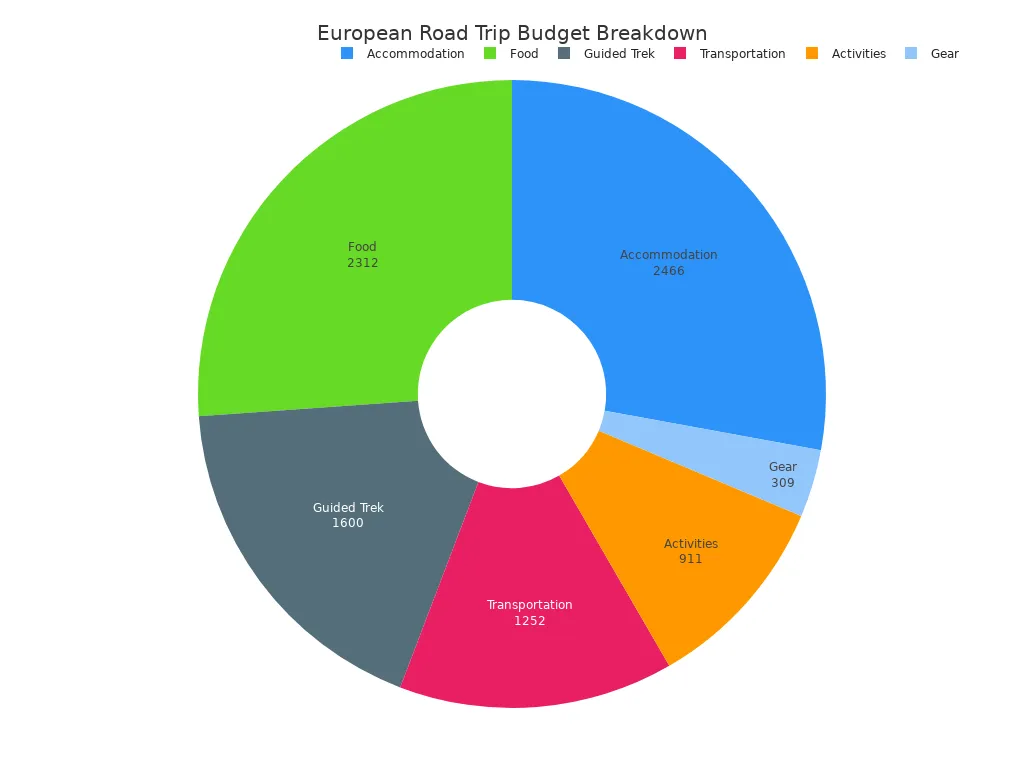
Let’s talk about these categories:
- Accommodation: This is often one of the biggest costs. My budget allocates about $27 per night for accommodation. This means I will mostly stay in hostels, guesthouses, or very cheap Airbnbs. Finding cheap places to sleep is key to saving money.
- Food: Eating well on a budget is totally possible! My food budget is around $25 per day. This means I will cook some meals, enjoy local street food, and look for affordable restaurants. I will avoid fancy places.
- Transportation: This covers getting around Europe. My plan includes about $14 per day for transportation. This means I will use public transport, budget airlines, and maybe a Eurail pass. Smart choices here really cut down travel costs.
- Activities: I have set aside about $10 per day for activities. This allows for some paid attractions, but I will also look for free museums, walking tours, and enjoying nature. You can have amazing experiences without spending a lot of money.
- Guided Trek: This is a specific item I included, showing that even with a budget, you can splurge on one significant experience. If you skip this, you have even more money for other things!
- Gear: This is for pre-trip purchases like a good backpack or travel essentials.
This cost breakdown gives you a solid starting point. Remember, these are guidelines. You might spend more on food one day and less on activities another. The goal is to keep your overall expenses in check. These tips will help you manage your money effectively.
Crafting Your Budget Europe Road Trip Itinerary
Now that we have our budget in place, let’s talk about where to go! Crafting your itinerary is crucial for a successful 3-month road trip, especially when you are traveling on a budget. I will guide you on selecting budget-friendly regions and planning an efficient route.
Why Eastern and Southern Europe Save You Money
I have found that focusing on Eastern and Southern Europe is a game-changer for your budget. These countries offer incredible experiences without the high cost of their Western counterparts.
For instance, Eastern European countries are considerably more affordable for budget travel, often costing around half the price. I saw that a 46-day trip through three Eastern European countries amounted to approximately $1,876.50 USD. That is a great deal for that duration in Europe!
Let me give you some examples of the daily costs I’ve seen. In Bulgaria, a budget traveler can expect to spend around $44 USD per day. If you skip splurges like sushi and avoid alcohol, that cost drops to about $35–40 USD daily. In Ukraine, a budget traveler’s daily average can be as low as $31 USD, especially if you stick to very cheap options.
By spending 60-70% of my trip in Eastern Europe and the Balkans, I can save approximately €2,000-€3,000. This is because daily costs are 40-50% lower there. I definitely advise against spending significant time in notoriously expensive destinations like Venice and Switzerland if you want to stretch your money. These cheap countries are perfect for budget travel.
Sample 3-Month Road Trip Route
I have put together a sample 3-month road trip route that optimizes for both budget and experience. This route starts and ends in Milan, Italy, and takes you through some amazing destinations:
- Milan, Italy – arrive
- Lake Como, Italy – 2 nights
- Venice, Italy – 2 nights
- Bled, Slovenia – 2 nights
- Ljubljana, Slovenia – 2 nights
- Zagreb, Croatia – 1 night
- Plitvice Lakes, Croatia – day trip
- Split, Croatia – 2 nights
- Hvar Island, Croatia – 3 nights
- Dubrovnik, Croatia – 2 nights
- Kotor, Montenegro – 2 nights
- Budva, Montenegro – 3 nights
- Albania – day trip
- Lake Ohrid, Macedonia – 3 nights
- Meteora, Greece – 1 night
- Athens, Greece – 3 nights
- Santorini, Greece – 4 nights
- Galaxidi, Greece – 1 night
- Positano, Italy – 1 night
- Cinque Terre, Italy – 2 nights
- Milan, Italy – depart
This route allows for incredible experiences. There is no better way to see the Balkans (Croatia, Montenegro, Slovenia, etc.) than by car. The coastal views are incredible, and having the freedom to pull over when you want to explore will lead to some amazing finds.
For budget travel, I recommend Airbnbs. For example, in Hvar Island, there are a ton of unique options, like a villa with a pool or a beachside apartment. In Dubrovnik, I found one of my all-time favorite budget-friendly Airbnb stays with a window onto the old castle ramparts. These cheap options help manage costs.
Itinerary Planning Principles
When I plan my itinerary, I always keep a few principles in mind. First, I prioritize destinations that offer a lot of free or cheap activities.
Wandering off the main paths in Venice to explore different areas of the old city is a great example. Second, I look for off-season travel opportunities. Traveling during the off-season means fewer crowds and lower costs for accommodation and activities. Third, I build in flexibility. Things change on the road, and being able to adapt saves money and stress. Finally, I focus on experiences over possessions. My goal is to collect memories, not souvenirs. These tips are essential for successful planning and traveling.
Smart Strategies to Save Money on Your Europe Trip
Now that we have our budget and a route, let’s dive into the real nitty-gritty: how I actually save money on the road. This section is packed with actionable tips to keep your expenses low across all major categories. I want you to travel the world on a budget, and these strategies are key.
Accommodation Hacks for Budget Travelers
Finding cheap accommodation is one of my top priorities for any trip. For a long 3-month journey, I find that hostels and Airbnbs are usually better than camping. They offer more convenience and often better overall savings when you factor in amenities and location.
When I look for a place to stay, I consider a few options, from the cheapest to slightly more expensive. Hostels are often my go-to.
Guesthouses are also great, and sometimes I look at hotels or vacation rentals like Vrbo and Airbnb. But I also know there are even more budget-friendly, or even free, alternatives out there! I have tried Couchsurfing, where I can stay with locals for free. House swapping through sites like HomeExchange is another cool idea if you have a home to offer. I also look into house and pet sitting with platforms like Trusted Housesitters. If I am willing to volunteer some time, Workaway can get me free lodging.
To find the best deals, I always start with accommodation aggregators. Booking.com is my favorite because its filters are so user-friendly. Hotels.com is good too, especially since they give you one free night after ten stays. Google’s Hotels function also helps me browse many options at once. I always apply filters like an “8+ Rating” to avoid bad experiences and “Free Cancellation” for flexibility. Then, I sort by “Lowest Price” to see the cheapest options first.
If I am specifically looking for hostels, I check Hostelworld. It often has a wider selection and sometimes even a best price guarantee. When I use Hostelworld, I always check the ratings, especially the “Atmosphere” rating.
I try to avoid anything below 7.0 for atmosphere, and I aim for 9.0 if I want a really social place. I also use filters for things like secure lockers. I find that medium-sized hostels, with 30-50 beds, usually have a good balance of lively and personal. I also prefer independent hostels over big chains.
For hotels, Booking.com is still my top choice. I register with them to get Genius level discounts, which can include free breakfast after just two stays. I use their filtering system to find guesthouses, lodges, or homestays, which are often unique and independent. If I find a good price with free cancellation, I book it right away because prices can change fast.
Here is a quick look at what you might expect to pay for accommodation in different parts of Europe:
| Region | Accommodation Cost (Hostel/Budget Hotel) |
|---|---|
| Western Europe | $25 – $50 per night |
| Eastern Europe | $10 – $20 per night |
| Southern Europe (Spain & Italy) | Varies greatly |
| Northern Europe (Scandinavian countries) | High costs |
As you can see, Eastern Europe offers some of the cheapest accommodation options, which is why I focus so much of my trip there. These tips help me keep my accommodation costs down.
Transportation Tactics to Reduce Costs
Getting around Europe can eat into your budget quickly if you are not careful. My goal is to find the most cost-effective transportation methods.
Buses are often my best friend for budget travel. They are usually much cheaper than trains. FlixBus is a great option; I have found fares as low as 5 euros one way, and they have flexible cancellation policies.
Eurolines covers many routes, and I find them generally more punctual than FlixBus, though their cancellation policies are less flexible. RegioJet (Student Agency Bus) is fantastic, especially in and out of the Czech Republic, offering luxurious yet affordable trips. If I am in the UK, Megabus can have deals as low as 1 pound if I book early. National Express is another reliable option in the UK. For places like the Balkans, local bus lines are incredibly affordable, even if you buy tickets on the day of travel.
Now, let’s talk about trains. Many people ask about a Eurail pass. I considered a Eurail pass for unlimited travel in certain countries, which can cost around $800. It can be a good deal, but it depends on your travel style and destinations.
A Eurail Pass is probably worth it if:
- I already know my itinerary, and individual tickets would cost more than the pass plus seat reservations.
- I like flexibility and want to book my route as I go.
- I plan to use expensive international high-speed trains.
- I am traveling a lot through Western and Central Europe.
- My trip includes complex international journeys.
- I want to experience scenic trains, like the Glacier Express in Switzerland.
- I am traveling during peak season when cheap tickets sell out fast.
However, a Eurail Pass might not be worth it if:
- I know my itinerary well in advance, and point-to-point tickets are cheaper.
- I am traveling through Eastern Europe or the Balkans, where train tickets are very cheap, and buses might be better.
- I only plan a few train journeys.
- Most of my train journeys are short distances.
- I am on a very tight budget and prefer slower, cheaper bus travel.
- I plan to travel a lot through Spain and France, as seat reservation costs can be high there.
Here is a look at how a Eurail Pass can save you money on some routes compared to buying individual tickets:
| Route | Seat Reservation (€) | Point-to-Point (2 months) (€) | Eurail Savings (2 months) (€) | Point-to-Point (10 days) (€) | Eurail Savings (10 days) (€) |
|---|---|---|---|---|---|
| London to Paris | 32 | 79 | 47 | 118 | 86 |
| Paris to Rome | 45 | 103.90 | 58.90 | 125 | 80 |
| Rome to Venice | 12 | 42.90 | 30.90 | 42.90 | 30.90 |
| Venice to Zermatt | 25 | 67.40 | 42.40 | 84.40 | 59.40 |
| St Moritz to Vienna | 0 | 56.90 | 56.90 | 104.50 | 104.50 |
| Vienna to Berlin | 0 | 49.90 | 49.90 | 139.90 | 139.90 |
| Berlin to Amsterdam | 0 | 37.90 | 37.90 | 79.90 | 79.90 |
One big benefit of a Eurail Pass is the flexibility. I can decide my routes as I go, which means I do not have to commit to an inflexible itinerary just to get cheap train tickets. This flexibility is great for long-term traveling. My transportation choices are always about balancing cost and convenience.
Eating and Drinking on a Budget
Food is another area where costs can quickly add up. My strategy is simple: cook more, eat out less, and enjoy local street food.
I always try to stay in accommodations with kitchens, like Airbnbs or self-catering apartments. This lets me cook my own meals. I buy breakfast items like yogurt, milk, granola, and fruit from local grocery stores every few days. For lunch, I love making picnic lunches with cheeses, spreads, fruits, and vegetables from local markets. I grab fresh baguettes or buns from bakeries.
For dinner, I cook easy dishes like omelets, pasta, and salads using fresh local ingredients. Sometimes, I even buy components of fully cooked meals from supermarkets. Cooking at my temporary “home” saves money and gives me a taste of local life. I even try to cook regional dishes!
Budget travelers in Europe can expect to spend about €20 to €40 per day on food. This amount can change depending on where I am. Here is a general idea of food costs:
| Meal/Category | Estimated Cost (EUR) |
|---|---|
| Daily Food Expenses (Budget Traveler) | €20 – €40 |
| Breakfast | €2 – €5 |
| Lunch | €5 – €10 |
| Dinner | €10 – €20 |
| Snacks | A couple of euros |
These costs are estimates, but they show that eating out for every meal will quickly break my budget. I focus on grocery shopping and cooking to keep my food expenses low.
Affordable Activities and Entertainment
You do not need to spend a fortune to have amazing experiences. Many of the best activities are free or very cheap. I always look for ways to enjoy destinations without breaking the bank.
Here are some examples of what I look for in different destinations:
- Belgrade, Serbia: I can explore Kalemegdan Fortress for free and visit St. Sava Temple for free. Museums like the Museum of Yugoslavia or Nikola Tesla Museum have small fees. I can also enjoy local beer for €0.80-3.20 and a Serbian meal for around €8.
- Athens, Greece: A combo ticket for seven archaeological sites costs €30, or I can get Acropolis entry for €20. Gyros are only €3, and a 24-hour public transport ticket is €4.50.
- Sarajevo, Bosnia and Herzegovina: The War Childhood Museum costs about €5. I can visit Latin Bridge for free and enjoy traditional Bosnian coffee for less than €2.
- Bratislava, Slovakia: Exploring Bratislava Castle grounds costs €10, and visiting the UFO Bridge is free.
- Tallinn, Estonia: I can explore the UNESCO Old Town for free, visit Alexander Nevsky Cathedral for free, and climb Toompea Hill for free. Museums like Kiek in de Kök and Seaplane Harbour have modest entrance fees.
- Kraków, Poland: I can find a hearty Polish meal for just a few euros if I eat away from the main square.
- Porto, Portugal: A traditional Portuguese meal can be as little as €8.
- Sofia, Bulgaria: A hearty Bulgarian meal costs €5-7, and I can take an affordable bus to Vitosha Mountain.
- Bucharest, Romania: The National Museum of Romanian History costs about €4.60.
- Valencia, Spain: The City of Arts and Sciences tickets are around €38 for a full day, and dishes can be as cheap as €10.
- Riga, Latvia: I can explore the Old Town for free, enjoy treats at the Central Market for a few euros, and find classical music concerts for less than €10.
My strategy for activities is to mix free options like walking around, visiting parks, and enjoying local culture with a few paid attractions that I really want to see. I also look for free walking tours in many cities. These tips help me experience a lot without high costs. I always prioritize experiences over expensive souvenirs.
Essential Pre-Trip Planning for Your Europe Road Trip
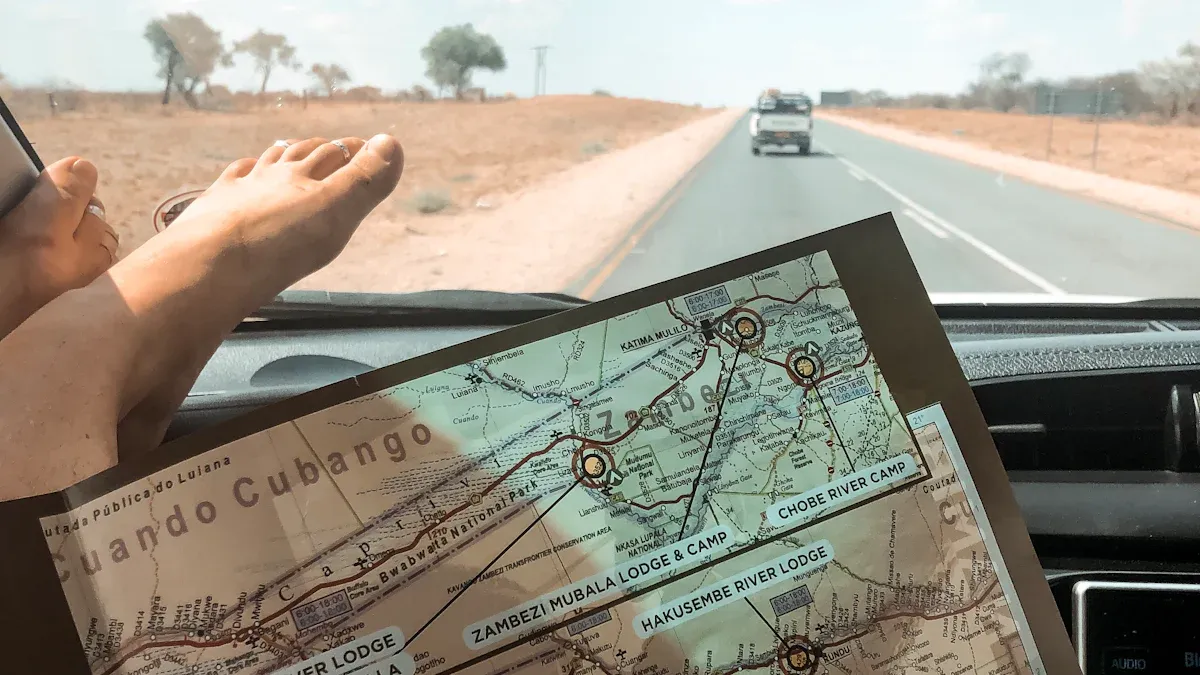
Before I hit the road for my epic 3-month road trip, I know that solid pre-trip planning is crucial. It helps me avoid headaches and keeps my budget on track. Here are the essential steps I take to prepare for my travel adventure.
Visa Requirements and Entry Regulations
For my Europe travel, especially as a non-EU citizen, understanding visa requirements is super important. I always check the rules for the Schengen Area. If you are like me and plan to visit many countries, you must apply for your Schengen visa at the consulate of the country where you will spend the longest time.
If your stays in several countries are of equal length, apply at the consulate of the first country you will visit. Generally, I apply at the consulate responsible for where I legally live. This ensures I have the right paperwork for all the countries I want to explore.
Non-Negotiable Travel Insurance
I never, ever travel without insurance. It is a non-negotiable part of my travel planning. Unexpected things happen on the road, and I want to be covered. Travel insurance protects me from medical emergencies, trip cancellations, lost luggage, and even car issues. It gives me peace of mind, which is priceless when I am far from home.
Vehicle Considerations for Your Journey
Since this is a road trip, my car is a big part of the adventure! I make sure my car is in top shape before I leave. This means a full service, checking tires, oil, and all fluids. I also research international driving permits if my home license isn’t recognized in all the countries I plan to visit. Renting a car is another option, but I always compare costs carefully. I look for cheap rental deals and consider fuel efficiency. Having my own car gives me so much freedom to explore.
Banking and Money Management Abroad
Managing my money wisely is key to staying within my budget. I always use a fee-free bank account, like the Charles Schwab Investor Checking Account. It offers no minimum balance, no ATM fees, no foreign transaction fees, and unlimited ATM fee rebates worldwide. I also research partner banks of my current institution, as they might waive or reduce ATM and foreign transaction fees.
I look for low-fee or no-fee ATMs, prioritizing local banks over big international chains. I also use credit cards that do not charge foreign transaction fees. When an ATM or merchant asks if I want to pay in my home currency, I always choose the local currency to avoid dynamic currency conversion (DCC) fees, which can be really high. These tips help me save money on banking costs.
Packing Light and Smart
Packing light is one of my best tips for any long travel. For a 3-month road trip, I plan to do laundry often. This means I do not need to pack a ton of clothes. I carry dissolving laundry detergent sheets for convenience. I use a lightweight, carry-on, soft-sided rolling bag. These are easier to handle than hard suitcases, especially on stairs or when fitting into a small car.
I also use a large laptop backpack as my personal item. This lets me carry bulky items like a sweater and flight essentials without needing another carry-on. I choose versatile clothes that I can mix and match. I roll my clothes and use packing cubes to keep things organized and compressed. Finally, I bring a portable extra bag for any souvenirs or unexpected purchases. This smart packing helps me keep my travel light and easy.
Mindset for a Successful Budget Road Trip
Embarking on a 3-month road trip across Europe with a budget in mind needs more than just careful planning. It also requires the right attitude. I have found that your mindset truly shapes your travel experience.
Embrace Simplicity and Adventure
I always tell people to embrace simplicity. You do not need fancy things to have an amazing time. I love exploring new neighborhoods, especially those rich in local culture. Finding a local festival is another fantastic way to experience new cultures without spending much.
I also enjoy visiting farmer’s markets; they offer cheap local produce and a real taste of the community. These simple, cheap activities often create the best memories. My goal is always to find adventure in the everyday, not just in big attractions.
Be Flexible and Adaptable
Things rarely go exactly as planned when you are traveling. I have learned to be flexible. What if your car breaks down? Unexpected costs from vehicle breakdowns can really hit your budget. Or what if you lose your passport? I know people who faced family emergencies while traveling. Travel disruptions like delays or cancellations are common.
Non-Schengen citizens also need to remember the 90-day stay limit. Being ready to change plans, having emergency funds, and getting travel insurance are my top tips. This flexibility helps you handle anything that comes your way.
Connect with Locals for Authentic Experiences
I believe the best travel experiences come from connecting with local people. I try to stay in guesthouses or homestays. This lets me interact with residents and learn about their customs. Savoring local cuisine at markets or family-run restaurants is a must.
I even try to learn a few basic phrases in the local language. It shows respect and opens doors to more meaningful interactions. Asking local people for their favorite spots often leads to the most authentic discoveries. Using public transport also helps me observe daily life and interact with local people.
Prioritize Experiences Over Possessions
My philosophy for budget travel is simple: experiences over possessions. I do not spend money on expensive souvenirs. Instead, I invest in moments. The joy of finding a cheap, delicious meal, exploring a hidden alley, or having a conversation with a local person is priceless.
These are the memories I bring home, not things. This mindset helps me stay within my budget and truly enjoy every part of my travel.
So, I hope I’ve shown you that a 3-month European road trip on a $10k budget in 2025 is absolutely achievable! My plan helps you travel the world on a budget. We covered focusing on cheap regions in Europe, smart spending on accommodation, food, and transport to save money. Finding cheap accommodation, cheap food, and cheap travel options is crucial for your budget. This smart travel helps you manage your money.
You need a flexible, adventurous mindset for this 3 month travel adventure. Start planning your own epic, affordable European adventure today! The true value of this 3 month trip is in the experiences and memories, not the money you spend. You can travel the world on a budget and have amazing travel experiences.