Bosnia and Herzegovina beckons! This hidden gem in Europe offers unique charm. 2026 is the perfect year for your travel. Tourism in Bosnia sees an average yearly increase of 8.9%. You will discover diverse landscapes, from picturesque lakes to grand architecture. The country boasts a rich history and welcoming people. Its natural beauty includes mountains, rivers, and waterfalls, providing incredible views. This guide unveils the best places to visit in Bosnia and Herzegovina. You will find top experiences and things to do in Bosnia and Herzegovina. We present 19 top destinations in Bosnia and Herzegovina. These are the best places to visit for your unforgettable 2026 travel.
Key Takeaways
Bosnia and Herzegovina is safe for travelers. You should stick to marked paths and be aware of your surroundings.
Explore diverse places like historic Sarajevo, the iconic Mostar bridge, and the beautiful Kravica Waterfalls.
Visit unique sites such as the Dervish monastery at Blagaj Tekke and the waterfall city of Jajce.
Enjoy outdoor adventures in Una National Park or discover traditional life in Lukomir village.
Plan your trip for spring or autumn. These seasons offer the best weather and fewer crowds.
Is Bosnia and Herzegovina Safe for Travelers?
Addressing Common Concerns
You might ask about safety when you plan your travel to Bosnia and Herzegovina. This is a common and important question. Major international bodies advise you to “Exercise Increased Caution” when visiting Bosnia. This advisory was last updated on December 12, 2024. The reasons for this caution include potential risks like terrorism, crime, and land mines. You should know that terrorism and land mines are among the most common safety concerns reported by tourists. However, these concerns do not mean you cannot have a safe and enjoyable trip. Millions of visitors explore Bosnia each year without incident. You simply need to be aware of your surroundings and take sensible precautions. Understanding these points helps you prepare for a worry-free adventure.
Essential Safety Tips
You can ensure your safety by following some essential tips. First, always stick to marked roads and paths. This is extremely important, especially in rural areas, because of land mines from past conflicts. Never wander into unmarked or abandoned areas. Pay attention to any warning signs you see. Second, be aware of your surroundings, just as you would in any other country. Keep your valuables secure and out of sight. Avoid walking alone at night in poorly lit areas. If you use public transport, always keep an eye on your belongings. Third, research local customs and respect them. This helps you avoid misunderstandings and shows respect for the local culture. Fourth, always have emergency contact numbers readily available. This includes local police and your embassy. You can also consider travel insurance for added peace of mind. With common sense and these simple steps, your travel experience in Bosnia will be both safe and memorable. You will find the local people welcoming and helpful.
1. Sarajevo
Historic Charm and Culture
Sarajevo, Bosnia and Herzegovina’s capital, offers you a unique experience. People call it the ‘Jerusalem of Europe’ or ‘Little Jerusalem.’ This is because of its amazing religious diversity. You find four different religious buildings close together. You hear the bells of the Catholic cathedral and Serb-Orthodox church mix with the Muslim call to prayer. This city welcomed Sephardic Jews in 1492. This made its multicultural character even stronger.
Sarajevo’s history shows a blend of Eastern and Western traditions. The Ottoman Empire founded Sarajevo in the 15th century. It became a center for trade and silk. You see minarets and Turkish-style marketplaces like Baščaršija from this time. The Gazi Husrev Beg Mosque is a 16th-century Ottoman masterpiece. Later, the Austro-Hungarian Empire brought European architecture. You can see this change clearly on Ferhadija Street. A painted compass marks the ‘Sarajevo Meeting of Cultures.’ Look East, and you see Ottoman buildings. Look West, and you see Austro-Hungarian styles. This shows you where East visibly meets West. Sarajevo is a symbol of resilience and cultural fusion.
Top Things to Do in Bosnia’s Capital
You will find many things to do in Bosnia and Herzegovina, especially in Sarajevo. This city has many important landmarks. You can explore its rich history and culture.
Gazi Husrev-bey Mosque: Visit this mosque, completed in 1530. It is a great example of Ottoman architecture. You will see its large dome and intricate patterns.
Baščaršija: Walk through this old bazaar, the heart of Sarajevo. It started in the 15th century. You will love its cobbled streets and traditional crafts. Look for the Sebilj fountain here. It is a famous attraction.
Latin Bridge: See this 16th-century bridge. It is famous because Archduke Franz Ferdinand’s assassination happened nearby in 1914. This event started World War I. A museum close by tells you more about this moment.
2. Mostar
Iconic Old Bridge and Old Town
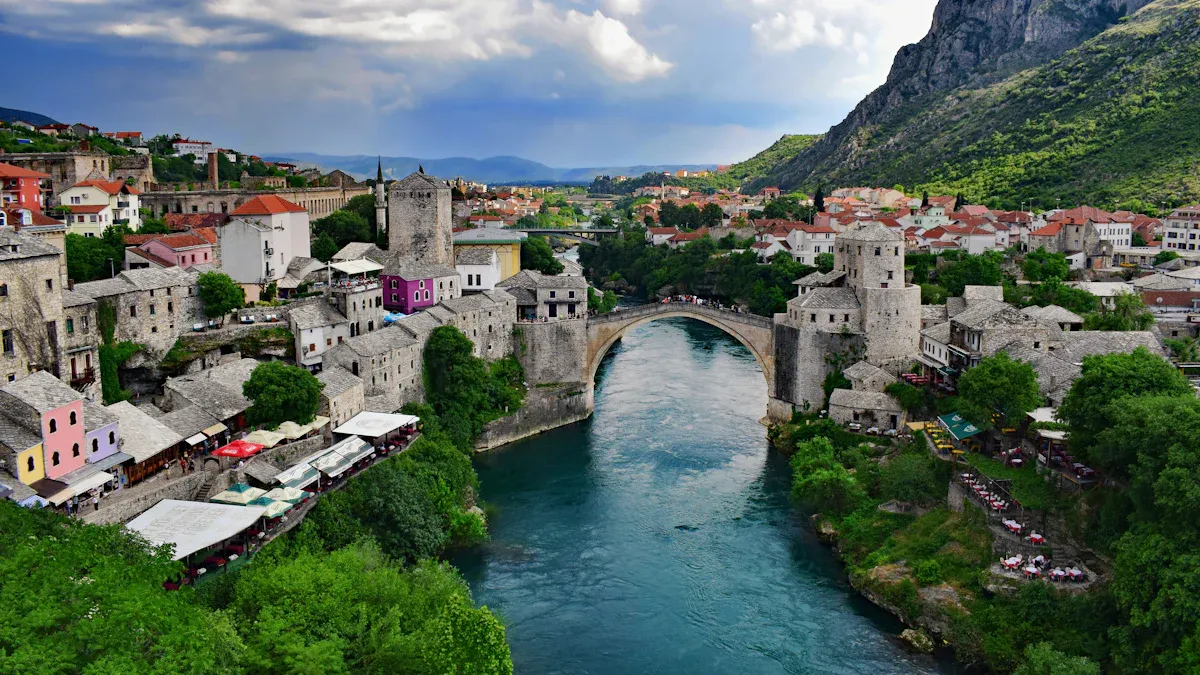
Mostar invites you to experience its iconic Old Bridge, known as Stari Most. This bridge is a UNESCO World Heritage Site. It represents the region’s rich cultural heritage and multicultural background. The original bridge was built in 1566. Architect Hayreddin designed it. It connected two parts of the town across the Neretva River. Its humpback style stood for 427 years. In 1993, during the Croat-Bosniak War, military forces destroyed the bridge. It was fully restored and reopened in 2004. UNESCO helped fund and oversee this project. The bridge’s rebirth symbolizes resilience.
You can watch local divers leap from the bridge into the cold river below. This is a long-standing tradition. The Old Town surrounds the bridge. You will find charming artisan shops here. They sell local crafts and souvenirs. The atmosphere is vibrant. You see a blend of Ottoman and Austro-Hungarian architecture. Humpbacked alleys and stone konaks add to its charm. Mosques like the Koski Mehmed Pasha stand nearby.
Exploring Herzegovina’s Gem
Mostar is a true gem of Herzegovina. Its culture blends Ottoman legacies, wartime resilience, and multicultural harmony. The Stari Most links diverse communities. The city’s culinary traditions reflect its multicultural soul. You can enjoy ćevapi, peka, and local wines. Islamic fasting during Ramadan brings iftar meals. These include dolma and baklava. Dining in Mostar fosters unity.
Many visitors choose Mostar for day trips. It offers a compact yet rich experience. You can easily explore its historical sites. The city provides many things to do in Bosnia and Herzegovina. Its beauty and history make it a must-see destination in Herzegovina.
3. Kravica Waterfalls
Natural Beauty and Swimming
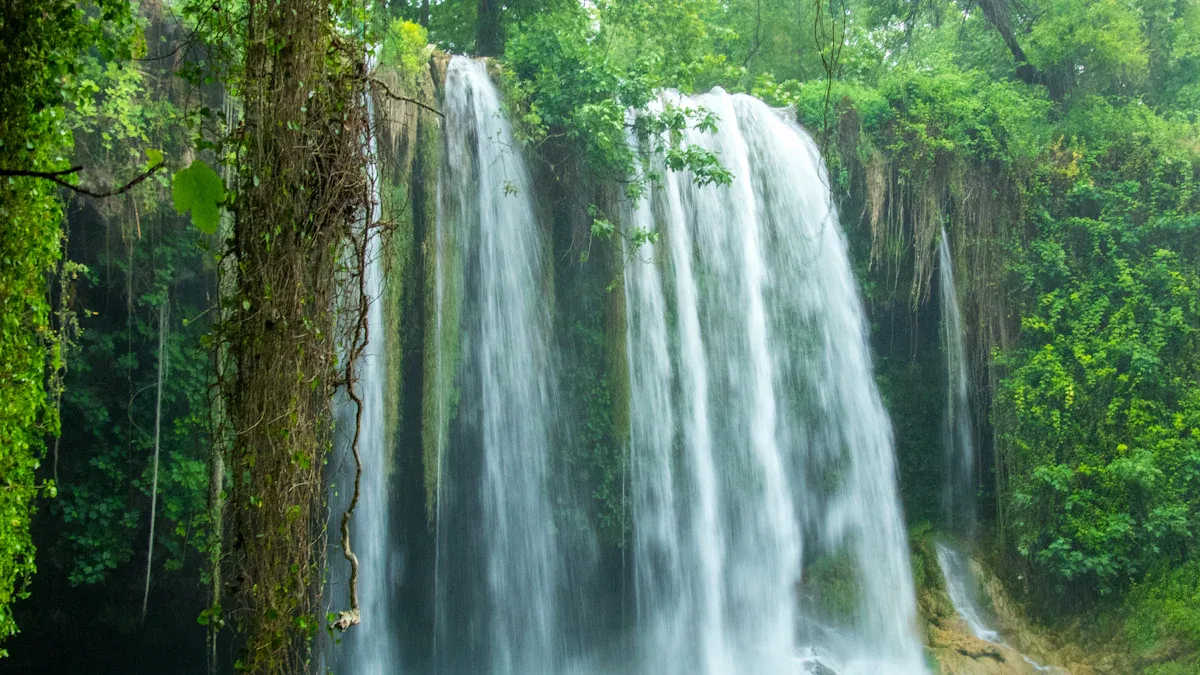
You discover the stunning Kravica Waterfalls in the heart of Herzegovina. This natural wonder offers a breathtaking sight. The Trebižat River creates these cascades. You see 25 meters of water falling over a wide tufa barrier. The waterfalls form a natural amphitheater. Emerald green pools collect the water below. You can swim in these refreshing pools during warmer months. Many visitors enjoy a dip on hot summer days. The lush greenery surrounding the falls adds to its charm. You find a perfect spot for relaxation and photography here. This place truly showcases Bosnia and Herzegovina’s incredible natural beauty.
A Refreshing Escape in Herzegovina
Kravica Waterfalls provides a perfect escape from city life. You experience pure nature here. The area around the falls offers picnic spots. You can also find small cafes and restaurants. They serve local food and drinks. You spend a whole day exploring the area. The sound of rushing water calms you. This destination is one of the top things to do in Bosnia and Herzegovina. It is easily accessible from Mostar and other towns in Herzegovina. You will appreciate the serene atmosphere. Kravica Waterfalls offers a memorable experience for all visitors.
4. Blagaj Tekke
Dervish Monastery by the Spring
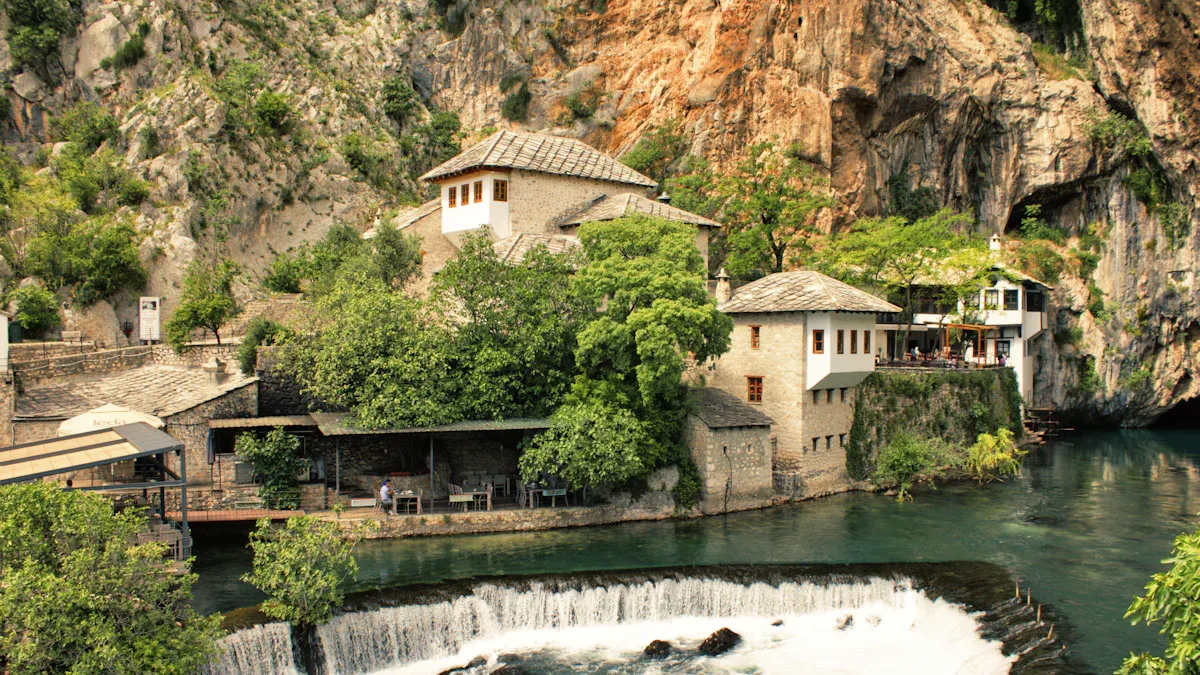
You will find Blagaj Tekke, a 16th-century Dervish monastery, near Mostar. This site stands as a magnificent testament to Bosnia and Herzegovina’s rich cultural and spiritual heritage. It sits at the base of a cliff. The Buna River spring emerges directly from the rock face here. This creates a stunning natural setting. The Tekke, also known as a dervish house, was built on the site of a Bogmil sanctuary. Excavations suggest people lived here in the Middle Ages. This shows deep cultural and religious importance. The first written records refer to this place as Sari Salutk’s burial site. He was a famous figure in the Ottoman empire. The Tekija was active until its last shaykh Sejdo Sehovic died in 1925. After World War II, religious practices of the Dervish and Tekke were banned until the 1970s. The Muslim community moved in. They protected the house from ruin. They revived it as a pilgrimage site for the religious Mawlid. This celebrates the birth of Prophet Mohammad.
Spiritual Serenity and Scenery
Blagaj Tekke offers you a place of spiritual serenity. The Dervish people accepted poverty. This was a way to humble themselves before God. They gave up material possessions. They focused solely on the values of love, service, and giving up the illusion of reaching God through material means. Dervishes often physically exerted themselves. This led to a trance-like state. They believed this helped them speak to God. Some people witnessed these trances. They believed Dervishes performed miracles or had supernatural powers. Dervishes were not allowed to beg for themselves. They could beg for others. This acceptance of poverty instilled humility. They valued personal experiences over intellectual studies. This was their way to reach God. Whirling Dervishes perform rhythmic movements. This helps them achieve a trance to reach God. This strong tradition started in Turkey. The picturesque setting of Blagaj Tekke, with its white walls against the turquoise water, makes it one of the most beautiful places in Herzegovina. Visiting this site is one of the unique things to do in Bosnia and Herzegovina. You will experience a blend of history, nature, and spirituality in Herzegovina.
5. Jajce
Waterfall City and History
You will find Jajce, a city with a unique natural wonder. A magnificent waterfall sits right in the town center. This is where the Pliva and Vrbas rivers meet. They form a stunning 17-meter-high cascade. This geological phenomenon creates a breathtaking sight. You can view the waterfall from various points in the city. Jajce holds significant historical importance. It served as the capital of the independent medieval Bosnian Kingdom. The city’s history dates back to the 14th century. You can feel its rich past as you explore its streets.
Royal Town Exploration
You can explore many historical sites in Jajce. A medieval fortress dominates the skyline. You can climb to the top for panoramic views of the city and surrounding landscape. Below the fortress, you will discover ancient catacombs. These underground chambers offer a glimpse into the city’s early Christian history. They served as a burial place for Bosnian nobility. Beyond the city center, you will find the beautiful Pliva Lakes. These lakes are famous for their historic watermills. These small wooden structures line the river, creating a picturesque scene. You can walk around the lakes or rent a boat. Visiting Jajce offers many things to do in bosnia and herzegovina. It combines natural beauty with deep historical roots. This makes it a truly memorable stop in central bosnia.
6. Una National Park
Pristine Rivers and Waterfalls
You will discover Una National Park in the western part of Bosnia. This park protects the pristine Una River and its surroundings. The Una River is famous for its emerald green waters. You will see incredible natural beauty here. The park features many stunning waterfalls. Strbacki Buk is the most famous waterfall. It cascades over several levels, creating a powerful and beautiful sight. You can feel the mist on your face as you stand near it. Martin Brod is another notable area. It has a series of smaller waterfalls and travertine formations. The park’s untouched nature offers a peaceful escape. You can enjoy the clean air and the sounds of nature.
Adventure in Bosnia’s Wilderness
Una National Park is a prime destination for adventure activities. You can experience thrilling white-water rafting on the Una River. The river offers different sections for various skill levels. Beginners and experienced rafters both find suitable routes. Hiking trails wind through the park’s forests. You can explore diverse flora and fauna. Birdwatching is also popular here. The park provides excellent opportunities for fishing. You can try fly-fishing in designated areas. These adventure activities make Una National Park one of the top things to do in Bosnia and Herzegovina. You will find many ways to connect with nature. This wilderness area in Bosnia promises an unforgettable experience for outdoor enthusiasts.
7. Počitelj
Medieval Fortified Village
You will discover Počitelj, a medieval fortified village, nestled on the bank of the Neretva River. This site is a UNESCO World Heritage site. It offers a rare blend of Ottoman and medieval architecture. Počitelj served as the hub of the kingdom of Dubrava župa in the 15th Century. This makes it a place of rich cultural and historical significance. You can explore its ancient stone houses and narrow, winding streets. The village feels like stepping back in time.
Ottoman Heritage and Views
Počitelj is recognized for its significant architectural and urbanistic historical value. People describe it as an ‘open-air museum.’ It showcases a unique combination of medieval and Ottoman architectural styles. You will find several restored Muslim sites here. These include a medieval mosque, Muslim primary and high schools, a charity kitchen, a hamam, a medieval inn, and a 15th-century clock tower.
Počitelj Kula is a UNESCO World Heritage Site in Bosnia and Herzegovina with rich cultural and historical significance. Nestled on the bank of the Neretva River, it served as the hub of the kingdom of Dubrava župa in the 15th Century. This site is a rare blend of Ottoman and medieval architecture and features several restored Muslim sites.
Počitelj became an important center after the Ottoman conquest. This led to the construction of several Ottoman structures:
Şişman İbrahim Pasha Mosque
Pocitelj Clock Tower
Madrasah
Public bath
Inn
You can climb to the Kula fortress at the top of the village. From there, you get stunning panoramic views over the Neretva River and the surrounding Herzegovina landscape. Počitelj exhibits both Ottoman and Medieval architectural influences. Its importance varied significantly since its 15th-century development. It suffered severe damage during the Bosnian War in 1993. This led to the displacement of its residents. It is now considered one of the most endangered historical sites. Počitelj was declared a ‘National Monument of Bosnia and Herzegovina’ in 2003. Bosnian-Herzegovinian officials nominated it for the UNESCO Cultural Heritage list in 2007. Despite significant damage, extensive restoration efforts have preserved its original state. Visiting Počitelj is one of the essential things to do in bosnia and herzegovina, offering a deep dive into history and culture in Herzegovina.
8. Trebinje
Sunny Old Town Charm
You will discover Trebinje, a city known for its sunny disposition. It sits in the southernmost part of Bosnia and Herzegovina. Its Old Town offers a charming experience. You can walk through its narrow streets. Stone buildings line these paths. The city has a distinct Mediterranean influence. You feel a relaxed atmosphere here. The Arslanagić Bridge is a must-see. This historic bridge spans the Trebišnjica River. It features beautiful stone arches. You can admire its architecture. The bridge provides a perfect spot for photos. Trebinje’s warm climate and inviting streets make it a delightful stop.
Southern Herzegovina’s Delights
Trebinje offers many delights in southern Herzegovina. You can explore its vibrant market. Local vendors sell fresh produce and regional specialties. The city is famous for its local wines. You can visit vineyards nearby. Many wineries offer tastings. You will enjoy the rich flavors of Herzegovina’s wine. The relaxed pace of life defines Trebinje. You can sit at a café in the main square. Watch daily life unfold around you. The city provides a peaceful escape. It offers unique things to do in bosnia and herzegovina. You will appreciate the blend of history, culture, and natural beauty. Trebinje truly captures the essence of southern Herzegovina.
9. Visoko (Bosnian Pyramids)
Mysterious Pyramids and Tunnels
You can visit Visoko, a town in central Bosnia. It holds a fascinating mystery: the “Bosnian Pyramids.” Many people believe these are the world’s first pyramids. Dr. Semir Osmanagić, an archaeologist, claims these hills are ancient man-made structures. He calls them the Pyramid of the Sun, the Pyramid of the Moon, and the Pyramid of the Dragon. Scientists and archaeologists widely dispute these claims. They say the hills are natural formations. Regardless of the controversy, the site attracts many visitors. You can explore the archaeological park. It features excavated areas and the mysterious Ravne tunnels. These tunnels are part of an extensive underground network. Supporters believe they connect the pyramids.
Unconventional Exploration
You will find a unique experience in Visoko. It offers an unconventional exploration for those interested in alternative history. You can walk through the Ravne tunnels. Many visitors report feeling a special energy inside. Some believe the tunnels have healing properties. You will see smooth, carved stones and ancient symbols. The air inside the tunnels is fresh and cool. Guides explain the theories behind the pyramids and tunnels. They share stories of their alleged ancient builders. This site provides a different perspective on history. It is one of the more unusual things to do in Bosnia and Herzegovina. You can decide for yourself if these are true pyramids. This journey into the unknown makes Visoko a memorable stop in Bosnia.
10. Konjic
Historic Bridge and Bunker
You will find Konjic in central Bosnia. It offers a mix of history and intrigue. The Old Bridge in Konjic is a beautiful stone arch bridge. It crosses the Neretva River. This bridge has stood for centuries. It connects the town’s two sides. You can walk across it and enjoy the river views. Konjic also hides a fascinating secret from the Cold War era. This is Tito’s Nuclear Bunker, known as ARK D-0.
Construction of this massive underground facility began in 1953. It continued until 1979. President Josip Broz Tito directed its building. The bunker was a military command center. It also served as a shelter for Tito, his family, and 350 close associates. This was for protection during an atomic conflict. The bunker sits 280 meters underground. It covers 6,500 square meters. It remained a state secret until the 1990s. Today, you can explore this intact facility. It now functions as a regional cultural institution. It promotes contemporary art and preserves history.
Gateway to Adventure
Konjic is a perfect starting point for outdoor fun. It acts as a gateway to adventure activities. The Neretva River flows through the town. This river is famous for white-water rafting. You can join a rafting tour. You will experience thrilling rapids and beautiful scenery. Many local operators offer guided trips. They provide all necessary equipment.
You can also explore the surrounding mountains. Hiking and canyoning are popular here. Konjic offers many things to do in bosnia and herzegovina for nature lovers. You will find stunning landscapes and fresh air. This makes Konjic an excellent choice for an active vacation.
11. Lukomir
Traditional Mountain Village
You will find Lukomir high in the Bjelašnica mountains. This is Bosnia’s highest and most isolated village. It offers you a rare look into traditional Bosnian mountain life. The village sits at an elevation of 1,493 meters. You see stone houses with unique cherry-wood roof shingles. These homes are centuries old. They stand as a testament to the village’s enduring heritage. You can also spot charming chapels and ancient stone walls. These structures add to the village’s timeless feel. From Lukomir, you get stunning panoramic views of the surrounding mountains and canyons. The landscape is breathtaking.
Authentic Bosnian Experience
Lukomir provides an authentic Bosnian experience. Life here centers around a close-knit community. Traditions and nature deeply root the villagers. Most villagers are shepherds. They lead a simple yet fulfilling lifestyle. Their daily routines follow nature’s rhythms. They tend to sheep flocks and practice traditional farming. Shepherding is a way of life passed down through generations. It provides food and a strong connection to the land. Villagers know the mountains and pastures very well. This knowledge helps preserve the ecosystem.
You will see a blend of old and new in their daily chores and gatherings. Locals are friendly and welcoming. They want to share their stories and hospitality with you. You can talk with shepherds. You might even hear traditional music and see dance sessions. They often share homemade foods and local folklore. Life here includes transhumance. Families and their sheep move with the seasons. They spend summers on Bjelašnica mountain. Winters are in lower settlements near Sarajevo. Summer involves bringing sheep to mountain pastures and drying hay. These chores secure their living for the entire year. Visiting Lukomir is one of the most unique things to do in bosnia and herzegovina.
12. Sutjeska National Park
Primeval Forest and War Memorial
You will find Sutjeska National Park in southeastern Bosnia. This is Bosnia’s oldest national park. It holds incredible natural beauty and historical significance. The park is home to Perućica, one of Europe’s last remaining primeval forests. This forest has reached a great age without significant disturbance. It maintains its unique ecological features intact. Perućica is also recognized as Europe’s best-preserved primeval forest. It holds exceptional historical value. You can see unique ecological features here, including the world’s tallest Norwegian Spruce tree. This UNESCO-recognized site spans 1,400 hectares. Many trees are 300 years old. The forest itself is estimated to be 20,000 years old. In certain areas, the forest growth is nearly impenetrable.
The natural resources of Perućica primeval forest contribute to its ecological characteristics. These include its geomorphological, climatic, hydrogeographical, and biogeographical potentials. These resources support various forms of nature-based tourism. You can find features like mountaineering and cycling trails, viewpoints, caves, waterfalls, water sources, streams, and endemic plant and animal species. The park also features the WWII Tjentište monument. This massive concrete memorial commemorates the Battle of Sutjeska. This was a major battle during World War II.
Nature and History Combined
Sutjeska National Park offers you a unique blend of nature and history. You can explore the dense, ancient forest. You can also reflect on the past at the Tjentište monument. The park provides many opportunities for outdoor activities. You can hike through pristine wilderness. You can discover hidden waterfalls. The park’s diverse landscapes offer stunning views. This combination of untouched nature and profound history makes Sutjeska National Park a must-visit. It is one of the most compelling things to do in bosnia and herzegovina. You will experience both the wild beauty of Bosnia and its resilient spirit.
13. Međugorje
Pilgrimage Site and Spirituality
You will find Međugorje in the region of Herzegovina. It stands as a significant Catholic pilgrimage site. Many people visit this small town due to alleged Marian apparitions. These events reportedly began in June 1981. Several children claimed to see the Virgin Mary. At that time, Međugorje was part of Yugoslavia.
The Vatican has carefully examined these claims.
In 1985, Bishop Pavao Zanic of Mostar-Duvno stated the apparitions were not authentic.
The Yugoslavian bishops’ conference in 1991 could not confirm the supernatural nature of the reports. They did not deny it either.
Bishop Ratko Peric, Bishop Zanic’s successor, upheld this decision until 2020.
The current Bishop, Petar Palic, has not changed these decisions.
In September 2024, the Dicastery for the Doctrine of the Faith (DDF) allowed the publication of messages linked to the apparitions. This means they found nothing against Church doctrine. However, this does not mean the apparitions are directly supernatural. You should refer to the messages as ‘alleged messages’. The DDF also noted positive spiritual outcomes. They allowed public devotion and pilgrimages. They did not declare the phenomena supernatural.
A Place of Faith
Međugorje draws millions of pilgrims each year. You can visit Apparition Hill. This is where the first alleged sightings occurred. Many pilgrims climb this rocky path. They pray and reflect along the way. Cross Mountain is another important site. A large concrete cross stands at its summit. Pilgrims often carry stones up the mountain as a sign of penance. You will find a deep sense of faith and community here. The town offers many spiritual programs. These include daily Mass, confession, and prayer gatherings. Međugorje provides a unique spiritual experience in Herzegovina. It is a place where many people seek peace and connection.
14. Višegrad
Historic Bridge on the Drina
You will find Višegrad in eastern Bosnia. It holds a significant historical landmark. The Mehmed Paša Sokolović Bridge spans the Drina River here. This bridge is a UNESCO World Heritage site. Ottoman Grand Vizier Mehmed Paša Sokolović ordered its construction in the 16th century. Architect Mimar Sinan designed it. The bridge features eleven large arches. It stands as a masterpiece of Ottoman engineering. You can walk across its ancient stones. You will feel the weight of centuries of history. The bridge offers beautiful views of the river and surrounding landscape.
Literary and Cultural Landmark
The Mehmed Paša Sokolović Bridge gained worldwide fame. Ivo Andrić’s Nobel Prize-winning novel, “The Bridge on the Drina,” immortalized it. This book tells the story of the bridge and the town. It spans four centuries of history. Scholars interpret the bridge as a symbol for Yugoslavia itself. It represents a bridge between East and West. This concept helped shape a national self-image. Andrić shows how great powers build such infrastructure. He suggests it is a means of conquest, not friendship. The bridge becomes a dual symbol. It unifies by facilitating passage. It also divides as a reminder of Ottoman rule.
The novel’s popularity made the bridge and Višegrad famous across Yugoslavia. Literary scholar Annabel Patterson notes the bridge is the central unifying element. It replaces a traditional hero. The bridge silently witnesses human experiences. It sees both tragic and joyful events. You read about Fata’s leap or Milan Glasičanin’s gambling. You also learn about Salko Ćorkan’s dance. Darker events like impalements and humiliations also occur. Andrić emphasizes the bridge’s enduring nature. He states it remains ‘clean, young and unalterable.’ This is true despite endless suffering and joy. It symbolizes that life persists. It endures despite individual fleeting experiences. You can also visit Andrićgrad nearby. This is a cultural complex dedicated to Ivo Andrić. It offers more insight into his work and the region’s history.
15. Banja Luka
Fortress City and Green Spaces
You will discover Banja Luka, the second-largest city in Bosnia. It offers a blend of history and natural beauty. The Kastel Fortress stands as the city’s oldest preserved historic monument. Romans first built this fortress. Later, it became a strategic military point for Ottomans and Austro-Hungarians. Each empire added its unique architectural style. This shows its long-standing strategic importance. The fortress covers a large area within its ramparts. Its ramparts, towers, and bastions use various types of stones. This suggests many construction phases.
The Kastel Fortress uniquely integrates with its natural surroundings. You get panoramic views of the Vrbas River. Lush greenery provides a serene backdrop to its ancient stone walls. The fortress showcases a blend of Roman, Ottoman, and Austro-Hungarian influences. You see this in its intricate stone carvings and tower designs. Archaeological traces date back to the Palaeolithic period. This proves continuous habitation for at least 8,000 years. You can also visit the Ferhadija Mosque. This mosque is a beautiful example of Ottoman architecture. Banja Luka also boasts many green spaces. You find parks and tree-lined avenues throughout the city.
Exploring Northern Bosnia
Banja Luka offers a vibrant café culture. You can relax at one of the many outdoor cafes. Enjoy a coffee and watch city life. The Vrbas River flows through the city. It adds to the city’s charm. You can enjoy various activities on the river. Rafting is a popular choice. The river provides a refreshing escape. Banja Luka serves as a great base for exploring northern Bosnia. You will find many things to do in this region. The city combines historical sites with modern amenities. It offers a welcoming atmosphere for visitors. You will experience the unique culture of this part of Bosnia.
16. Prokoško Lake
Serene Glacial Lake
You will find Prokoško Lake nestled high in the Vranica mountains. This picturesque glacial lake offers a truly serene experience. The Vranica Mountain Range features impressive geological formations. These are called Glacial Cirques. They shaped the landscape around the lake. The area boasts rich plant life. You can discover endemic flora here. These unique plant species thrive in this mountainous region. The lake’s untouched nature provides a peaceful escape. You can enjoy the quiet beauty of the surroundings. This makes Prokoško Lake a hidden gem in central Bosnia.
Mountain Retreat in Bosnia
Prokoško Lake serves as a perfect mountain retreat. You will see traditional wooden huts dotting the landscape around the lake. These huts add to the rustic charm of the area. They offer a glimpse into local mountain life. The lake is also home to unique fauna. The Bosnian alpine newt lives in ponds near Prokoško Lake. You can find stable populations of these newts here. The air is fresh. The views are stunning. You can hike around the lake or simply relax by the water. This destination offers a tranquil experience. It is one of the most beautiful natural spots in Bosnia.
17. Ostrožac Castle
Medieval Castle on Una River
You will find Ostrožac Castle perched high above the Una River. This impressive medieval castle stands near Bihać. It offers a commanding view of the surrounding landscape. The castle’s history dates back to the 13th century. Croatian noble families first built it. Later, the Ottomans took control. They expanded and fortified the castle. You can see different architectural styles. These styles reflect its long and varied past. The castle’s strategic location made it important for centuries. It guarded the river and the valley below. Exploring its ancient walls gives you a sense of history. You can imagine knights and soldiers defending its gates.
Architectural Gem
Ostrožac Castle is truly an architectural gem. Its unique design combines medieval fortress elements with later additions. You will notice the blend of styles as you walk through its grounds. The castle also features artistic sculptures. These sculptures add to its unique charm. A local artist created many of these pieces. They are often displayed within the castle ruins. This creates an interesting contrast. Ancient stone walls meet modern art. The castle grounds invite you to explore. You can wander through courtyards and climb towers. From the ramparts, you get stunning views of the Una River. The river’s emerald green waters flow gracefully below. Ostrožac Castle offers a fascinating experience. It combines history, architecture, and natural beauty. This makes it one of the unique things to do in Bosnia and Herzegovina.
18. Stolac
Ancient Necropolis and Heritage
You will discover Stolac, a town rich in archaeological heritage. It sits in the heart of Herzegovina. This area is like an open-air museum. You can explore its ancient past. One key site is the Radimlja Necropolis. This necropolis is home to 135 tombstones. These tombstones date to the 14th and 15th centuries. They are a local variety known as stećak. UNESCO recognized this site as a World Heritage Site in 2016. The necropolis features a large number of tombstones, 133 of them. They exhibit various shapes: slabs, chests, gable-roofed sarcophagi, and crosses. You will see decorations like figural and ornamental compositions. Epitaphs are carved on stone surfaces. These tell stories of feudal aristocratic families, military officers, and master stonemasons. The limestone used for most tombstones (93%) is exceptionally white. This site represents a valuable cultural monument from the Middle Ages in Bosnia and Herzegovina.
Open-Air Museum Town
Stolac truly feels like an open-air museum. You can walk through its streets and see history everywhere. The town showcases its rich archaeological heritage. It also features beautiful Ottoman-era architecture. This blend makes Stolac unique in Herzegovina. You can explore ancient ruins and historic buildings. Each corner tells a story. The town offers a deep dive into centuries of human settlement. You will find a continuous record of life from prehistoric times to the present. This makes Stolac a fascinating destination. You can wander through its old town. You will see mosques, bridges, and traditional houses. These structures show the town’s long history. The Bregava River flows through Stolac. It adds to the town’s charm. You can enjoy the peaceful atmosphere. Look for the Čaršija Mosque and the Old Bridge. These are prime examples of Ottoman design. The town’s layout itself reflects centuries of development. You will feel like you are stepping back in time. This makes Stolac one of the most compelling things to do in Bosnia and Herzegovina. It offers a unique journey through time.
19. Bijambare Caves
Underground Wonders
You can explore the fascinating Bijambare Caves. This complex of caves sits near Sarajevo. It offers an amazing underground experience. The Bijambare Cave complex holds some of Bosnia’s most beautiful cave formations. You will see impressive stalactites and stalagmites here. These formations have grown over thousands of years. The Gornja Cave, also known as the Upper Cave, showcases ‘cave jewelry’. This includes delicate stalactites and stalagmites. The Middle Bijambare Cave features four large halls. These halls are rich with cave formations. The final and largest chamber is the ‘Music Hall’. It is famous for its stunning natural stone structures. This hall also has exceptional acoustics. Inside the caves, you will find many unique stone formations.
Cave Exploration Adventure
You can embark on a memorable cave exploration adventure at Bijambare. The caves offer a cool escape, especially during warmer months. You walk along well-maintained paths inside. Guides provide interesting facts about the cave’s geology and history. The lighting inside highlights the intricate details of the formations. You will feel a sense of wonder as you move through the chambers. The ‘Music Hall’ is a highlight. Its natural acoustics make it a special place. Sometimes, they even host concerts there. Outside the caves, you find a beautiful natural park. You can enjoy hiking trails and fresh air. This area offers excellent opportunities for various adventure activities. Bijambare Caves provide a unique and educational experience. You will discover the hidden beauty beneath Bosnia’s surface.
Planning Your Trip to Bosnia and Herzegovina
How to Get There
You can reach Bosnia and Herzegovina easily. Most international flights arrive at Sarajevo International Airport (SJJ). Other options include Tuzla International Airport (TZL) and Mostar International Airport (OMO). You can also enter Bosnia by bus from neighboring countries. Many bus lines connect major European cities to Bosnia. Consider these options when planning a trip to Bosnia.
Getting Around the Country
You have several ways to travel around Bosnia and Herzegovina. Buses are a popular and affordable choice. They connect most cities and towns in Bosnia. You can also rent a car. This gives you more freedom to explore. Taxis are available in cities. They offer convenient short-distance travel. For longer distances, trains are an option, though less extensive than buses.
Is Bosnia and Herzegovina Expensive?
Bosnia and Herzegovina offers good value for your money. For a mid-range traveler, the average daily cost for accommodation, food, and activities is approximately 160 BAM. This budget allows you to stay in an Airbnb. You can eat out at local restaurants. You will enjoy some drinks. Occasional taxi use is possible. You can also engage in paid activities. These include museum visits or rafting. This makes Bosnia an affordable destination.
Best Time to Visit
Choosing the best time to visit Bosnia and Herzegovina depends on your interests.
Month | High (°C) | Low (°C) | Rainy days | Condition |
|---|---|---|---|---|
January | 11 | 1 | 5 | Good |
February | 13 | 4 | 10 | Good |
March | 15 | 6 | 8 | Good |
April | 20 | 8 | 6 | Good |
May | 23 | 13 | 11 | Excellent (best) |
June | 25 | 16 | 11 | Excellent (best) |
July | 31 | 19 | 3 | Good |
August | 31 | 20 | 8 | Good |
September | 27 | 17 | 10 | Excellent (best) |
October | 20 | 11 | 17 | Excellent (best) |
November | 17 | 7 | 2 | Good |
December | 13 | 6 | 18 | Wet |
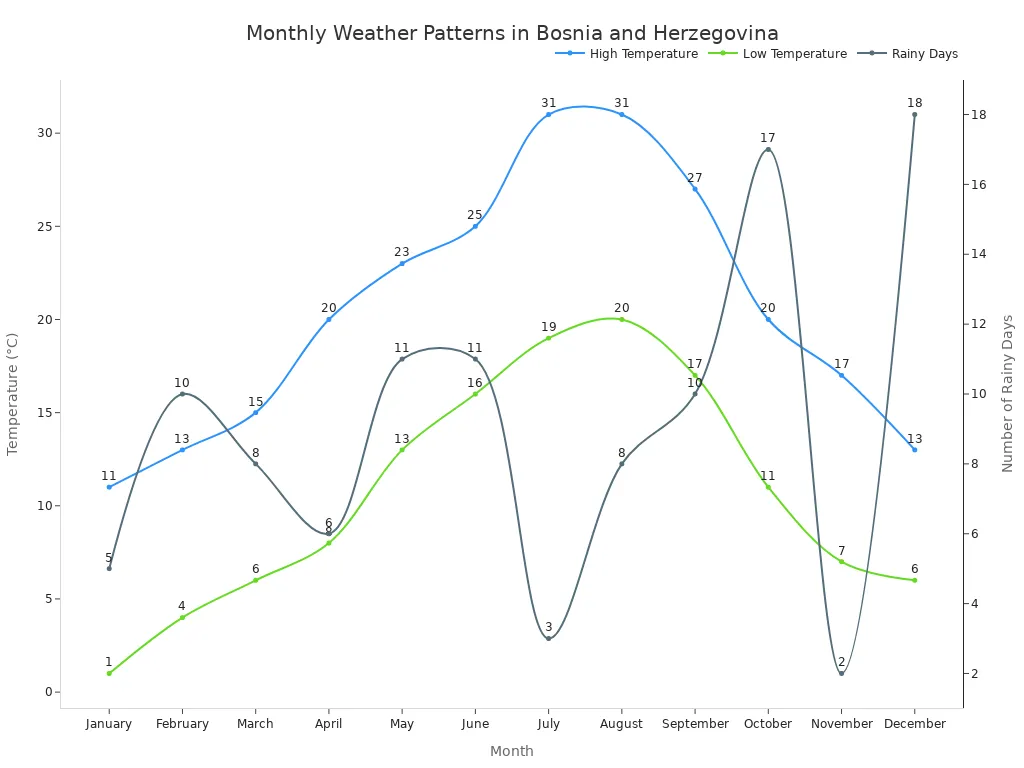
You will find the best time to visit Bosnia and Herzegovina is during spring or autumn.
May, June, September, and October are excellent months.
Mostar is best in May, June, September, and October.
Summers are hot and dry across Bosnia. Mountainous regions have cool evenings. Herzegovina has an arid Mediterranean climate. Temperatures often exceed 30°C (90°F) in Herzegovina. Prices increase during July and August. Warm weather in Bosnia lasts from June to mid-September. In Herzegovina, it starts earlier in May and extends into late September.
Spring and autumn are pleasant. May offers warm days, cool evenings, and wildflowers. October and November are good for avoiding crowds. You can enjoy autumn foliage. Winter is ideal for skiing in Bosnia’s mountains. This includes mounts Bjelašnica, Igman, and Jahorina. Herzegovina experiences mild winters. You should plan your travel for early or late summer. June or September offer less crowded destinations. This is the best time to visit Bosnia and Herzegovina.
Bosnia and Herzegovina offers an incredible array of experiences. It is truly one of the best places to visit in Europe for 2026. You explored historical cities and rich cultural sites across Bosnia. You also discovered breathtaking natural wonders in Bosnia and Herzegovina. From the majestic mountains of Bosnia to the sunny charm of Herzegovina, you found many top experiences. Each unique attraction invites you to discover its magic. This country welcomes you with great hospitality. These are the best places to visit in Bosnia and Herzegovina. Plan your unforgettable travel to Bosnia now. Your journey will be amazing.
FAQ
❓ Do I need a visa for Bosnia and Herzegovina?
You generally do not need a visa for short stays. Many countries have visa-free agreements. Always check the latest visa requirements for your specific nationality. You can find this information on the official embassy website.
💰 What currency does Bosnia and Herzegovina use?
You use the Convertible Mark (BAM) in Bosnia and Herzegovina. You can exchange major currencies at banks or exchange offices. ATMs are widely available in cities. You should carry some local cash for smaller purchases.
🗣️ Is English widely spoken in Bosnia and Herzegovina?
You will find English speakers in tourist areas and larger cities. Younger generations often speak English well. Learning a few basic Bosnian phrases helps you connect with locals. People appreciate your effort.
🍲 What local dishes should I try in Bosnia and Herzegovina?
You must try ćevapi, a grilled minced meat dish. You will also enjoy burek, a savory pastry. Do not miss dolma, stuffed vegetables. These dishes offer you a true taste of Bosnian cuisine.