

Here are seven top propane heaters for camping in 2026 that balance portability, safety, fuel options, and run time. Picks include an Outland Living 19″ fire pit, the Original 540-Degree tank-top radiant heater, Mr. Heater MH9BX (Massachusetts/Canada approved), GasOne high-pressure burner, Cuisinart 11,000 BTU patio heater, Mr. Heater 1-lb refillable keg, and a 6,200 BTU catalytic camping heater.
Each unit fits different camps, tanks, and budgets with varied BTU, safety shutoffs, and setup simplicity. Continue for detailed specs, runtimes, and buying tips.
| Outland Living 19″ Portable Propane Fire Pit |

| Best for Ambiance | Fuel Type: Propane (20‑lb tank via hose) | Portability: Lightweight, travel‑size with carry kit | Outdoor Use: Designed for camping, patio, RV, tailgating | VIEW LATEST PRICE | Read Our Analysis |
| Original 540-Degree 45,000 BTU Tank Top Radiant Propane Heater |

| Best for Big Heat | Fuel Type: Propane (mounts to 20‑lb tank) | Portability: Tank‑top mount, easy to transport | Outdoor Use: For outdoor use only | VIEW LATEST PRICE | Read Our Analysis |
| Mr. Heater MH9BX-Massachusetts/Canada approved portable Propane Heater |

| Best for Safety-Compliant Use | Fuel Type: Propane (connects to propane tank) | Portability: Portable with fold‑down handle | Outdoor Use: Approved for outdoor use (Massachusetts/Canada) | VIEW LATEST PRICE | Read Our Analysis |
| GasOne High-Pressure Single Propane Outdoor Burner |

| Best for Outdoor Cooking | Fuel Type: Propane (portable burner connects to tank) | Portability: Portable outdoor burner (designed for outdoors) | Outdoor Use: Intended for outdoor cooking and activities | VIEW LATEST PRICE | Read Our Analysis |
| Cuisinart Portable 11,000 BTU Outdoor Propane Patio Heater |
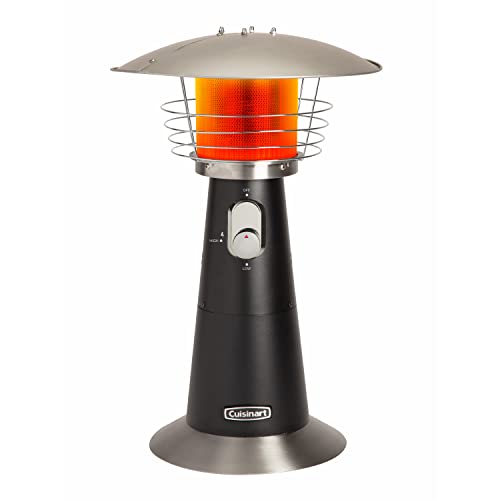
| Best Tabletop Heater | Fuel Type: Propane (1‑lb tank or 20‑lb with regulator) | Portability: Lightweight tabletop, compact | Outdoor Use: For patios, camping, tailgates (tabletop outdoors) | VIEW LATEST PRICE | Read Our Analysis |
| Mr. Heater 1 lb Refillable Propane Fuel Keg |
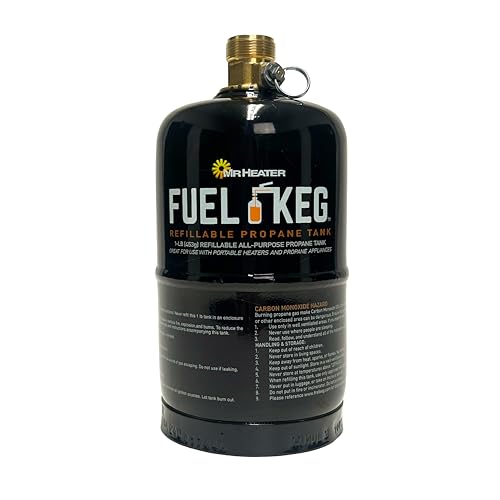
| Best Eco-Friendly Fuel | Fuel Type: Propane (1‑lb refillable propane keg) | Portability: Refillable 1‑lb keg, portable | Outdoor Use: Intended for outdoor refill/use activities | VIEW LATEST PRICE | Read Our Analysis |
| Portable 6200BTU Catalytic Propane Camping Heater |
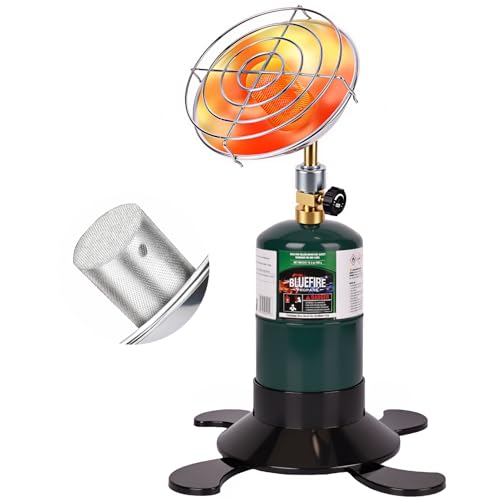
| Best Lightweight Camper Heater | Fuel Type: Propane (1‑lb cylinders) | Portability: Compact, lightweight for camping | Outdoor Use: Suitable for camping, tents, patios, etc. | VIEW LATEST PRICE | Read Our Analysis |
More Details on Our Top Picks
Outland Living 19″ Portable Propane Fire Pit
If you want a truly portable, low-fuss campfire, I’d pick the Outland Living 19″ Portable Propane Fire Pit — it delivers a realistic flame with 58,000 BTU/hr heat, hooks to a standard 20-lb propane tank via a pre-attached 10-ft hose, and sets up in minutes with no tools. I like its 19″x19″x11″ compact footprint, durable enamel-steel body, and stainless steel burner. Manual ignition and an adjustable chrome valve let me control flame height. It includes lava rock, cover, and carry kit. CSA-approved and spark-free, it’s ideal for patios, RVs, and camps—check local fire restrictions.
- Fuel Type:Propane (20‑lb tank via hose)
- Portability:Lightweight, travel‑size with carry kit
- Outdoor Use:Designed for camping, patio, RV, tailgating
- Safety Shutoff / Protections:CSA approved; spark‑free propane operation (follow local rules)
- Heat/Output Specification:58,000 BTU/hr
- Connection / Tank Compatibility:Pre‑attached 10‑ft hose to 20‑lb propane tank
- Additional Feature:58,000 BTU output
- Additional Feature:Includes lava rock
- Additional Feature:Carry kit & cover
Original 540-Degree 45,000 BTU Tank Top Radiant Propane Heater
I recommend the Original 540-Degree 45,000 BTU Tank Top Radiant Propane Heater for campers who need broad, directional warmth—its 540-degree radiant output heats multiple sides of a campsite at once. I like how it mounts directly to a 20 lb tank, so setup’s simple and transport’s compact. You get three heat settings—45,000/36,000/30,000 BTU—via a built-in regulator, and expect about 9.5 hours on high from a full tank. It’s intended for outdoor use only and includes a tip-over safety shut-off. If you want reliable, multi-directional heat without complex assembly, this is a solid choice.
- Fuel Type:Propane (mounts to 20‑lb tank)
- Portability:Tank‑top mount, easy to transport
- Outdoor Use:For outdoor use only
- Safety Shutoff / Protections:Tip‑over safety shut‑off
- Heat/Output Specification:45,000 / 36,000 / 30,000 BTU (high/med/low)
- Connection / Tank Compatibility:Mounts directly on 20‑lb propane tank (tank‑top)
- Additional Feature:540-degree radiant output
- Additional Feature:Tank-top mount design
- Additional Feature:Three heat settings
Mr. Heater MH9BX-Massachusetts/Canada approved portable Propane Heater
For campers who want a compact, reliable heater that’s approved for use in stricter jurisdictions like Massachusetts and Canada, I recommend the Mr. Heater MH9BX. I like its 4,000–9,000 BTU range that heats up to 225 sq ft with nearly 100% clean-burning radiant heat. It’s made of steel, plastic, and nickel, imports included, and may shut off above 7,000 ft. Safety features include tip-over and pilot shut-off plus an oxygen-depletion sensor. It connects to a propane tank via a swivel-out regulator, has a fold-down handle, runs about 5.6 hours at low, and forbids unauthorized attachments.
- Fuel Type:Propane (connects to propane tank)
- Portability:Portable with fold‑down handle
- Outdoor Use:Approved for outdoor use (Massachusetts/Canada)
- Safety Shutoff / Protections:Tip‑over, pilot outage auto shut‑off, oxygen‑depletion sensor
- Heat/Output Specification:4,000–9,000 BTU
- Connection / Tank Compatibility:Swivel‑out regulator; connects to standard propane tank
- Additional Feature:Massachusetts/Canada approved
- Additional Feature:Oxygen depletion sensor
- Additional Feature:Fold-down handle
GasOne High-Pressure Single Propane Outdoor Burner
You’ll want the GasOne High-Pressure Single Propane Outdoor Burner if you’re an outdoorsman who needs fast, reliable heat for camping, tailgating, or seafood boils. I’ve relied on its high-output design to bring water to a boil quickly and maintain an even flame, which keeps food from burning. The cast iron burner head and heavy-duty metal frame stand up to repeated use, and the top heat guard plus bottom heat shield protect hoses and surfaces from oil and heat. The sturdy hose assembly delivers consistent gas flow. It’s a straightforward, durable choice for outdoor cooking and brewing.
- Fuel Type:Propane (portable burner connects to tank)
- Portability:Portable outdoor burner (designed for outdoors)
- Outdoor Use:Intended for outdoor cooking and activities
- Safety Shutoff / Protections:Top heat guard and bottom heat shield protect hose/components
- Heat/Output Specification:High‑output single burner (unspecified exact BTU)
- Connection / Tank Compatibility:Hose assembly to connect to propane tank (high‑pressure)
- Additional Feature:Cast iron burner head
- Additional Feature:Top heat guard
- Additional Feature:Bottom heat shield
Cuisinart Portable 11,000 BTU Outdoor Propane Patio Heater
Camping with minimal gear but maximum comfort calls for a heater that’s compact and powerful—I recommend the Cuisinart Portable 11,000 BTU Outdoor Propane Patio Heater for solo campers or small groups who want quick, tabletop warmth. I like its 11,000 BTU output that covers about 30 sq. ft., and the reflector top plate spreads heat evenly. The dial knob gives low, high, and intermediate settings for easy comfort control. Safety’s solid with an anti-tilt auto shut-off and a burner screen guard. It’s lightweight for tailgates or patios, runs on a 1-lb tank, or a 20-lb with an optional regulator.
- Fuel Type:Propane (1‑lb tank or 20‑lb with regulator)
- Portability:Lightweight tabletop, compact
- Outdoor Use:For patios, camping, tailgates (tabletop outdoors)
- Safety Shutoff / Protections:Anti‑tilt automatic shut‑off and burner guard
- Heat/Output Specification:11,000 BTU
- Connection / Tank Compatibility:Uses 1‑lb tank; can connect to 20‑lb with optional regulator
- Additional Feature:Tabletop compact design
- Additional Feature:Reflector top plate
- Additional Feature:Compatible with 1-lb tank
Mr. Heater 1 lb Refillable Propane Fuel Keg
I recommend the Mr. Heater 1 lb Refillable Propane Fuel Keg for campers who want to cut costs and waste. It’s a DOT-certified, 16 oz refillable tank that ships empty and needs the Mr. Heater refill kit (F200049) to fill outdoors. Refilling takes about 60 seconds, and the keg fits any appliance that accepts a 1 lb cylinder. It’s certified for 12 years from purchase—after that you must recertify or dispose of it legally—and carries a one-year limited warranty. Follow the manufacturer’s refill video and use only the compatible refill kit for safe operation.
- Fuel Type:Propane (1‑lb refillable propane keg)
- Portability:Refillable 1‑lb keg, portable
- Outdoor Use:Intended for outdoor refill/use activities
- Safety Shutoff / Protections:DOT certified; follow refill/inspection safety procedures
- Heat/Output Specification:(Fuel container) N/A — supplies propane for heaters (refillable 1‑lb tank)
- Connection / Tank Compatibility:1‑lb refillable keg (requires refill kit)
- Additional Feature:DOT certified tank
- Additional Feature:Refillable (60s refill)
- Additional Feature:12-year service life
Portable 6200BTU Catalytic Propane Camping Heater
If you’re after a compact, reliable heat source for small shelters and quick setups, I recommend the Portable 6200BTU Catalytic Propane Camping Heater—its catalytic burner delivers steady, wind-resistant radiant warmth up to 200 sq ft while running on 1 lb propane cylinders. I like its rapid warm-up and adjustable rotary valve that lets me dial heat from low to high. The all-aluminum reflector, safety mesh, brass hose, and canister bracket feel rugged. It’s lightweight, easy to set up, and works without electricity for tents, patios, fishing, and tailgates. Uses 1 lb tanks; Hotdevils Bluefire is recommended.
- Fuel Type:Propane (1‑lb cylinders)
- Portability:Compact, lightweight for camping
- Outdoor Use:Suitable for camping, tents, patios, etc.
- Safety Shutoff / Protections:Safety mesh guards and secure canister bracket
- Heat/Output Specification:6,200 BTU (catalytic)
- Connection / Tank Compatibility:Connects to 1‑lb propane cylinders (bracket)
- Additional Feature:Catalytic burner technology
- Additional Feature:All-aluminum reflector
- Additional Feature:Brass connecting hose
Factors to Consider When Choosing a Propane Heater for Camping
When selecting a propane heater for camping, attention should be paid to heat output (BTU) and how that matches the intended shelter size. Equally important are fuel type compatibility and expected run time per tank, along with built-in safety features. Portability and weight complete the checklist, since they determine how practical the unit is to transport and set up.
Heat Output (BTU)
Many campers focus on BTU ratings because they directly indicate how much heat a propane heater produces per hour and therefore how well it can warm a given space. BTU measures heating power; higher ratings suit larger or colder areas. A practical guideline is roughly 10–20 BTU per square foot for mild conditions and 20–40+ BTU/sq ft for colder or poorly insulated environments. Higher BTU settings burn more propane, reducing run time and increasing refill frequency. Adjustable or multi‑setting controls let users balance warmth and fuel conservation. Environmental factors—wind, humidity, altitude—diminish effective heat delivery, so selecting a unit with extra BTU capacity or wind‑resistant features helps maintain comfort in adverse conditions without overspending on unnecessary power.
Fuel Type Compatibility
For selecting a camping propane heater, verifying fuel-type compatibility is essential to guarantee safe operation and acceptable run time. Buyers should check accepted cylinder sizes—common options are 1 lb disposable, 1 lb refillable, and 20 lb tanks—since capacity affects portability and replacement options. Confirm whether the unit uses a low-pressure tank-top connection or requires a high-pressure regulator and hose; mismatched pressure systems can prevent operation or create hazards. Some models accept refillable 1 lb kegs or need a specific refill kit, so verify compatibility and recommended refill procedures. If using natural gas instead of propane, make certain the heater is certified or fitted with a rated conversion kit. Finally, consider local fuel availability: 20 lb tanks are widely refillable, specialty cylinders may not be.
Run Time Per Tank
After confirming which fuel types and cylinder sizes a heater accepts, attention shifts to how long a chosen tank will actually last in the field. Run time per tank depends primarily on heater BTU output versus usable propane in the cylinder (for example, a 20-lb tank ≈ 430,000 BTU usable; a 1-lb cylinder ≈ 21,600 BTU usable). Estimate by dividing usable BTU by the heater’s BTU/hr rating. Manufacturer run-time claims assume continuous operation at a set output; real-world duration varies with lower settings and intermittent use. Cold temperatures and wind increase consumption, shortening run time. For multi-night trips, plan conservatively: reduce calculated run time by 20–30% or carry spare tanks to prevent depletion in the field.
Safety Features Included
Considering safety features first helps buyers prioritize heaters that reduce fire, burn, and carbon-monoxide risks. Heaters with automatic tip-over shutoff switches are essential; they cut gas flow if the unit falls, preventing fires and CO buildup. An oxygen depletion sensor (ODS) or low-oxygen shutoff is equally important, terminating operation when ambient O2 drops to unsafe levels. Flame failure or pilot safety valves add protection by stopping gas if the burner or pilot extinguishes. Physical safeguards—heat shields, guards, and cool-touch handles—minimize burn injuries and protect nearby materials. Reliable gas control requires pressure- and temperature-rated regulators, certified fittings, and CSA/ANSI or equivalent approvals. Together, these features substantially reduce operational hazards during camping use.
Portability And Weight
Portability and weight are decisive factors when matching a propane heater to a camping style: ultralight backpackers prioritize units under roughly 10 lbs that pack small, while car campers can accept heavier, more powerful models. Check weight and packed dimensions to confirm fit for a pack or vehicle; aim under ~10 lbs for backpacking and expect larger mass for vehicle trips. Favor heaters that use small fuel canisters or attach to an already-carried tank to avoid extra gear bulk. Seek foldable, removable, or collapsible components to minimize packed volume. Account for combined weight of heater plus required fuel—large tanks add substantial mass. Evaluate integrated handles, carrying cases, or strap attachments that simplify transport and protect the unit.
Size And Coverage Area
Weight and pack size determine which heaters a camper can carry, but matching heater output to the space to be warmed determines how well that heater performs. Estimate required BTUs by multiplying square feet by ceiling height and using roughly 20–40 BTU per cubic foot for cold conditions. Check the manufacturer’s stated coverage area and compare to usable heated space; small portables commonly list from ~30 to ~225 sq ft. Consider heat distribution: radiant units warm people and objects directly and can feel smaller in coverage than convection or combined units with similar BTUs. Account for environmental factors—wind, open shelter walls, and very low ambient temperatures—by oversizing capacity 25–50% for exposed setups. For multi-person or larger tents, use higher-output heaters or multiple units and verify run time at the chosen setting.
Ignition And Controls
Select ignition and control features with attention to convenience, reliability, and safety: ignition types range from match-lit simplicity to push-button piezo or battery-powered electronic starters, each with trade-offs for cold-weather performance and spare-part needs. Consider adjustable controls—multi-setting knobs or variable valves—that provide precise BTU-range output for low-to-high heat management. Built-in safety interlocks tied to controls, such as tip-over shutoff, oxygen-depletion sensors, and automatic pilot shutoff, can disable ignition or gas flow when conditions become hazardous. Fuel connection style and regulator placement (tank-top mount versus remote hose with regulator) affect setup ease and whether flame adjustments occur at the unit or the tank. In extreme cold or high altitude, simpler mechanical controls and manual ignition often outperform battery-dependent electronics for dependable starts.
Durability And Construction
Built to endure outdoor use, a propane heater’s materials and construction determine its longevity and safety: corrosion-resistant metals (stainless or enamel-coated steel) and brass or stainless fittings resist moisture, while heavy-duty burners (cast iron or stainless) and reinforced housings prevent dents, warping, and heat fatigue. Durable hoses and regulators—braided or thick-walled hoses with certified regulators—reduce leak risk and survive frequent connection cycles. Protective features such as heat shields, top guards, and screens safeguard internal components from spills, wind, and impact. Verify stainless fasteners and industry certifications to confirm corrosion resistance and compliance. Serviceability matters: accessible, replaceable burners and parts simplify maintenance and prolong service life. Prioritizing these elements yields a safer, longer-lasting camp heater.