
Yes, you can become a flight attendant in Australia by meeting airline requirements and completing the training they provide. Most airlines want strong customer service skills, clear communication, and the legal right to work in Australia. You’ll also need to pass medical and background checks and stay calm in busy situations. The role can be competitive, though with the right preparation, it’s a realistic career path with solid pay and travel perks.
How to Become a Flight Attendant in Australia

If you want to become a flight attendant in Australia, you’ll usually need to be at least 18, hold a Senior Secondary Certificate of Education or an equivalent qualification, and complete initial aid training with annual CPR refreshers. That gives you a solid starting point for joining a professional crew where teamwork matters every day.
From there, build experience in hospitality or customer service so airlines can see your people skills. You can strengthen your career pathway with a TAFE qualification if you left school early. When roles open, send a customized resume and cover letter that highlight transferable strengths. Your application timeline could include screening, group interviews, practical assessments, and training over one or two days. Should selected, you’ll usually shadow experienced crew initially, helping you settle in and feel part of the team quickly.
What Does a Flight Attendant Do?
As a flight attendant, you keep passengers safe, calm, and comfortable from boarding to landing.
You’ll demonstrate safety procedures, respond to emergencies, and make sure cabin rules are followed at all times.
You’ll also serve food and drinks, answer passenger requests, and help create a smooth in-flight experience.
In-Flight Duties
While many people focus on the travel perks, a flight attendant’s core job is to keep passengers safe, comfortable, and informed throughout every flight. You help create a calm, welcoming cabin where everyone feels looked after and included from takeoff to landing.
Throughout the trip, you manage meal service routines efficiently, answer call buttons, and provide clear updates when plans change. You complete passenger comfort checks, assist families, support older travellers, and help nervous flyers feel at ease.
You also tidy shared spaces, restock cabin items, and stay alert to passenger needs before they become problems. As delays, turbulence, or special requests arise, you respond with patience and professionalism. Your presence helps the whole cabin feel more connected, cared for, and confident for everyone onboard, every step of the trip.
Safety And Service
Because safety comes initial on every flight, your role centers on preparing the cabin, demonstrating emergency procedures, checking equipment, and enforcing airline regulations with confidence and care. You guide passengers through safety procedures, respond quickly to issues, and help create a calm, secure environment where everyone feels looked after.
At the same time, you deliver warm, attentive service that reflects your airline’s service standards. You welcome passengers, assist with seating and luggage, serve meals and drinks, and handle requests professionally.
Whenever delays, turbulence, or medical concerns arise, you stay composed and reassuring. Your ability to balance authority with kindness helps passengers trust you and feel they belong onboard. In every shift, you’re part of a team that keeps people safe, comfortable, and connected from takeoff to landing.
Flight Attendant Requirements in Australia
To qualify as a flight attendant in Australia, you’ll generally need to be at least 18, hold a Senior Secondary Certificate of Education or an equivalent qualification, and complete initial aid training. That baseline helps you join a professional crew where safety, care, and teamwork matter every day.
Most airlines expect Year 12 or an equivalent, though TAFE options can support school leaver pathways if you departed school prematurely. You’ll also need current initial aid certification covering wound treatment, emergency response, and CPR refreshers, so you’re ready to support passengers and your team.
Because cabin crew serve alcohol, the minimum age stays at 18. The cabin crew award also shapes roles across cabin crew, supervisors, and managers, giving you a clear place within the industry and helping you understand where you fit.
Do You Need Qualifications or Experience?

Meeting the minimum entry requirements gets you in the door, but airlines also want qualifications or experience that show you can handle passengers with confidence.
Most employers expect entry qualifications such as a Senior Secondary Certificate of Education or an equivalent pathway, and some accept TAFE study if you left school early. First aid certification also matters because it shows you’re ready to support people when it counts.
You don’t always need airline experience, but relevant experience can make you stand out and feel like a natural fit.
Roles in hospitality, retail, tourism, or customer service help you build teamwork, communication, and calm problem-solving skills. When you highlight those strengths in your application, you show airlines you can contribute, connect with passengers, and belong in a professional cabin crew environment.
Age, Height, Passport, and Medical Rules
Before you apply, you’ll need to meet the basic age and passport rules that airlines set for cabin crew.
You also have to match height requirements so you can safely reach equipment and move through the cabin.
On top of that, you must pass medical standards to prove you can handle the physical demands of the job.
Age And Passport Requirements
While airlines can set their own hiring standards, you’ll generally need to be at least 18 years old in Australia because cabin crew serve alcohol and handle safety duties. That minimum age helps show you’re ready to join a professional team trusted with passengers’ comfort and safety every day.
You’ll also need a valid passport, even for airlines mainly flying domestic routes, because schedules and operational needs can change. Check your passport validity carefully, since many employers prefer plenty of time remaining before expiry. Having your documents organised shows you’re dependable and ready to fit into a crew environment where preparation matters.
Some airlines might also ask about your right to work in Australia, so keep supporting identification current. Once you meet these basics, you’ll feel more confident stepping into recruitment and training.
Height And Medical Standards
Because cabin crew work in tight spaces and safety-focused conditions, airlines often set practical height and medical standards alongside age and passport rules. You’ll usually need to meet height requirements so you can reach safety equipment, assist passengers, and move confidently through the cabin. Exact measurements vary by airline, so always check each carrier’s recruitment page before applying carefully.
You’ll also need medical clearance to show you can handle emergency duties, long shifts, and time-zone changes. Airlines might assess your vision, hearing, general fitness, and overall health. Should you wear glasses or contact lenses, that doesn’t always exclude you.
These standards help keep you, your crew, and passengers safe. Meeting them means you’re ready to join a professional team and contribute with confidence every day.
Which Skills Do Airlines Look For?
Although airlines train you in company procedures, they still want to see strong customer service skills, clear communication, and the ability to stay calm under pressure.
You’ll spend every shift helping people feel safe, heard, and welcome, so your customer service mindset matters from the start.
Airlines also value teamwork communication because cabin crew work closely in fast-moving situations. You need to listen well, follow directions, and support your crew so everyone delivers a smooth experience.
Adaptability helps too, since delays, weather, and different passenger needs can change your day quickly.
If you’ve worked in hospitality, retail, or tourism, you’ve likely built useful skills already.
Show that you’re friendly, professional, resilient, and ready to create a positive atmosphere where passengers and crew feel they belong together.
Do You Need RSA and First Aid?
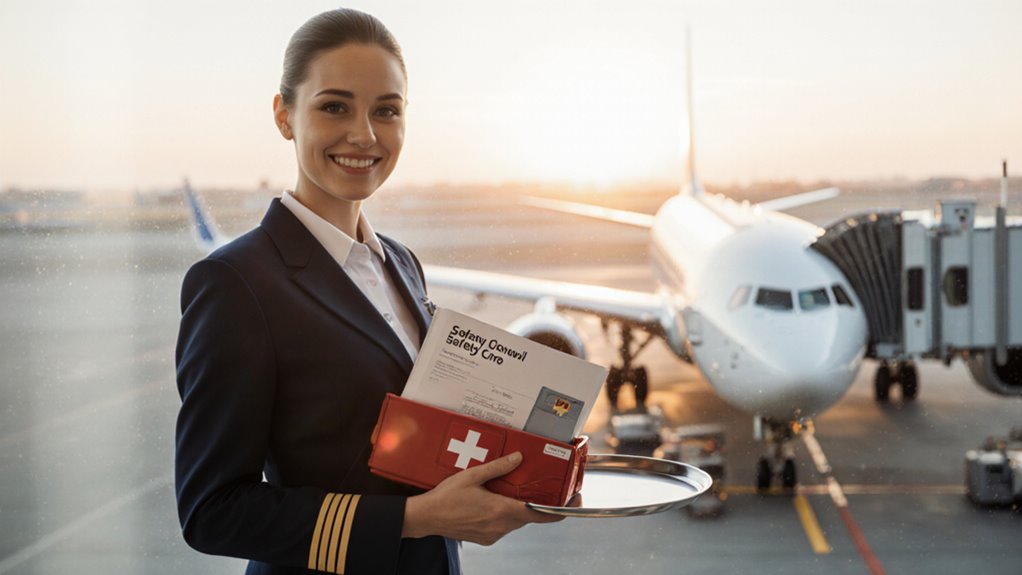
Yes—initial aid is generally essential, and RSA might also matter depending on the airline and route. Whenever you want to join cabin crew in Australia, you’ll usually need first aid certification before or during training. It shows you can respond calmly to wounds, medical issues, and onboard emergencies while protecting everyone around you.
RSA requirements aren’t universal, but they can matter because you must be at least 18 and may serve alcohol in flight. Some airlines cover RSA during training, while others prefer you to already have it.
Your initial aid certification typically stays valid for three years, with CPR refreshers needed yearly. Having both credentials helps you feel prepared, fit the team’s standards, and step into the role with more confidence from day one and trust.
How to Write a Flight Attendant CV
Once you’ve sorted out initial aid and any RSA requirements, your next step is building a flight attendant CV that shows airlines you can handle safety, service, and teamwork. Keep your CV formatting clean, professional, and easy to scan. Use resume tailoring for each airline, and highlight hospitality, customer service, first aid, and teamwork so recruiters can envision you fitting right in with their crew.
| Section | What to include | Why it matters |
|---|---|---|
| Profile | Service-focused summary | Shows fit |
| Skills | Safety, teamwork, communication | Matches role |
| Experience | Hospitality, customer service | Proves transferable strengths |
| Certifications | First aid, CPR, RSA | Confirms readiness |
| Education | Year 12 or equivalent | Meets entry standards |
Keep it concise, honest, and polished. You want recruiters to feel you belong onboard.
Where to Find Flight Attendant Jobs
Where should you look for flight attendant jobs in Australia? Start with places that connect you to real openings and a supportive industry community. You’ll find most roles advertised through trusted sources, and checking regularly helps you stay in the loop.
- Search online job boards like SEEK and Indeed for cabin crew listings.
- Visit airline careers pages for Qantas, Virgin Australia, Jetstar, and Rex.
- Follow airlines on LinkedIn and social media for new vacancy alerts.
- Join aviation and hospitality groups where members share openings and advice.
- Check regional carriers and charter operators for entry points and growing teams.
You can also set alerts, save searches, and apply quickly when roles appear. Staying consistent helps you feel connected, prepared, and ready to join the cabin crew community.
What Happens at the Interview Day?
At the interview day, you’ll usually complete assessment activities that test how you reason, communicate, and respond under pressure.
You can also expect group exercise tasks where you’ll work with other candidates and show teamwork, customer service, and problem-solving skills. When you progress well, you’ll move on to a one-on-one interview where you’ll answer questions about your experience, attitude, and fit for the role.
Assessment Activities
Although each airline runs its own process, interview day usually combines group interviews with practical assessments so recruiters can see how you communicate, work with others, and handle customer-facing situations.
You’ll be observed closely, but the goal isn’t to catch you out. It’s to see how naturally you’d fit into a cabin crew team and support passengers with confidence and care.
- Brief introductions that show your warmth
- Customer service scenarios with clear responses
- Practical simulations based on onboard situations
- Personality or aptitude checks
- Candidate scoring across communication and professionalism
You could also complete written questions or short role-based tasks that reflect real airline standards. Stay calm, listen carefully, and be yourself.
Recruiters want people who can contribute, stay composed, and help create a safe, welcoming experience for everyone onboard.
Group Exercise Tasks
During group exercise tasks, recruiters watch how you interact in a team, solve problems, and communicate under pressure. You’ll often tackle a teamwork puzzle, discuss solutions, and show calm, respectful group dynamics. They want to see whether you include quieter people, listen well, and help the group feel united.
| Moment | What you show |
|---|---|
| Circle discussion | Warm eye contact |
| Timed problem | Clear thinking |
| Teamwork puzzle | Shared ideas |
| Different opinions | Respect, patience |
| Final answer | Confidence, teamwork |
Consider it as joining a future crew, not competing alone. You stand out via inviting others in, building on ideas, and keeping everyone focused. Should you stay positive, practical, and encouraging, you’ll show the kind of teammate passengers and crew can trust together.
One-On-One Interview
Once you move past the group activities, you’ll usually meet a recruiter or hiring panel for a one-on-one interview that tests how well you fit the cabin crew role.
Here, you’ll show warmth, professionalism, and your ability to make passengers feel safe and welcome under pressure.
- Expect questions about customer service experience
- Share examples of stress handling in action
- Show strong communication and calm decision-making
- Present neat grooming and confident personal branding
- Explain why you’d belong on their crew
You can answer behavioural questions using real examples from hospitality, retail, or volunteering.
Recruiters want to see empathy, resilience, and teamwork, not perfection.
Keep eye contact, smile naturally, and speak clearly.
Should your values match the airline’s culture, you’ll stand out as someone they can trust onboard every flight.
What Happens in Airline Training?
At the point that you’re shortlisted, the airline usually invites you to a training program or recruitment day where it tests how well you handle customer service, teamwork, and practical tasks.
You’ll join other applicants, follow a set training schedule, and move through group activities, roleplays, and practical assessments designed to show how well you fit the crew.
You can complete customer scenarios, safety checks, and emergency drills while recruiters watch how you communicate, stay calm, and support others.
Airlines want to see that you can work closely with a team and help passengers feel safe and welcome.
In the event that you progress, onboarding can include shadowing experienced crew on your initial day, which helps you settle in, learn expectations quickly, and feel like part of the airline community from the start.
Flight Attendant Salary and Perks in Australia
How much you earn as a flight attendant in Australia depends on your experience, employer, and route type. Your salary breakdown can start around $67,722, rise to about $80,564 mid-career, and reach $116,686 with senior experience. Some estimates place the average near $94,405, though smaller carriers might pay less.
- Entry roles can average about $1,350 weekly
- Bonuses might range from $126 to $33,000 yearly
- Major airlines often offer stronger employee perks
- Travel benefits help you feel part of the team
- Health cover and flexible rosters support your lifestyle
You’ll often enjoy employee perks like discounted flights, health insurance, and better scheduling flexibility. When you join the ADF, you might also receive 16.4% superannuation and home purchase assistance, helping you build a secure future and belong.
Frequently Asked Questions
Can Flight Attendants in Australia Have Visible Tattoos or Piercings?
In Australia, flight attendants can have tattoos or piercings, but airline grooming policies usually require tattoos to stay hidden and piercings to remain small and professional. What is accepted depends on the airline, the uniform, and whether body art or jewellery is visible during duty.
Do Australian Flight Attendants Need to Relocate to Another City?
Yes, you may need to relocate if your airline base is in another city. In some cases, you can remain where you live, but long commutes and training schedules often make moving the more practical option.
How Long Are Typical Flight Attendant Probation Periods in Australia?
In Australia, flight attendant probation periods usually last three to six months. During this period, you complete required training, take part in performance assessments, and show that you can handle cabin crew duties to the expected standard.
Can Part-Time or Casual Flight Attendant Roles Be Available?
Some regional airlines and contract positions offer part time schedules or casual roster shifts. These options are often easier to access after you have industry experience, and strong customer service skills can help you stand out when applying.
Do Flight Attendants in Australia Choose Their Base Location?
Yes, you can nominate preferred base locations, but Australian airlines usually allocate crew bases according to operational requirements and seniority. New flight attendants are often placed where demand is highest, while more experienced crew may have greater access to preferred locations over time.