Imagine a place where every street in Malacca whispers tales of old empires! This vibrant UNESCO World Heritage Site showcases a unique blend of Portuguese, Dutch, British, Chinese, and Malay influences. Malacca truly offers a rich cultural tapestry. Did you know over 15.5 million visitors come to Melaka annually? Many find a 3-day trip is perfect for exploring Malacca’s many attractions. Are you ready for a perfect 3 days in Malaysia?
This 3-day travel guide provides your comprehensive Malacca itinerary. You will discover the best things to do in Malacca and experience its deep heritage. This itinerary helps you find all the things to do in Malacca Malaysia. Get ready to explore this amazing Malacca!
Key Takeaways
Malacca offers a rich mix of cultures. You can see Portuguese, Dutch, British, Chinese, and Malay influences.
A 3-day trip lets you explore Malacca’s history. Visit old forts, churches, and museums.
Jonker Street Night Market is a must-visit. Enjoy local foods and find unique souvenirs there.
Malacca has diverse food. Try Nyonya Laksa, Chicken Rice Balls, and Satay Celup.
Getting around Malacca is easy. You can walk, ride trishaws, or take buses.
Day 1: Colonial Heritage & Best Things to Do in Malacca
Your first day in Malacca plunges you into its rich European colonial past. You will explore sites that tell stories of Portuguese and Dutch rule, seeing firsthand the architectural beauty and historical significance of each location. This day is packed with some of the best things to do in Malacca.
Morning: St. Paul’s Hill & A Famosa
Start your Malacca adventure at St. Paul’s Hill. This historic spot was once known as Mary’s Hill during Portuguese colonization, serving as a governing area for Malacca. The Dutch later renamed it St. Paul’s Hill, showing the shift in power. You will find ancient buildings here, including St. Paul’s Church, one of Southeast Asia’s oldest churches. Look closely, and you will see tombstones from the 1600s, a direct link to centuries past.
The Portuguese built St. Paul’s Church in 1521 as Nossa Senhora da Annunciada. It was a key religious and strategic point. The Dutch later used the church, adding their own gravestones. From the top, you get amazing panoramic views of the city and the Straits of Malacca. This makes it a perfect spot for a historical walking tour.
Just below St. Paul’s Hill, you will discover the remains of A Famosa. The Portuguese constructed this fortress in 1511. It saw many changes before the British largely destroyed it in 1824. Some believe A Famosa was built on the ruins of the Grand Mosque of Melaka, located near the Melaka River. As you explore, notice the guard post with gun holes on the gateway’s top right.
The entrance has a zigzag cobble-laid design, which served as a defense. Though many defensive walls crumbled over time, recent digs have uncovered two previously buried bastions. These show you the true size of this ancient military complex.
Afternoon: Stadthuys & Christ Church
After your morning exploration, head to the iconic Dutch Square. Here, you will find The Stadthuys, meaning ‘State House’ in Dutch. Built around 1650, it stands as the oldest Dutch building in the East. It first served as the official home for the Dutch Governor and Deputy Governor. It also became the main administrative center after the Dutch took over Malacca from the Portuguese in 1641.
Even after the Governor moved out, it remained the administrative heart through British rule and until 1979. Today, it is the Malacca Historical Museum. Its structure truly shows the fine art of Dutch design. You will easily spot The Stadthuys by its bright red exterior and the Red Clock Tower, added in the 19th century. Sir Maurice Alexander Cameron, a British naval engineer, designed it in the Dutch Colonial style. Workers finished it in 1660 on the ruins of an old fortress.
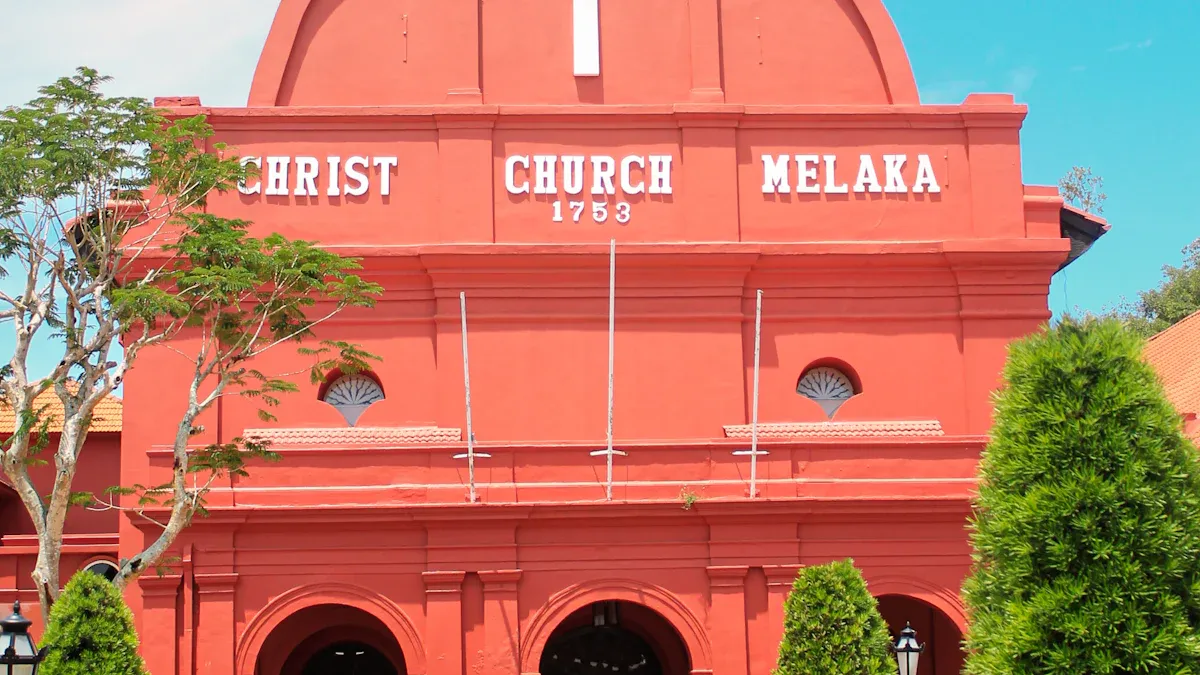
Right next to The Stadthuys, you will see Christ Church, another striking red building. This 18th-century Anglican church began as a Dutch Reformed church. It holds the title of the oldest functioning Protestant church in Malaysia. Construction started in 1741 to mark 100 years since Malacca’s capture from the Portuguese. It finished in 1753. After the Anglo-Dutch Treaty of 1824, Malacca went to British control. In 1838, they re-consecrated the church with Anglican rites and renamed it Christ Church.
Look for its unique architectural features:
Gambrel or ‘Dutch Roof’: This style helps reduce water and makes more space.
Gable End: A round gable end sticks out above the roof.
Belfry: A small, newer bell tower sits on top.
Dutch Bricks (ijselstene): Workers built the walls with these small, strong yellow clay bricks, then covered them with Chinese plaster.
Red Facade: The church was originally white but got its famous red paint in 1911. This color became a symbol of Malacca’s Dutch-era buildings.
Inside, you will find a rectangular layout, measuring 82 feet by 42 feet. The high ceiling reaches 40 feet, with wooden beams carved from single trees. Dutch tiles cover the roof. Granite blocks pave the floors; these blocks once served as ballast for merchant ships. You can also see historical tombstones with Portuguese and Armenian writings on the floors. Memorial plaques with Dutch, Armenian, and English inscriptions adorn the walls. One notable Armenian inscription dates back to 1774. The church bell, inscribed with the date 1698, is even older than the church itself! You can also find preserved historical documents here, like the Kerk Boek and Doop Boek, from early Dutch times. Exploring this museum-like church is one of the essential things to do in Malacca.
Evening: Jonker Street Night Market
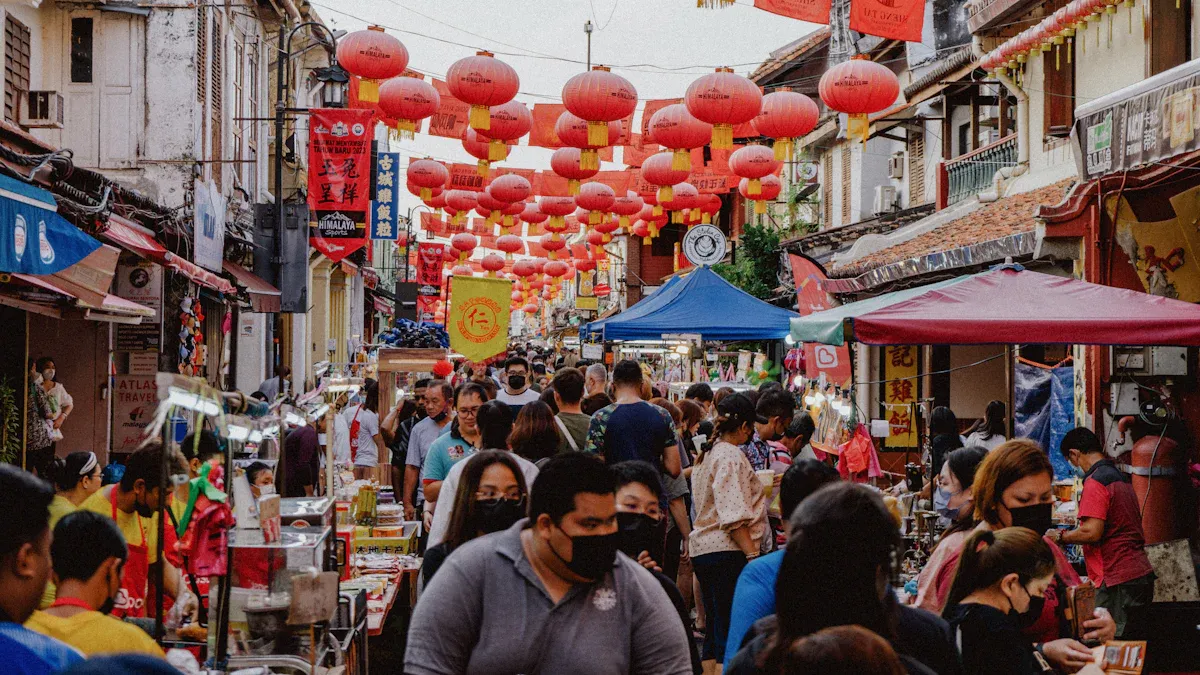
As evening approaches, prepare for a sensory feast at the Jonker Street Night Market. This vibrant market operates on Fridays, Saturdays, and Sundays, typically from 6 PM until midnight.
Some stalls even open from 5 PM. The main street is already busy from 10 AM, but the real energy builds between 6 PM and 7 PM. It gets very crowded by 8 PM, so arriving earlier helps you avoid long queues. This market is famous for its food, offering a mix of flavors. You will find popular dishes like Nyonya laksa, a spicy noodle soup with coconut milk and seafood.
You can also try shaved ice, satay (grilled meat skewers with peanut sauce), and durian puffs. Local favorites like chicken rice balls and cendol are also highly sought after and can sell out fast. Don’t miss the Coconut Ice Cream, often served in a halved coconut shell with toppings like roasted peanuts and nata de coco. It costs around RM7 to RM10. Trying these local treats is one of the best things to do in Malacca.
Day 1 Dinner: Local Flavors
For dinner, you must dive into Malacca’s unique culinary scene. Nyonya cuisine, including the famous Nyonya Laksa, first appeared in Malacca with the Strait-Chinese settlers. Malacca Nyonya cuisine shows strong influences from Portuguese and Indonesian cultures. Nyonya Laksa, also known as Laksa Lemak or Curry Laksa, is a rich dish with a coconut milk-based broth.
It typically includes tofu puffs, shrimp, and egg as garnishes. Cooks prepare a blended spice paste with turmeric, galangal, lemongrass, and shrimp paste. They cook this paste down to make the flavors strong. Then, they combine it with shrimp or chicken broth, adding coconut milk at the end. You can also enjoy it with fish balls and fried tofu.
Another must-try is the Chicken Rice Ball. This local specialty offers a fun twist on the classic chicken rice. Instead of loose grains, the rice comes pressed into small, flavorful balls. You eat them with tender, poached chicken. These local activities give you a true taste of Melaka.
Day 2: Cultural Immersion & Things to Do in Melaka
Your second day in Malacca invites you to explore its rich cultural tapestry. You will discover the diverse faiths and unique Peranakan heritage that make this city so special. This day offers many cultural activities and some of the best things to do in Malacca.
Morning: Temples & Mosques
Malacca is a place where different faiths live together peacefully. You can see this harmony in its many temples and mosques. You will find ancient places of worship, each telling a story of the communities that built them. Here is a quick look at some important ones:
Name | Construction Date | Historical Significance |
|---|---|---|
Cheng Hoon Teng Temple | 16th century | This is Malaysia’s oldest Chinese temple. It serves Malacca’s Buddhist, Taoist, and Confucian communities. You will admire its decorative woodwork and roof carvings. |
Sri Poyatha Moorthi Temple | 1781 | This is thought to be the oldest Hindu temple in Malaysia. It serves Malacca’s Chitty community. It has a simpler design than South Indian temples. You will see carved stone statues of animals and Hindu gods inside. |
Kampong Kling Mosque | 1748 | Indian Muslim traders built this mosque. It first used wood and later rebuilt with brick. It has a unique pagoda-style minaret and Sumatran-style architecture. |
Tranquerah Mosque | 1728 | This is one of Malaysia’s oldest mosques. It features a Sumatran style and saw extensive renovations in the 18th century. |
Malacca Strait Mosque (Masjid Selat Melaka) | 2006 | This newer mosque sits on stilts off an artificial island. It looks like it floats at high tide. Its location overlooking the Strait of Malacca and striking architecture make it a popular spot for photos. |
You should visit the Kampung Hulu Mosque, built between 1720-1728. It is the oldest mosque in Malacca and one of the oldest in Malaysia. Even though it had renovations in 1892, it still has traditional wooden pillars and a second-floor balcony. Its intricately made wooden Minbar shows Javanese influence. This reflects the styles of earlier Nusantara mosques.
The Kampung Hulu Mosque is a testament to Malacca’s rich cultural blend. It features a unique mix of Malay, Chinese, and Javanese architectural styles. You will notice its multi-tiered roof instead of a traditional dome, which is typical of Javanese architecture. The Dutch commissioned this mosque. It is not just a place of worship; it also symbolizes the harmonious mix of cultures in Malacca.
The Kampung Kling Mosque, first built in 1748, then rebuilt in brick in 1872, shows a unique mix of styles. Its design blends Sumatran, Chinese, and Malay craftsmanship.
You will see a pagoda-like, tiered roof, intricate woodwork, and decorative patterns. These reflect local art and influences from different trading communities. This blend shows how different cultures and religions have lived together in Malacca for centuries. You find it on ‘Harmony Street’ next to the Cheng Hoon Teng Temple and Sri Poyyatha Vinayagar Moorthi Temple. It stands as a strong symbol of historical tolerance and multiculturalism. It offers you a real connection to Malacca’s past as a busy trade center.
Baba Nyonya Heritage Museum
Next, immerse yourself in the unique Peranakan culture at the Baba Nyonya Heritage Museum. This is one of the best things to do in Malacca to understand this distinct community. The museum is in a building made of three terrace lots. The Chan family bought these lots in 1861. The Chan family came to Malacca in the early 19th century. Their ancestors were from Tong’An county, Fujian province, Southern China. Their descendants are now the seventh generation of the family. The Peranakan culture, which the museum represents, started as early as the 16th century. Migrants from China traveled to Malaya. They adopted local customs and married local people. This created this unique hybrid culture.
While the museum itself does not list specific artifacts, you can imagine the types of items it holds. These items tell the story of Baba-Nyonya life. For example, an exhibition called “Exploring the World of Baba-Nyonya: A Peranakan Culture Exhibition on the Maritime Silk Road” showed 132 artifacts. It used multimedia and scene restorations to show the history, religion, customs, and art of the Baba-Nyonya culture. This culture formed from early Chinese immigrants marrying locals in Southeast Asia. Visiting this museum gives you a deep insight into Malacca’s unique heritage.
Malacca River Cruise
In the afternoon, relax and enjoy a Malacca River cruise. This is one of the most enjoyable activities in Melaka. You can easily fit the Malacca River cruise into your day. You can take it after a morning walk through Jonker Street or after visiting the Stadthuys and A Famosa. The Maritime Museum, shaped like a Portuguese galleon, is also nearby. Most attractions in the historic core are close to the jetties. This makes it easy to combine the cruise with sightseeing and shopping.
As you glide along the Malacca River, you will see many sights. You will pass by the Dutch Square, also known as Red Square. You will also see traditional villages and old bridges. Look for the Melaka Malay Sultanate Water Mill. You will notice artwork painted on the walls of buildings. You might even spot a monorail train and a ferris wheel in the distance. The cruise offers a different perspective of Malacca. It shows you the city’s charm from the water. This is one of the essential things to do in malacca.
Day 2 Dinner: Melaka’s Diverse Cuisine
For dinner, continue your cultural immersion by exploring Melaka’s diverse cuisine. You can find many local eateries offering authentic Malay or Chinese dishes. Try some delicious satay celup, where you cook your own skewers in a communal peanut sauce pot. Or, seek out a restaurant serving authentic Peranakan dishes you learned about at the museum. You can also find fantastic seafood restaurants along the river. These offer fresh catches prepared in various local styles. Enjoying these local flavors is one of the best things to do in malacca.
Day 3: Maritime History & Local Treasures in Malacca
Your final day in Malacca takes you on a journey through its maritime past. You will discover its role as a bustling port and find unique local treasures. This day offers interactive experiences and a final taste of Malacca’s rich culture.
Maritime Museum & Naval History
Start your day by exploring Malacca’s deep connection to the sea at the Samudera Maritime Museum. This impressive museum is a replica of the Flor de la Mar. This Portuguese carrack sailed into Malacca in 1511 with Afonso de Albuquerque’s fleet. They came to conquer the city. The original ship, full of looted treasures, sadly sank off Sumatra. The museum stands as a powerful symbol of Malacca’s maritime legacy.
The Maritime Museum in Malacca City opened on June 13, 1994. It centers around this striking replica of the Flor do Mar. This replica is 34 meters high, 36 meters long, and 8 meters wide. It holds artifacts and documents from Malacca’s golden era. It highlights the city’s role in maritime dominance and trade. The museum emphasizes Malacca’s importance as the “Emporium of the East.” Its strategic position in the Straits of Malacca made it vital.
Inside, you can explore the decks of the ship replica. You will find exhibits that include maps of Zheng He’s voyages. You will also see artifacts from the Malacca Sultanate, cannons, ceramics, and navigation tools. These items come from the Portuguese, Dutch, and British eras. The museum details Malacca’s rich maritime history, trade routes, and colonial past. You will also see naval artifacts. Exhibits feature porcelain, silk, textiles, spices, and sunken treasures from shipwrecks like the Diana. It also covers Malacca’s history through the Malacca Sultanate, Portuguese, Dutch, and British periods. You can even see ship models and a diorama of the captain’s cabin on the upper deck. The name ‘Samudera’ also refers to the old Samudera-Pasai kingdom, a key trading partner. This museum offers a fascinating look into the past.
Souvenir Shopping & Crafts
Before you leave, you must find some unique souvenirs to remember your trip to Malacca. The city offers many local crafts and treats. You can find these items directly from local artisans in traditional villages or in shops around Jonker Street.
Consider these popular choices:
Nyonya Delights and Local Snacks: You can find treats like pineapple tarts and kuih bangkit. Many families make these from traditional recipes.
Handmade Batik and Traditional Textiles: Look for scarves, shirts, or fabric for custom tailoring. These items represent Malaysian heritage.
Peranakan Beaded Shoes and Antiques: These intricately crafted shoes are a unique find. You can also discover antiques like Peranakan artifacts, vintage tins, and old coins in specific areas.
Woven Bags and Wood Carvings: Local artisans often sell these handmade items.
The Peranakan beaded shoes in Malacca are truly special. They feature patterns created by tiny 1mm glass beads sewn in rows. Each bead is sewn individually in a single direction. This ensures consistency and uniformity. The beads are made of glass, not plastic. They come in various colors and sizes, starting from 2mm. Some beads, like the ‘Diamond Beads,’ are as small as 0.5mm. They require a microscope for embroidery! Artisans use high-quality Miyuki and Czech Glass Beads for their exceptional quality and vibrant colors. These shoes are a beautiful example of Malacca’s detailed craftsmanship.
Final Heritage Meal
For your final meal in Malacca, treat yourself to more of its incredible food. You have many options to choose from. Each dish tells a story of the city’s diverse cultures.
Here are some recommended dishes for a memorable last meal:
Nyonya-style cuisine: This food has strong Chinese influences. Try Nyonya Laksa, a creamy, rich laksa with a coconut milk base. It comes with noodles, chicken, boiled egg, and tofu.
Kristang food: This cuisine features Portuguese influence.
Durian Cendol: This is a sweet, creamy dessert. It has shaved ice, green rice flour jelly, coconut milk, palm sugar, and durian fruit.
Chicken Rice Balls: These are sticky rice cooked with chicken stock. They are shaped like ping pong balls and served with a side sauce.
Satay Celup: You cook assorted skewers of meat, vegetables, and seafood in a hot pot of peanut gravy.
Klebang Shake: This frozen dessert is made from blended coconut flesh, coconut water, and ice.
Asam Pedas: This is a sour and spicy stew. It features whole fish or fish head, vegetables, tamarind, and peppers.
Oh Chien: This is a pan-fried oyster and egg omelet, a traditional Hokkien-style street food.
Char Siew Rice: This Cantonese-style barbecue pork is served over rice. You can choose options for stewed or crispy pork belly.
Enjoying these flavors is a perfect way to conclude your Malacca adventure.
Departure & Last Tips
As your 3-day heritage trip to Malacca comes to an end, you will leave with many memories. Remember to check out from your accommodation. If you have extra time before your departure, you can revisit a favorite spot or grab one last snack. Malacca is a city that truly captures your heart with its history and flavors.
Planning Your Malacca Heritage Trip
Planning your trip to Malacca ensures a smooth and enjoyable experience. This section gives you essential practical advice. You will find details on transportation, accommodation, and general travel tips for your Malacca itinerary.
Getting Around Malacca
Moving around Malacca is easy. You have several options. Trishaws are a unique way to see the city. They are often decorated with flowers. You can find them near Stadthuys and the City Clock Tower. Trishaw rides in Malacca cost between RM25 and RM50 per trip. The price depends on the distance. Buses are also available. Malacca Sentral Bus Terminal is the main depot. Panorama buses offer city tours. Cabs are good for short trips. Air-conditioned cabs offer comfortable rides. Private vans are also an option for city tours.
Best Time to Visit Malacca
The best time to visit Malacca depends on your preferences. Malacca’s weather is stable year-round. Temperatures are usually around 86°F (30°C). Humidity is often above 80%. Short, dramatic thunderstorms are common. November to March is high season. Many international visitors come then. The weather is generally dry. April and May see fewer tourists. Accommodation rates are lower. This is a good time for budget travelers. From June to October, you can enjoy cultural touring. This is still a good time to visit Malacca.
Accommodation Options
You need a comfortable place to stay. Finding where to stay in Malacca is simple. Many great hotels are available. Noble Resort Hotel Melaka offers luxury in the city center. Hotel Sentral Riverview is a 3-star budget-friendly option. Eco Tree Hotel is another affordable choice in Melaka Raya. The Explorer provides a comfortable stay. Fenix Inn has spacious serviced suites. The Baba House is charming and affordable. Herald Boutique Hotel offers cozy interiors. Hallmark Inn Hotel gives easy access to attractions. Layang Layang Guest House is also affordable. You have many choices for where to stay in Malacca.
Essential Packing List
Pack light for your Malacca itinerary. Bring comfortable walking shoes. You will do a lot of exploring. Light clothing is best for the warm, humid weather. Don’t forget sunscreen and a hat. An umbrella or light rain jacket is useful for sudden showers. A portable charger for your phone is also a good idea.
This 3-day travel guide has shown you the unforgettable experiences and deep cultural immersion awaiting you in Malacca. You’ve explored the historical significance and diverse attractions of this charming city. Our Malacca itinerary makes planning easy.
It covers all the best things to do in Malacca. You will discover many things to do in Malacca Malaysia. This itinerary ensures a perfect 3 days in Malaysia. Malacca offers so much. You can truly create lasting memories in Melaka. Plan your adventure to Melaka now. Explore all the things to do in Malacca. Melaka awaits!