Vietnam offers ancient history, vibrant culture, stunning landscapes, and world-renowned cuisine. You will find diverse experiences here. Prepare for an unforgettable journey across this incredible country. This guide covers the best things to do in Vietnam, catering to all interests from North to South. Many people choose Vietnam for their travel plans. Its appeal as a travel destination continues to grow.
This makes it your go-to resource for things to do in Vietnam.
Key Takeaways
Vietnam offers diverse experiences. You can explore ancient history, vibrant culture, and stunning landscapes.
Northern Vietnam features cultural sites like Hanoi and natural wonders like Ha Long Bay and Sapa’s rice fields.
Central Vietnam blends history and beaches. Visit imperial Hue, modern Da Nang, and ancient Hoi An.
Southern Vietnam provides city life in Ho Chi Minh City. You can also explore the Mekong Delta and Phu Quoc Island.
Plan your trip well. Consider visa needs, transportation, and local customs. Enjoy delicious Vietnamese food.
Northern Vietnam: Culture and Nature
Northern Vietnam offers a rich blend of culture and stunning natural beauty. You will find ancient traditions, vibrant cities, and breathtaking landscapes here. This region provides some of the best things to do in Vietnam. It is a must-see part of your travel in Vietnam.
Hanoi: Capital City Charm
Hanoi is Vietnam’s historic capital. You will discover a city where ancient traditions meet modern life. Explore its tree-lined boulevards and colonial architecture. You can also find bustling markets and serene lakes.
You can visit many historical sites in Hanoi. These include the Imperial Citadel of Thang Long and the Hanoi flagpole. You can also see the Temple of Literature, Vietnam’s first national university. Do not miss Hoa Lo Prison Museum and the One Pillar Pagoda (Mot Cot Pagoda). Tran Quoc Pagoda and the Four guarding temples of Thang Long are also important. Hoan Kiem Lake is a central landmark.
Hanoi offers many popular cultural experiences. You can explore the Old Quarter’s narrow streets. Sample delicious street food and enjoy freshly brewed beer. Attend a traditional Ca trù performance. Visit art galleries and the Fine Arts Museum. Experience a Water Puppet show.
This show tells Vietnamese legends and myths using puppets and water. Visit Ngoc Son Temple on Hoan Kiem Lake. Learn about the ‘Sword Lake’ legend there. Explore the French Quarter with its colonial architecture. See Notre Dame Cathedral and the Opera House. The Temple of Literature is a peaceful, almost 1000-year-old scholarly site.
It dedicates itself to Confucius. It is known for its ornate beauty and serene environment. A cooking class is a highly recommended activity. It introduces you to Vietnamese foods. You get a fun experience, interact with locals, and visit a local market. Trấn Quốc Pagoda is Hanoi’s oldest pagoda. It dates back to the 6th Century. It sits on an island in West Lake. It offers unique views. Dong Xuan Market is a large market. It sells many goods at wholesale prices. Bargaining is common there.
Ha Long Bay: UNESCO Site
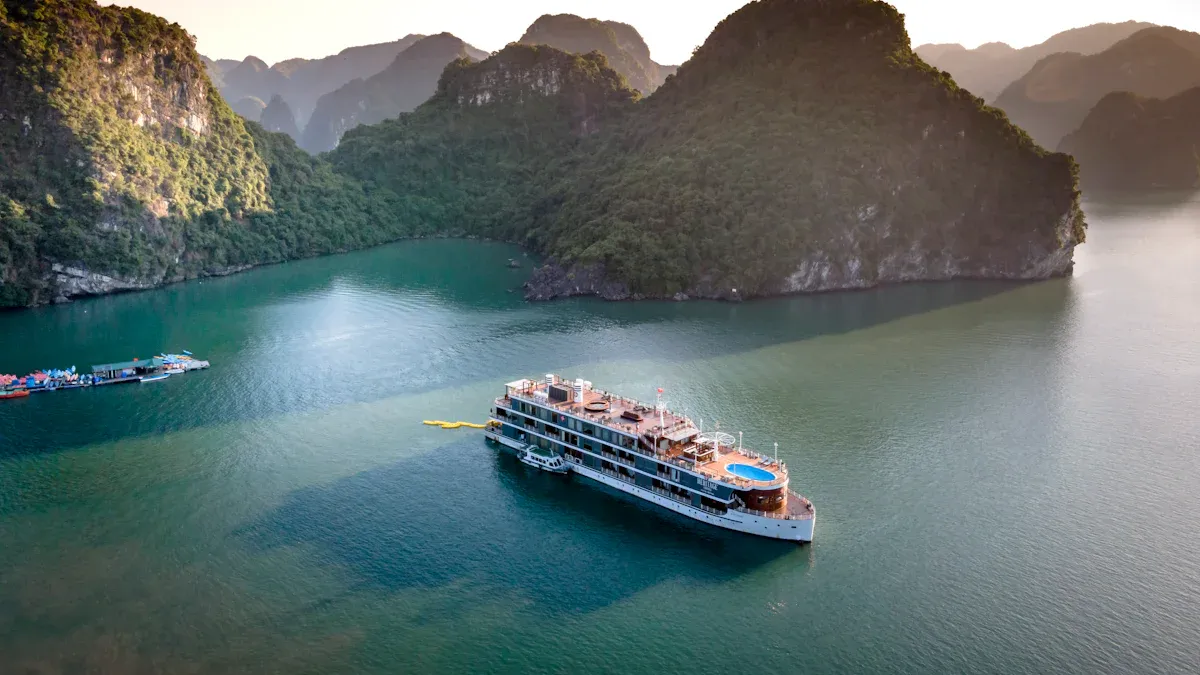
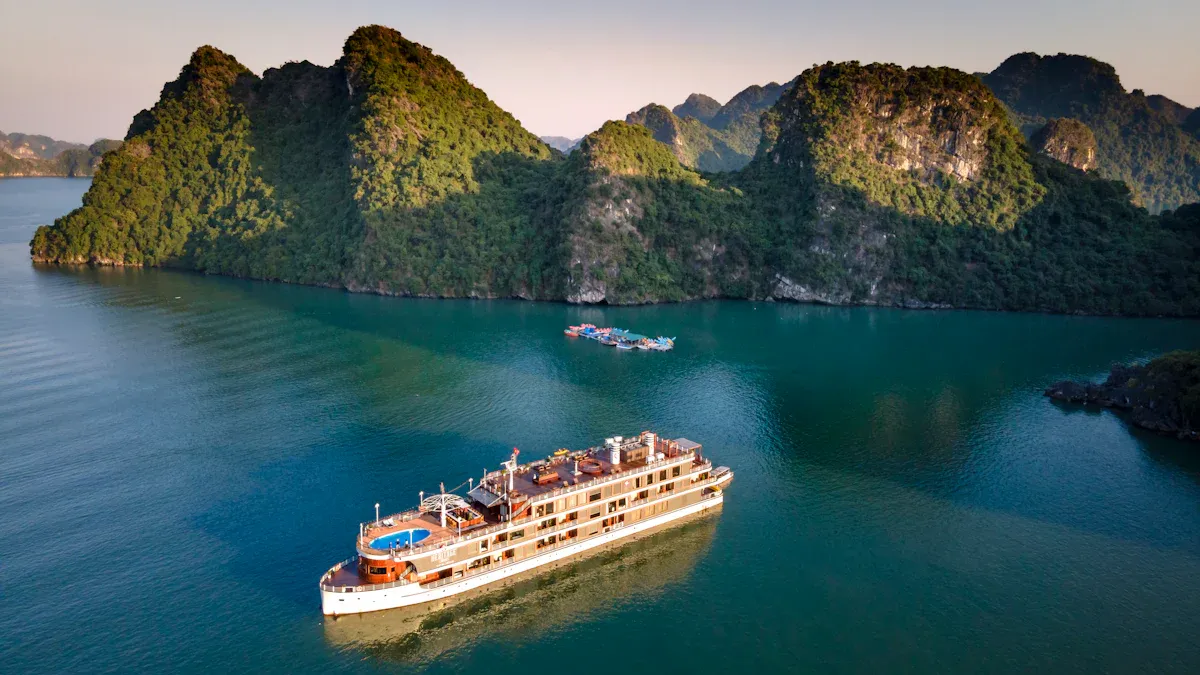
Ha Long Bay is a UNESCO World Heritage site. It is one of the most famous destinations in Vietnam. You will see thousands of limestone karsts and islets rising from emerald waters. This makes Ha Long Bay a truly magical place.
Ha Long Bay has distinctive geological formations. These include mountainous limestone islands. Some reach up to 400 meters above the water. These are prime examples of karst features. Karst landscapes form from soluble carbonate rocks like limestone. These rocks deposited between 390 and 260 million years ago. Faulting and plate tectonic activity uplifted this thick limestone blanket. Erosion then created the steep islands you see today. Ha Long Bay also features pillars, conical peaks, arches, and caves. All these contribute to its unique geological significance. You can spot famous islets like Fighting Cock Islet (Hòn Gà Chọi). It resembles two roosters in mid-fight. Stone Dog Islet (Hòn Chó Đá) looks like a stone dog. Thumb Islet (Hòn Ngón Tay) is shaped like an upraised thumb.
When you visit Ha Long Bay, you often take a cruise. Many cruises explore both Ha Long Bay and Lan Ha Bay. You can enjoy kayaking, swimming, and exploring caves.
However, you should know about environmental challenges. Waste from hundreds of tourist boats is a primary source of water pollution in Ha Long Bay. Most boats dispose of untreated wastewater directly into the bay. Even those with treatment systems rarely use them. You might notice floating debris near busy ports. Oil slicks from fishing boats can appear in certain channels. Some less-maintained beaches and caves show trash.
Stricter environmental regulations are needed for Ha Long Bay. Onshore trash still lines parts of the beach. This can put off visitors. Rapid economic growth in Vietnam has led to a ‘plastic pollution crisis.’ This means plastic waste often leaks into waterways. This affects the natural beauty of Ha Long Bay. Despite these issues, efforts are underway to improve the situation in Ha Long Bay. You can still have an amazing experience in Ha Long Bay & Lan Ha Bay.
Sapa: Terraced Rice Fields
Sapa is a mountain town in Northern Vietnam. It is famous for its stunning terraced rice fields. These fields create a breathtaking landscape. They are a testament to human ingenuity.
Indigenous farmers developed the terraced rice fields method for centuries. They adapted to frequent natural disasters. These included flash floods and soil erosion. This method was crucial for cultivation in mountainous areas. Traditional farming was impossible there.
Terraces effectively prevent damage and increase productivity. Sapa’s terraced rice fields are built on the sides of steep hills and mountains. Farmers irrigate them with water from nearby streams and rivers. They plant rice seedlings in these flooded terraces. Water channels from mountain springs or streams. These are located higher than the fields.
Water flows naturally along the terrain. It uses bamboo flumes, earthen troughs, or hand-carved wooden pipes. Each terrace’s elevation, slope, and water level are carefully calculated. This ensures a seamless cascade from one layer to the next. Farmers plant rice seedlings in the water-laden soil. This task requires precision and patience. Knowledge passes down through generations.
Sapa is also home to several ethnic minority groups. You can meet the Hmong, Red Dao, Tay, Giay, and Xa Pho people. They maintain their traditional cultures and lifestyles. Trekking through the rice fields and visiting local villages are popular activities. This allows you to experience their unique heritage.
Ninh Binh: “Ha Long Bay on Land”
Ninh Binh is often called “Ha Long Bay on Land.” It offers a similar dramatic landscape of limestone karsts. However, these rise from rice fields and rivers instead of the sea. It is one of your favorite places to visit in Vietnam.
The spectacular karst mountains near Ninh Binh resemble the iconic Ha Long Bay. The karst spires of Tam Coc are explicitly similar to those in Ha Long Bay. The scenic karst pillars in Northern Vietnam, including Ninh Binh and Ha Long, form through limestone dissolution.
Groundwater in a warm, tropical climate causes this. This process creates distinctive karst topography. It initially riddles the limestone with caves. These eventually collapse to form sinkholes. Finally, landscapes of limestone spires remain. This shared geological origin contributes to their similar appearance.
You can take river tours in Ninh Binh. For example, on the Ngo Dong River. You glide through narrow karst tunnels. The cave roof is close to the water line. This experience of navigating through water-filled karst formations echoes the water-based exploration of Ha Long Bay’s islands and caves. The Trang An boat tour takes you through rivers and lakes. Dramatic karst mountains surround you. You pass through river caves.
This water-based exploration amidst towering limestone formations reminds you of Ha Long Bay. The Mua Cave viewpoint offers a panoramic view of the valley. You see the start of the Tam Coc boat ride. You also see the surrounding karst landscape from above. This aerial perspective of the limestone formations is comparable to viewing Ha Long Bay from an elevated position.
Central Vietnam: History and Beaches
Central Vietnam offers a captivating blend of historical significance, stunning coastal beauty, and charming ancient towns. You will discover a region rich in imperial heritage and vibrant modern life. This area provides some of the best things to do in Vietnam.
Hue: Imperial City and Tombs
Hue served as Vietnam’s imperial capital for over 140 years. You can explore its rich history and grand architecture. Emperor Gia Long established Hue as the capital of the newly formed Nguyen Dynasty in 1802. He named the unified nation ‘Viet Nam’. Feng shui principles guided the capital’s location. Emperor Minh Mang, Gia Long’s successor, expanded the dynasty’s influence. He pushed westward into Cambodia and seized Laotian territory.
He also clashed with the Khmer empire, establishing these as vassal states. French colonization intensified after Emperor Tu Duc’s death. This led to Hue and the entire nation becoming a French protectorate of Annam until 1945. This period also saw a succession crisis with the murders of three emperors. This allowed France to gain direct control. The imperial palace suffered significant damage during the First Indochina War. It was brutally bombed and blasted in 1968 during the Tet Offensive. Only a fraction of it remains intact today.
You can visit the Imperial City, a UNESCO World Heritage site. This vast complex includes the Forbidden Purple City, once reserved for the emperor and his family. You will find ornate temples, palaces, and gates within its walls.
Beyond the city, you can explore the elaborate imperial tombs of the Nguyen emperors. Each tomb reflects the personality and reign of its emperor.
Khai Dinh Tomb: This tomb features a unique and modern blend of traditional Vietnamese, Roman Gothic, Hindu, and French architectural styles. Builders used concrete for most of its construction. You will see opulent mosaics and large dragon carvings. It combines Eastern and Western design elements. You can admire intricate bas-reliefs, decorative arches, and stone stairs.
Minh Mang Tomb: This tomb is known for its classical perfection, symmetry, and harmony. It strictly adheres to traditional Vietnamese architecture and Confucian principles.
Gia Long Tomb: This is the first and most secluded tomb. It is known for its majestic Feng Shui and simplicity. It features a simpler design and harmony with nature, creating a unique charm.
Dong Khanh Tomb: This tomb features a blend of traditional and Western styles. Its construction spanned four reigns.
Tu Duc Tomb: This tomb is often described as the most romantic and poetic. It resembles a peaceful royal park with a clear lotus lake and shady trees.
An Lang (Duc Duc Tomb): This tomb possesses a simpler beauty with a modest architectural style. It lacks customary stone statues.
Thieu Tri Tomb: This tomb shows an intermingling of styles from the tombs of Gia Long and Minh Mang. Its overall architecture is both formal and rustic.
Do not forget to try Hue’s famous regional food specialties. You must taste Bún bò Huế, a spicy beef noodle soup.
Da Nang: Modern City and Coast
Da Nang is a dynamic city. It offers a modern skyline and beautiful coastline. You will find a perfect blend of urban excitement and beach relaxation here.
The city’s beaches are a major draw. Early mornings at My Khe Beach are bustling. You will see families swimming, soccer matches, jogging, and exercising. Locals and expats engage in various activities early in the mornings and evenings. These activities include swimming, jogging, stretching, playing volleyball, and gathering to watch the sunset. You can also try paddleboarding at Non Nuoc Beach. Surfing lessons are available through Surf Shack in Da Nang.
Da Nang is transforming into a high-tech innovation and investment hub. It holds a strategic position within Vietnam’s emerging role in the global semiconductor and AI value chains. This transformation acts as a catalyst for progress. It makes Da Nang an ideal place for international companies to invest, expand, and build. The city actively pursues digital transformation, IT outsourcing, and green tech.
Hoi An: Ancient Town Lanterns
Hoi An Ancient Town is a UNESCO World Heritage site. It charms visitors with its well-preserved architecture and vibrant lantern-lit streets. You will feel transported back in time as you wander through its narrow alleys.
Hoi An’s architecture reflects its history as a bustling trading port. Various historical trade routes influenced its unique style.
Chinese Influence: Many Ming loyalists migrated to Dai Viet after the Ming-Qing transition. They settled in Hoi An, replacing the Japanese quarter. Their architectural style is evident in structures like the red lacquered wood and stone main structure of the Japanese Covered Bridge.
Japanese Influence: Japanese traders established a quarter in the late 16th century. They used red-seal ships. They built two and three-story wooden houses along the river bank. The Japanese Covered Bridge, built with their assistance in the 17th century, is a prime example. It features a curved roof resembling a traditional Japanese house.
Vietnamese Influence: The architecture of Hoi An blends Vietnamese styles. The Tan Ky Old House showcases this. The Japanese Covered Bridge also incorporates Vietnamese touches, such as yin-yang tiles decorating the roof.
You can visit the Tan Ky Old House, built in 1741. This house showcases a blend of Chinese, Japanese, and Vietnamese architectural styles. Notable features include double overlapping columns, representing the heaven-human relationship. Five vertical columns symbolize the five elements.
A light-providing atrium adds to its charm. The Japanese Covered Bridge (Chua Cau) connects the former Chinese and Japanese quarters. Its design combines Chinese elements, like red lacquered wood and stone structure. It also has Japanese elements, like a curved roof, and Vietnamese touches, such as yin-yang tiles.
Hoi An is also famous for its traditional crafts. You can visit workshops and see artisans at work.
Weaving conical hats
Making silk lanterns
Molding intricate pottery
You can also enjoy Hoi An’s culinary delights. Try Cao Lau noodles and White Rose dumplings. These are some of the best things to do in Vietnam for food lovers. Your travel to this part of Vietnam will be unforgettable.
Southern Vietnam: Cities and Delta Life
Southern Vietnam offers a vibrant mix of city life and natural beauty. You will explore a bustling metropolis, unique river life, and tropical island getaways. This region provides incredible experiences for your travel in Vietnam.
Ho Chi Minh City: Dynamic Metropolis
Ho Chi Minh City is a dynamic metropolis. You will find a bustling urban center here. Ho Chi Minh City serves as Vietnam’s financial capital. It is a primary economic hub. This status draws people nationwide. This contributes to its rapid growth. The Doi Moi Policy changed urban land use patterns in Ho Chi Minh City. New land use laws since 1993 stimulated real estate investments.
The First City Master Plan in 1993 managed this development in Ho Chi Minh City. Young people migrate to Ho Chi Minh City for education and jobs. Ho Chi Minh City’s GDP accounts for nearly 25% of Vietnam’s total. You will see robust export activities. These include electronics and garments. Domestic consumption is vigorous. This is due to rising incomes.
Ho Chi Minh City is a top FDI destination. It focuses on high-tech sectors. These include IT and advanced manufacturing. The mechanical industry is a backbone of Ho Chi Minh City’s economy. The electronic and IT industry is a hot spot for manufacturing in Ho Chi Minh City.
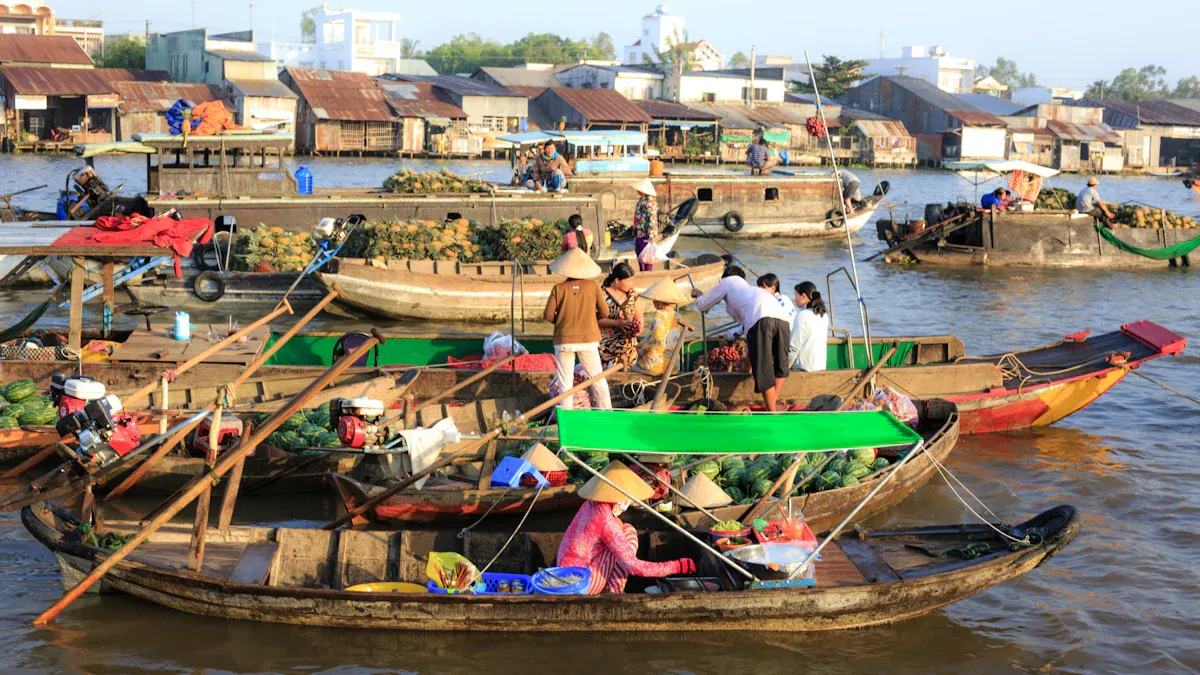
Mekong Delta: River Life and Markets
The Mekong Delta offers unique river life. You can explore its vibrant markets. Farmers on Con Chim island practice traditional agriculture. They use wet and dry season methods.
This is a model for nature-based farming in Vietnam. You will see crops like rice and fruits in flooded fields. People call these “floating gardens.” Farmers shift from intensive rice farming. They now raise ducks and fish. They use mangrove forests for aquaculture. You can find shrimp and clams here. Polyculture systems are also common. You can visit many floating markets.
Cai Rang is the largest market. It is a 45-minute boat ride from Can Tho. Phong Dien is smaller and less touristy. Cai Be operates throughout most of the day. Phung Hiep opened in 1915. Nga Nam is the southernmost market. Tra On specializes in agricultural products. These markets offer a glimpse into local life. They are some of the best things to do in Vietnam.
Phu Quoc Island: Tropical Paradise
Phu Quoc Island is a tropical paradise. You will find a convergence of forests and seas here. Streams, waterfalls, and hills also define the landscape. Primeval vegetation covers the island. Tropical forests house many bird and mammal species. Some are rare and endangered.
The island has about 60 kilometers of coastline. You will see beautiful views. Coral reefs and unique sea creatures thrive here. Phu Quoc has diverse ecosystems. These include evergreen and mangrove forests. Its varied terrain includes mountains and streams. Rich biodiversity means lush landscapes.
You can find orchids and medicinal plants. Diverse fauna includes 30 mammal species. You can also see 200 birds. Some are listed in Vietnam’s Red Book. These pristine rainforests offer experiences with wild creatures. This makes Phu Quoc a great place for travel.
Essential Vietnam Travel Tips
You need good planning for a smooth and enjoyable travel experience in Vietnam. This guide provides practical advice. It covers logistics, local customs, and culinary highlights.
Best Time to Visit Vietnam
Vietnam has varied weather. You will find both sunshine and rain throughout most months. The country has an extensive coastline and three distinct weather systems. Consider Vietnam as three separate destinations when you plan your visit.
Northern Vietnam (Hanoi, Ha Long Bay, Sapa): Visit from April to June or September to November for pleasant temperatures and clear skies. September to November offers cooler temperatures around 25 degrees Celsius. Late April and early October are great for Sapa’s rice paddies.
Central Vietnam (Hue, Hoi An, Da Nang): Enjoy hot and dry weather from mid-January to late August. Temperatures often reach the mid-30s Celsius. March is excellent for bright blossoms in Hoi An.
Southern Vietnam (Ho Chi Minh City, Mekong Delta, Phu Quoc): The dry season runs from November to April or early May. Temperatures average between 25-35 degrees Celsius year-round. Phu Quoc Island offers sunny days year-round.
February and March are optimal months to visit the entire country for relatively dry weather. This is a good guide for your travel.
Visa Requirements
Most visitors to Vietnam need a visa. However, some countries have visa exemption agreements. For these visitors, tourist visas may be valid for 15 to 30 days. Always check the latest requirements before your trip.
Transportation Options
Efficient transportation makes your travel in Vietnam easier.
Planes: Use planes for trips longer than six hours by bus. Domestic air travel is efficient. Airport arrival times are short.
Luxury Vans: These are a good option if planes are not available. They carry 7-10 passengers. They offer spacious seats with chargers and ample legroom.
VIP Sleeper Buses: These buses provide wide, comfortable seats with privacy curtains. They are good for multi-hour trips if you have a tight budget.
Trains offer a relaxing way to travel. However, they are not the most efficient for speed or destinations.
Planning Your Vietnam Itinerary
Plan your Vietnam itinerary carefully. Consider the best things to do in Vietnam that match your interests. Research different regions. Decide how much time you want to spend in each place. This helps you make the most of your trip.
Local Cuisine: Must-Try Dishes
You must try Vietnam’s delicious food.
Pho: This is a quintessential Vietnamese noodle soup. Northern-style Pho from Hanoi has a clear broth. Southern Pho is sweeter and cloudier. It features more herbs.
Banh Xeo: This “sizzling pancake” comes from Southern Vietnam. It is a crispy rice flour pancake. It has pork, shrimp, and bean sprouts.
Bun Cha: This Hanoi dish features grilled pork and noodles. You eat it with rice vermicelli and grilled pork in a dipping sauce.
Banh Mi: This sandwich combines French baguettes with Vietnamese fillings. It includes pate, cold cuts, and pickled vegetables.
Goi Cuon: These are fresh spring rolls. They have herbs, rice vermicelli, shrimp, and pork. You eat them cold with a hoisin-peanut dipping sauce.
Cultural Etiquette
Understanding local customs shows respect.
Greetings: Stand up to greet respected individuals, especially elders. Men typically shake hands with a small nod. Women usually greet with a brief bow. Use both hands when you give or receive items from elders.
Religious Sites: Dress modestly when you visit pagodas, temples, or mausoleums. Cover your shoulders. Your shorts must be over the knee. Remove sunglasses and hats before you enter worshipping altars. Speak softly. Remove your shoes before you enter worshipping areas.
Budgeting and Currency
A mid-range budget traveler can expect to spend $60–$90 per day in Vietnam. This budget allows for comfortable hotels and dining.
Hostels and Guesthouses: $5–$15 per night.
Mid-range Hotels: $25–$50 per night.
Luxury Resorts: $100–$500 per night.
The local currency is the Vietnamese Dong (VND). You can use ATMs widely.
Vietnam offers incredible diversity. You find historical depth in the North. The Central coast provides serene beauty. The South has an energetic pulse. This comprehensive guide helps you plan your Vietnam travel adventure. Embrace Vietnam’s unique charm. You will discover many things to do in Vietnam. Use this guide to start your unforgettable travel to Vietnam today.