
Seven top lightweight backpacking stoves for 2026 balance weight, boil speed, wind resistance, packability, fuel fit and durability. Choices range from ultralight titanium burners like the BRS-3000T to compact canister classics such as the MSR PocketRocket 2.
Windproof AOTU and Odoland models offer adapters for diverse fuel options, while integrated systems like Fire-Maple’s Star X2 Pro and Fixed Star 1 nest pots and stoves for compact packing.
Each model trades off weight for robustness and fuel flexibility; read on for detailed specs and practical buying tips.
| AOTU Portable Wind-Resistant Backpacking Camping Stove |

| Windproof Compact | Fuel Type / Compatibility: Butane or butane‑propane mixed canisters (7/16″ EN 417); not propane | Portability / Packability: Ultra‑compact; packed dims 4 × 5 × 8 cm; plastic storage box | Boil Time / Performance Indicator: Rated power 3000 W (implies fast boil; no explicit time) | VIEW LATEST PRICE | Read Our Analysis |
| Odoland 6-Piece Lightweight Camping Cookware Mess Kit |
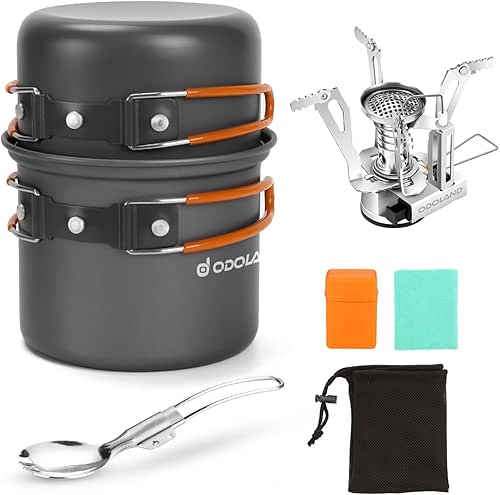
| All-in-One Kit | Fuel Type / Compatibility: Uses small canister stove (kit includes stove sized for standard backpacking canisters) | Portability / Packability: Nested 6‑piece kit with mesh carry bag; pots stack for storage | Boil Time / Performance Indicator: Not specified (designed for quick, efficient outdoor cooking) | VIEW LATEST PRICE | Read Our Analysis |
| MSR PocketRocket 2 Ultralight Camping and Backpacking Stove |

| Ultralight Performance | Fuel Type / Compatibility: Isobutane‑propane threaded canisters (self‑sealing) | Portability / Packability: Ultralight, folds small; collapsed 2×2×3 in; protective case included | Boil Time / Performance Indicator: Boils 1 L in ~3.5 minutes | VIEW LATEST PRICE | Read Our Analysis |
| Fire-Maple Star X2 Pro Backpacking Camp Stove |

| Integrated System | Fuel Type / Compatibility: Propane‑style fuel canisters (compatible with common threaded canisters) | Portability / Packability: Integrated cookpot stores accessories; compact for hiking; 19.8 oz | Boil Time / Performance Indicator: Heat‑exchange tech reduces boil times up to 30% | VIEW LATEST PRICE | Read Our Analysis |
| Fire-Maple Fixed Star 1 Backpacking Propane Stove System |

| Fast-Boil Efficient | Fuel Type / Compatibility: Propane‑style fuel canisters (not compatible with COLEMAN liquid fuel) | Portability / Packability: All components nest inside 1 L pot; compact; 18 oz | Boil Time / Performance Indicator: Heat‑exchange tech reduces boil times up to 30% | VIEW LATEST PRICE | Read Our Analysis |
| Odoland Portable Windproof Camping Stove with Adapter |

| Power & Versatility | Fuel Type / Compatibility: 7/16″ threaded single propane/butane‑propane mixed canisters (EN 417) | Portability / Packability: Foldable, lightweight with carrying case; collapsible burner | Boil Time / Performance Indicator: Up to 3500 W; boils 1 L in ~3 minutes (varies) | VIEW LATEST PRICE | Read Our Analysis |
| BRS-3000T Ultra-Light Titanium Mini Camping Stove |

| Featherweight Minimalist | Fuel Type / Compatibility: Screws directly onto small threaded canister (standard isobutane/propane type) | Portability / Packability: Extremely compact; 25 g; nests inside 750 ml pot with 110 g canister | Boil Time / Performance Indicator: Boils 1 L in ~2:58 | VIEW LATEST PRICE | Read Our Analysis |
More Details on Our Top Picks
AOTU Portable Wind-Resistant Backpacking Camping Stove
If you want a compact, wind-resistant stove that won’t weigh down a solo hiker or a two-person team, I’d pick the AOTU Portable Wind-Resistant Backpacking Camping Stove for its integrated aluminum construction and honeycomb windproof net—those features keep it light yet durable and improve combustion in breezy conditions. I like its 3000 W output and adjustable valve for rapid boil or gentle simmer, plus a polyethylene flame part that boosts oxygen flow for cleaner burn. It accepts EN 417 butane or butane-propane canisters, fits cookware up to ~20 cm, packs tiny, and comes with a satisfaction guarantee.
- Fuel Type / Compatibility:Butane or butane‑propane mixed canisters (7/16″ EN 417); not propane
- Portability / Packability:Ultra‑compact; packed dims 4 × 5 × 8 cm; plastic storage box
- Boil Time / Performance Indicator:Rated power 3000 W (implies fast boil; no explicit time)
- Flame Control / Ignition:Adjustable valve for rapid high heat and fine simmer
- Construction Material:Aluminum alloy burner, honeycomb high‑temp aluminum windscreen, refined aluminum body
- Intended Use / Suitability:Backpacking, camping, hiking, fishing for 1–3 people
- Additional Feature:Polyethylene flame component
- Additional Feature:Honeycomb windproof net
- Additional Feature:Includes plastic storage box
Odoland 6-Piece Lightweight Camping Cookware Mess Kit
I recommend the Odoland 6-piece mess kit for solo backpackers who want a compact, all-in-one cooking setup that won’t slow them down. I’ve used the two non-stick anodized aluminum pots and found them strong, lightweight, and fast-heating. The foldable handles and stove nest neatly with the spork, cleaning cloth, and mesh bag, leaving room for a gas canister. It’s built to last and handles daily backpacking use without fuss. Setup and cleanup are straightforward, and the whole kit stays organized in its carry bag. If you want simplicity and durability, this kit delivers.
- Fuel Type / Compatibility:Uses small canister stove (kit includes stove sized for standard backpacking canisters)
- Portability / Packability:Nested 6‑piece kit with mesh carry bag; pots stack for storage
- Boil Time / Performance Indicator:Not specified (designed for quick, efficient outdoor cooking)
- Flame Control / Ignition:Basic foldable stove included (implied manual flame control)
- Construction Material:Anodized aluminum pots and stove (non‑stick)
- Intended Use / Suitability:Camping, hiking, backpacking, picnics, survival, family outings
- Additional Feature:Mesh carry bag
- Additional Feature:Foldable pot handles
- Additional Feature:Includes cleaning cloth
MSR PocketRocket 2 Ultralight Camping and Backpacking Stove
I’m recommending the MSR PocketRocket 2 for hikers who prize ultralight gear and fast boil times. I carry this 2.6 oz stove (4.2 oz with case) because its collapsed 2 x 2 x 3 in profile tucks into a minimalist kit, and the folding supports open to 4.8 x 4.8 x 3.6 in for stable pots. It boils a liter in about 3.5 minutes, offers a simmer-to-rolling-boil flame, and needs no priming or pressurizing. The serrated supports suit many pot styles, and it runs on common self-sealing isobutane-propane canisters. A protective case is included.
- Fuel Type / Compatibility:Isobutane‑propane threaded canisters (self‑sealing)
- Portability / Packability:Ultralight, folds small; collapsed 2×2×3 in; protective case included
- Boil Time / Performance Indicator:Boils 1 L in ~3.5 minutes
- Flame Control / Ignition:Simmer to boil control; no priming required
- Construction Material:Metal stove (lightweight alloy) with serrated pot supports; protective case
- Intended Use / Suitability:Minimalist backpacking, hiking, trekking, global travel
- Additional Feature:Serrated pot supports
- Additional Feature:No priming required
- Additional Feature:Protective case included
Fire-Maple Star X2 Pro Backpacking Camp Stove
You’ll appreciate the Fire-Maple Star X2 Pro if you want a near-complete cook system that’s light enough to carry all day; I value its integrated pot-and-stove design and instant piezo ignitor because they cut setup time and clutter on the trail. The hard-anodized aluminum pot houses the stove and accessories, keeping pack volume low. Advanced heat-exchange tech trims boiling times by up to 30% and resists wind. At 19.8 oz it’s a practical compromise between weight and capability. The locking stainless handle, neoprene cover, reduced plastic, and robust build all signal durability and safer, longer-term use on hikes.
- Fuel Type / Compatibility:Propane‑style fuel canisters (compatible with common threaded canisters)
- Portability / Packability:Integrated cookpot stores accessories; compact for hiking; 19.8 oz
- Boil Time / Performance Indicator:Heat‑exchange tech reduces boil times up to 30%
- Flame Control / Ignition:Built‑in piezoelectric ignitor; integrated control
- Construction Material:Hard‑anodized aluminum pot; stainless steel handle; neoprene cover
- Intended Use / Suitability:Hiking, trekking, fishing, outdoor use (backpacking)
- Additional Feature:Built-in piezo ignitor
- Additional Feature:Neoprene pot cover
- Additional Feature:Accessories nest inside
Fire-Maple Fixed Star 1 Backpacking Propane Stove System
Hunting for a compact, fast-boiling stove that keeps pack weight down? I found the Fire-Maple Fixed Star 1 a clever, integrated propane system: a 1 L hard‑anodized pot with a built‑in jet burner and piezo ignitor. It nests stove, bowl, and compatible propane canister inside the pot for tiny pack volume and weighs 18 oz. Heat‑exchange tech cuts boil times up to 30% versus traditional stoves, though I still use a windscreen in gusts. Handle is locking stainless steel, pot has a neoprene cover, and it’s not compatible with COLEMAN canisters. Follow manufacturer fuel and safety guidance.
- Fuel Type / Compatibility:Propane‑style fuel canisters (not compatible with COLEMAN liquid fuel)
- Portability / Packability:All components nest inside 1 L pot; compact; 18 oz
- Boil Time / Performance Indicator:Heat‑exchange tech reduces boil times up to 30%
- Flame Control / Ignition:Built‑in piezoelectric ignitor; adjustable control recommended with windscreen
- Construction Material:Hard‑anodized aluminum pot; stainless steel handle; neoprene cover
- Intended Use / Suitability:Hiking, trekking, fishing, hunting, emergency use (backpacking)
- Additional Feature:Built-in piezo ignitor
- Additional Feature:Nests fuel and accessories
- Additional Feature:Not Coleman-compatible
Odoland Portable Windproof Camping Stove with Adapter
I recommend the Odoland Portable Windproof Camping Stove with Adapter for solo hikers and minimalist weekend campers who need a compact, powerful cooker that won’t be slowed by breezy conditions. I like its windshield design and even heat distribution — it boosts burning efficiency so you save fuel. The all-in-one aluminum alloy and stainless steel build feels sturdy, with a piezo ignition and flame controller for precise simmering. It pushes up to 3500W and can boil a liter in roughly three minutes. Two connector types accept EN 417 7/16-thread canisters. Foldable, lightweight, and it comes with a carrying case for easy transport.
- Fuel Type / Compatibility:7/16″ threaded single propane/butane‑propane mixed canisters (EN 417)
- Portability / Packability:Foldable, lightweight with carrying case; collapsible burner
- Boil Time / Performance Indicator:Up to 3500 W; boils 1 L in ~3 minutes (varies)
- Flame Control / Ignition:Piezo ignition and flame controller for adjustable heat
- Construction Material:Aluminum alloy and stainless steel construction
- Intended Use / Suitability:Camping, backpacking, hiking, picnics, overnight trips
- Additional Feature:Two connector types
- Additional Feature:Built-in piezo ignition
- Additional Feature:Foldable with carrying case
BRS-3000T Ultra-Light Titanium Mini Camping Stove
If you’re chasing every saved gram on overnight trips, I’d pick the BRS-3000T for its astonishing 25 g titanium body that shaves weight without sacrificing a steady, adjustable flame. I like that it delivers 2700 W and brings 1 L to boil in about 2:58 while burning roughly 140 g/hour. It’s tiny: the stove, a 110 g canister and pouch nest inside a 750 ml pot. Setup is simple—flip out the pot supports, close the valve, twist onto the canister—and you get smooth flame control. It’s an ultralight, no-frills choice for minimalist backpacking.
- Fuel Type / Compatibility:Screws directly onto small threaded canister (standard isobutane/propane type)
- Portability / Packability:Extremely compact; 25 g; nests inside 750 ml pot with 110 g canister
- Boil Time / Performance Indicator:Boils 1 L in ~2:58
- Flame Control / Ignition:Smooth flame adjustment via control valve (manual)
- Construction Material:Titanium alloy stove (ultralight) with pouch and O‑ring
- Intended Use / Suitability:Ultralight backpacking and camping (weight‑focused use)
- Additional Feature:Titanium construction
- Additional Feature:25 g ultralight weight
- Additional Feature:Includes spare O-ring
Factors to Consider When Choosing a Lightweight Stove for Backpacking
When selecting a lightweight backpacking stove, hikers must weigh trade-offs among weight and packability, boil time efficiency, and fuel type compatibility. Performance in wind and the stove’s stability and pot support also directly affect real-world usability and safety. These factors together determine whether a stove meets the demands of a given trip and cooking style.
Weight And Packability
For backpackers prioritizing minimal carry weight and efficient use of limited space, stove selection hinges on both mass and packability: aim for ultralight burners under about 100 g (3.5 oz) for the lightest setups, but account for how lightweight canisters or integrated systems can add 100–300 g to the total stove-plus-fuel weight. Compare packed dimensions: models that collapse to roughly 2–3 in (5–8 cm) cubes or nest inside a 750–1000 ml pot save significant space. Include stove plus accessory volume—windscreen, piezo igniter, protective case—since non-nesting accessories can negate a small stove footprint. Check burner footprint and pot supports; compact 9–10 cm fireboards or minimal serrated supports reduce bulk. Balance extreme weight savings (25–50 g stoves) against extra items needed for reliable use.
Boil Time Efficiency
Boil time is a key performance metric for backpacking stoves, typically measured as the time to bring 1 liter of water to a rolling boil and directly affecting fuel consumption and time exposed to weather. Faster boil times (around 3–4 minutes) cut fuel use and reduce exposure to wind and rain. Rated power correlates with speed, but real-world results hinge on heat-transfer efficiency and environmental conditions. Integrated heat-exchange pots and close-fitting designs can shorten boil times by roughly 30% versus open flames by improving conductive and convective transfer. Wind protection and steady flame control prevent heat loss that otherwise lengthens boils and wastes fuel. Adjustable simmer and flame modulation enable matching output to volume, avoiding unnecessary fuel expenditure for small or delicate tasks.
Fuel Type Compatibility
Against the backdrop of trip length, climate, and resupply access, fuel compatibility is a decisive factor in selecting a lightweight backpacking stove. Canister stoves using self-sealing isobutane/propane mixes offer fast, controllable heat and low carried weight but depend on availability of compatible threaded canisters. Integrated stove-pot systems and jet burners that attach to screw-top canisters require specific thread standards (e.g., EN 417 7/16″), so compatibility should be confirmed before buying replacements. Liquid-fuel stoves running on white gas, kerosene, or diesel deliver reliable performance in extreme cold or high altitude and provide higher volumetric energy density for long trips, yet demand priming, pressure maintenance, extra fuel bottles, and added weight. Regional regulations and seasonal availability affect transport and disposal; verify local rules when planning.
Wind Resistance Performance
Fuel choice and stove format affect more than refill logistics; they also shape how a stove handles wind. Wind-resistant designs or integrated windshields can cut boiling times by roughly 30% versus unshrouded burners by limiting convective losses. Low-exposed-flame layouts and concentrated heat-exchange systems — pot-integrated or heat-exchanger stoves — retain efficiency and steadier output in gusty conditions. Physical windshields or honeycomb guards stabilize flame but add weight and bulk, a clear trade-off for ultralight kits. Wide, low flames and designs promoting elevated oxygen circulation improve combustion stability, whereas tall, exposed flames are prone to extinguishing. Because real-world performance depends on breeze intensity, pot geometry, and stove-to-cookware coupling, field testing in anticipated wind and terrain is essential before committing to a model.
Stability And Pot Support
When evaluating stability and pot support, prioritize stoves with wide, low-profile or serrated pot supports that increase contact area and resist tipping with taller cookware or uneven ground. Confirm the stove safely supports typical pot diameters and wet weights—around 20 cm and 1–2 kg—so pans don’t sag or shift. Prefer units with multiple folding legs or built-in windshields to broaden the footprint and resist lateral forces from stirring or gusts. Consider center-of-gravity and flame placement; designs that locate the flame beneath the pot center and keep heat exchange compact reduce top-heaviness. Always test stability on representative surfaces—rock, packed dirt, soft soil—and plan for a small flat rock or baseplate if legs are narrow or the stove is canister-mounted to guarantee consistent, safe performance.
Flame Control Precision
How precisely a stove’s flame can be modulated determines its usefulness beyond simply boiling water. Precise flame control permits rapid boil-to-simmer shifts, enabling delicate foods and reducing fuel waste by running lower heat when full power isn’t required. Stoves with smooth low-flow adjustment valves that allow fine incremental changes are preferable to those with only high/low detents because they enable consistent simmering. Burner designs that hold stable output in wind or cold improve practical control by minimizing the need to compensate with higher settings. Equally important is flame stability at low settings: intermittent sputtering undermines melting, simmering, and sauce work. Finally, valve responsiveness and whether a stove needs priming or preheating matter, since delays or lag reduce usable control during cooking.
Durability And Materials
Balancing weight, toughness, and corrosion resistance is central to selecting a backpacking stove, so materials and construction should be evaluated as carefully as burn time or output. Preference goes to high‑strength, heat‑resistant metals—anodized aluminum, stainless steel, or titanium—that combine corrosion resistance and durability with low mass. Inspect welded or machined joints and reinforced pot supports; solid joints endure repeated packing and thermal cycling better than thin stamped parts. Choose finishes and alloys rated for high temperatures (hard‑anodized surfaces, appropriate stainless grades) to prevent warping, oxidation, or coating loss. Factor in serviceability: replaceable valves, O‑rings, and igniters and spare‑part availability extend field life. Balance weight versus robustness: titanium gives superior strength‑to‑weight but can dent, while thicker steel or aluminum sacrifices grams for toughness.
Integrated Cook Systems
After evaluating materials and construction, attention turns to integrated cook systems as an option that prioritizes compactness and efficiency. Integrated cook systems nest burner and pot into a single unit, minimizing pack volume and simplifying setup; many designs allow the burner and fuel to stow inside the pot. Matched pot-and-burner geometry yields better heat transfer and faster boil times than separate stove-and-pot combos. Trade-offs include reduced versatility and a small weight penalty, making these systems best for solo or ultralight hikers who value space over multi-pot cooking. Buyers should verify packed weight and nested dimensions to make certain fit and meet weight budgets. Finally, check serviceability and fuel compatibility, since integrated designs can restrict replacement options and require specific canister types or adapters.