


Germany offers diverse mountain landscapes. The Bavarian Alps stand out as a prime destination for breathtaking scenery and outdoor activities. You will discover excellent hiking opportunities here. The region appeals to all hikers, offering unparalleled scenic views. These German Alps provide a perfect setting for adventure. You can explore specific mountains and experience diverse hiking trails. Prepare for an unforgettable journey in the Alps.
Key Takeaways
The Bavarian Alps are Germany’s best mountain region. They offer beautiful views and many outdoor activities.
You can hike famous mountains like Zugspitze and Watzmann. Each mountain has different trails for all skill levels.
Good preparation is important for your trip. Wear proper hiking boots and layered clothes. Always check the weather.
The Bavarian Alps are easy to reach. You can use trains or drive. Cable cars help you get to high places.
Beyond Bavaria, Germany has other mountain ranges. The Harz Mountains and Black Forest offer more hiking and nature.
Exploring the Bavarian Alps: Germany’s Premier Mountain Region
Geographical Highlights and Natural Beauty
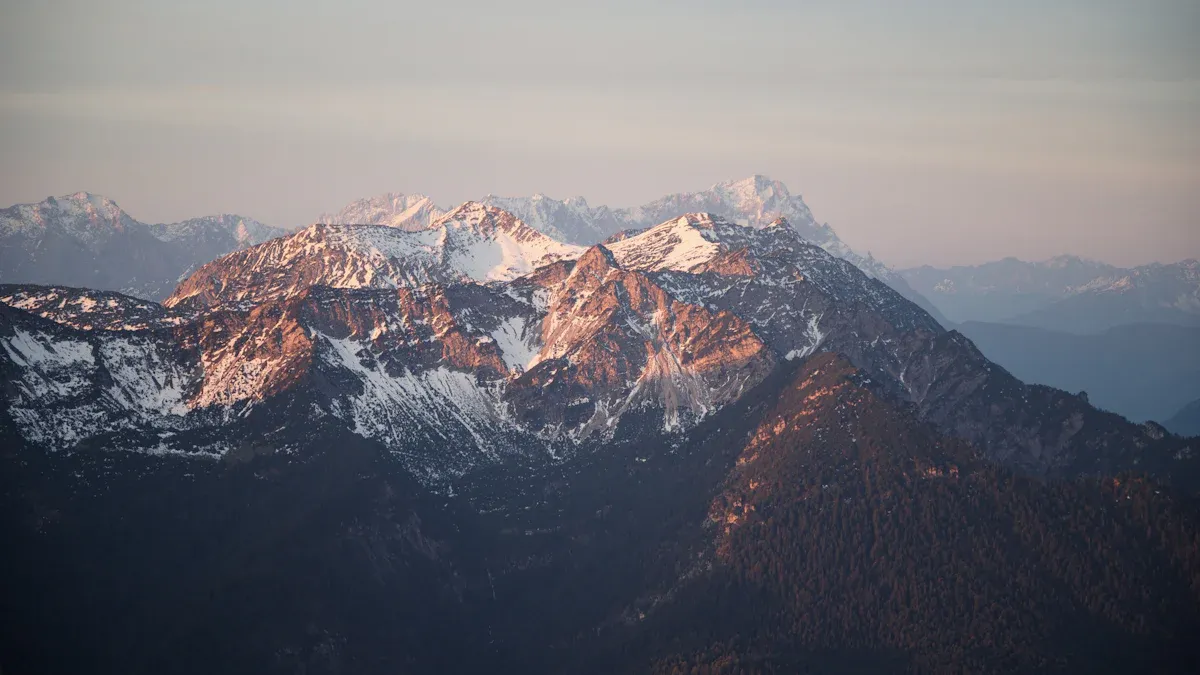
The Bavarian Alps present Germany’s most stunning mountain scenery. You will find towering peaks, lush valleys, and crystal-clear lakes here. This region forms the eastern part of the larger Alps mountain range. It offers diverse landscapes. You can explore dense forests, alpine meadows, and dramatic rock faces. The natural beauty of the Bavarian Alps attracts many visitors. You experience breathtaking views at every turn. The unique geology creates dramatic formations. This makes the scenery truly unforgettable. You can see glaciers on the highest peaks. You also find pristine mountain lakes reflecting the sky. This creates a picturesque environment for all your adventures.
Accessibility and Infrastructure
Reaching the Bavarian Alps is straightforward. Germany provides excellent infrastructure. You can travel easily to these mountains. Bavaria’s public transportation system helps you. Deutsche Bahn (DB) operates extensive train services. These connect major cities to popular Alpine regions. High-speed ICE trains link cities like Munich. Regionalbahn (RB) and Regional Express (RE) lines offer economical travel.
For comprehensive travel across Bavaria, consider the Bayern Ticket. This ticket allows unlimited use of regional trains, trams, and buses for a full day. You can add extra passengers for a small fee. If you travel to specific Alpine regions like Oberammergau or Garmisch-Partenkirchen, the Werdenfels ticket offers a cheaper option. These tickets make exploring the German Alps affordable. While public transport is viable, some routes might take longer. This is because the west-east orientation of the Alpine Road often crosses north-south public transport lines. You can plan your journeys using the German railway website (bahn.de). This ensures smooth travel to the heart of the Alps. Beyond public transport, well-maintained roads allow for easy car access. Many towns offer cable cars and chairlifts. These transport you quickly to higher elevations. This infrastructure makes the Bavarian Alps accessible for everyone.
Top Mountains for Hiking and Panoramic Views
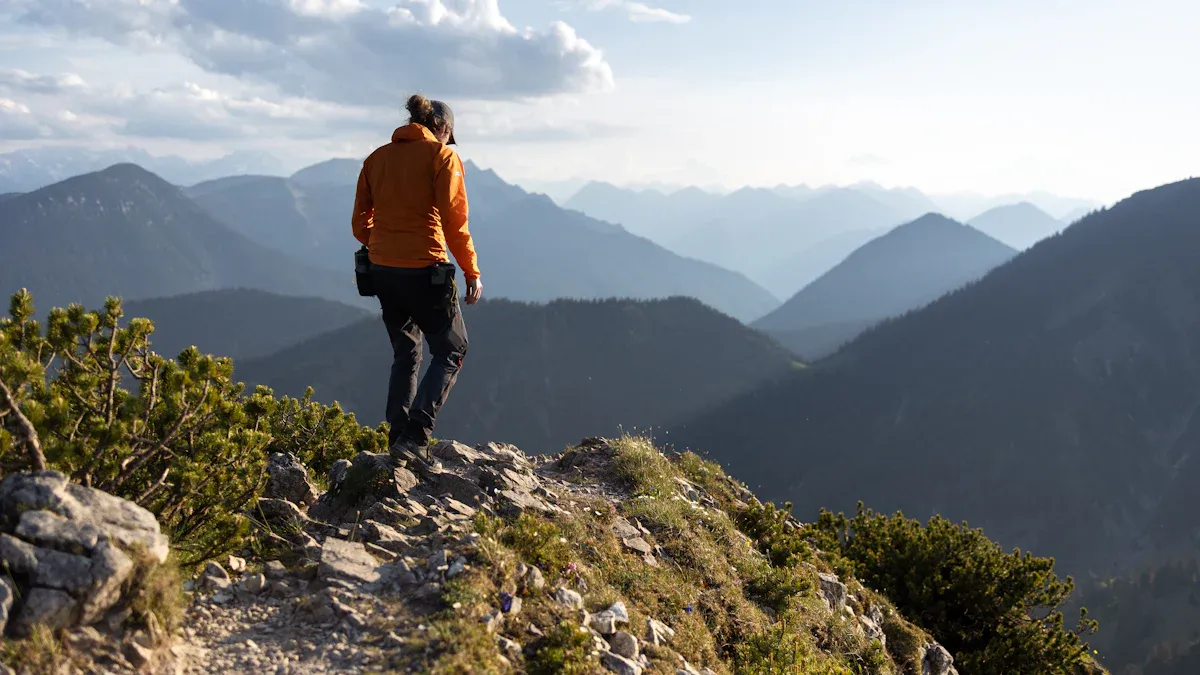
You will find many incredible mountains in the Bavarian Alps. Each offers unique experiences. You can enjoy spectacular hiking in the Bavarian Alps. These mountains provide some of the best places to hike. They also offer breathtaking panoramic view opportunities.
Zugspitze
The Zugspitze stands as Germany’s highest peak. It reaches 2,962 meters. You can experience incredible alpine scenery here. This mountain offers challenging hiking and easy access.
You have two primary hiking routes to the summit. The Reintal Valley route is easier. It provides a long but less steep ascent. The Höllental route is more demanding. You can hike to the Höllentalangerhütte. This part is easy. The full summit ascent via Höllental requires more skill. You will find fixed ropes and ladders on this route.
You can also reach the Zugspitze summit by cable car. The Eibsee Cable Car offers a quick ride. A cogwheel train also goes to the top.
Category | Sept – June Operating Hours | July – August Operating Hours | Adult 1-Day Ticket (Summer 2025) |
|---|---|---|---|
Zugspitze Cable Car | 8:30 AM – 4:45 PM | 8:00 AM – 5:45 PM | €75.00 |
Last Ascent | 30 minutes before closing | 30 minutes before closing | N/A |
The cable car runs at least every half hour. Additional trips happen as needed. The last ascent is 30 minutes before closing. From the summit, you get panoramic vistas of alpine peaks. You see four countries on a clear day. The best time to visit is summer for hiking. Winter offers excellent skiing. Garmisch-Partenkirchen is a nearby town. It provides many amenities.
Watzmann
The Watzmann is a majestic mountain in Berchtesgaden National Park. It is the third highest peak in Germany. This mountain is famous for its rugged beauty. It offers challenging multi-day hiking.
You can try the multi-day hike to Watzmann Mittelspitze. This route goes via Watzmannhaus.
Day 1: Approach and Overnight at Watzmannhaus
You start at Wimbachbrücke (634 m).
The hike to Watzmannhaus (1,928 m) takes about 4-5 hours. The trail is well-marked. It has rocky and wooded paths. Some sections are steeper. You stay overnight at Watzmannhaus.
Day 2: Summit Day (Watzmann Mittelspitze) and Descent
You climb to Hocheck (2,651 m). This climb is steep from Watzmannhaus. It involves some scrambling. This takes about 2-3 hours. The route has fixed cables and handholds.
You traverse from Hocheck to Mittelspitze (2,713 m). This part is more exposed. It has rocky ridges and narrow pathways. This takes approximately 1-2 hours. You need caution due to exposure.
You descend back to Watzmannhaus. Then you go to Wimbachbrücke. This takes around 4-5 hours from Watzmannhaus.
The Watzmann-Überschreitung (Traverse) is another option. This is a demanding two-day expedition. It typically includes an overnight stay at Watzmannhaus. This traverse is for highly experienced mountaineers only. It requires extensive alpine experience. You need advanced climbing skills and proper equipment. A head for heights is essential. Ideally, you should have a guide. This route is known for exposure and technical sections. Meticulous planning is crucial.
The views from Watzmann are spectacular. You see the famed Lake Königssee below. Berchtesgaden National Park offers many other hiking trails. You can also visit the Wimbachklamm gorge.
Alpspitze
The Alpspitze is a pyramid-shaped peak near Garmisch-Partenkirchen. It offers a variety of hiking trails. You can find options for all skill levels.
You can take the Alpspitzbahn cable car. It brings you close to the summit. From there, you can enjoy easy walks. You can also find more challenging routes.
The AlpspiX viewing platform is a unique feature. This architectural marvel extends from the cliffside. Its ‘X’ shape gives you thrilling 360-degree panoramic views. You see the Zugspitze massif and the Höllental valley. You feel suspended above the valley.
For families, the Pleasure Adventure Trail is a great choice.
Trail Name | Distance | Duration | Start Point | End Point |
|---|---|---|---|---|
Pleasure Adventure Trail | 3 kilometers | ~2 hours | Top station of Alpspitzbahn lift | Top station of Kreuzeckbahn lift |
This family-friendly hiking trail descends from Alpspitz to Hochalm. You can continue to Kreuzeck. A cable car is available from Hochalm to Alpspitz. This allows for a return trip to the valley. The Partnachklamm is a narrow river gorge south of Garmisch-Partenkirchen. It offers various walking trails suitable for families. Wear sturdy walking shoes. Conditions can be slippery. A light raincoat is good for waterfalls. These hiking routes are not suitable for strollers. A carrier is recommended for babies and toddlers.
Tegelberg
Tegelberg is a small but impressively rocky peak. It offers great hiking opportunities. You find it next to Schloss Neuschwanstein. This location provides unique views of the famous castle.
You can hike from Schloss Neuschwanstein to Tegelberg. This trail starts after Marienbrücke. It leads to the Tegelberg summit. You get increasingly distant and panoramic views of the castle.
Level 1 (284m from Marienbrücke, 20m elevation, 5 min travel): You get a view similar to Marienbrücke. It has no crowds. You can take full-body photos of Schloss Neuschwanstein.
Level 2 (991m from Marienbrücke, 106m elevation, 30 min travel): This provides a higher and wider view. Schloss Neuschwanstein appears as a ‘precious gem’. You see from Alpsee to the flat plains and Bannwaldsee.
Level 3 (1420m from Marienbrücke, 210m elevation, 45 min travel): This is the furthest point. Schloss Neuschwanstein is still clearly visible. You see the Tyrol mountains and multiple lakes. The castle appears smaller within this broader landscape.
The Tegelberg cable car takes you to the top. You can also enjoy a summer luge ride. An adventure playground and a beer garden are available. The Rohrkopfhütte Alpine Lodge offers delicious Bavarian food. It has magnificent views. You see the fairy-tale castles nestled among jagged mountains.
Herzogstand and Heimgarten
Herzogstand and Heimgarten are two popular peaks. They offer spectacular views of two of the most beautiful lakes in Germany. These are Walchensee and Kochelsee. You can enjoy a classic circular hike here.
A well-known day-tour involves hiking up Herzogstand peak. Then you follow the trail directly to Heimgarten. Finally, you descend back to the starting point. The trailhead is at the parking lot of Herzogstandbahn by Walchensee. This is a convenient parking spot for this round tour.
Here are some popular circular hiking routes:
Kesselberg Paßhöhe (725m) – Herzogstand (1731m) – Heimgarten (1790m) – Walchensee (801m) – Ohlstadt (665m)
Herzogstandbahn Valley Station (785m) – Herzogstand (1731m) – Heimgarten (1790m) – Walchensee (801m) – Herzogstandbahn Valley Station (785m)
A popular circular hiking route starts at Walchensee. It ascends to Herzogstand. It crosses over to Heimgarten. Then it descends back to Walchensee. This route covers 14.2 km. It takes about 7 hours. The transition from Herzogstand to Heimgarten involves a steep ridge hike. It is well-secured. It requires alpine experience. The descent from Heimgarten goes towards Walchensee. It follows a path through the Öhlstädter Alm. You pass mountain pines, forests, and meadows. You eventually return to the starting point near Deiningbach.
From Herzogstand, you see Walchensee. It often appears between the trees. From the ridge between Heimgarten and Herzogstand, you see Kochelsee on one side. Walchensee is on the other. These mountain viewpoints offer truly spectacular alpine views.
Notkarspitze
Notkarspitze offers a rewarding hike with great views. It is a less crowded option in the Bavarian Alps. You can enjoy peaceful hiking trails here.
A typical hike to Notkarspitze involves a significant ascent. You can start your hike early. For example, you might start around 8:00 am. You could reach the Notkarspitze summit by 11:35 am. You might return to your car around 2:45 pm. This gives you a good half-day adventure. The total elevation gain is substantial. You pass peaks like Ochsensitz (4970 ft) and Ziegelspitz (5640 ft) on the way to Notkarspitze (6198 ft).
The views from Notkarspitze are expansive. You see surrounding peaks and valleys. This mountain provides a great option for those seeking solitude. It offers a variety of hiking trails.
Essential Tips for Your German Alps Adventure
Preparation and Safety
Prepare well for your adventure in the German Alps. You need the right gear. Wear Grade B or B/C high-cut hiking boots with Gore-Tex waterproofing. These are good for rocky terrain. Carry a reusable water bottle or water bladder. For clothing, choose quick-dry or Merino base layers. Never wear cotton. An insulating mid-layer, like a hiking vest or fleece, is also important. Bring a proper rain jacket and a hooded puffer jacket for warmth. Merino wool hiking socks and pants with an elastic waist are also useful. Do not forget a headband, beanie, and half-finger climbing gloves for steel cables.
Safety is crucial. Dress in layers and always carry a rain jacket. This helps you adapt to changing weather. Bring both a physical map and a digital backup. Make sure your devices have battery power. Carry at least one liter of water per person. Always have a first aid kit. Include bandages, pain relievers, and an emergency blanket. Sunscreen is also vital. Stay on marked trails to avoid getting lost. Do not approach wildlife. Check the weather report before you go. Inform someone of your hiking plan. Choose a hike that matches your experience level.
Best Seasons to Visit
The Bavarian Alps offer beauty all year. Summer is popular for long days and warm weather. Winter brings snow sports. Autumn provides a special charm. You can attend Almabtrieb events in mid-to-late September. Farmers bring cows down from the mountains. They adorn the cows with flower crowns. People celebrate with music and food. Oktoberfest is another big autumn event in Southern Germany. You can also hike through stunning autumn landscapes. See the beautiful fall colors around Eibsee or Neuschwanstein Castle.
Accommodation and Local Cuisine
You will find many accommodation options in the Bavarian Alps. These include mountain hotels, five-star hotels, and family hotels. You can also find golf hotels, gourmet hotels, and spa hotels. Some hotels have pools. Luxurious five-star hotels, cozy boutique stays, and unique castle hotels are available. Schloss Elmau Luxury Spa Retreat offers history and modern luxury. You can find options for every budget.
Taste the local cuisine. Try traditional Bavarian roast with Semmelknödel. Käsespätzle, like macaroni and cheese, is a favorite. Enjoy smoked fish in a roll or beer-battered fish. Wiener Schnitzel is a classic. Semmelknödel with Speck on sauerkraut is another hearty dish. For dessert, try Kaiserschmarrn, a fluffy shredded pancake. Obatzda, a Bavarian cheese delicacy, is perfect with Dunkelbrot.
Beyond Bavaria: Other Notable German Mountain Ranges
While Bavaria boasts the iconic Alps, Germany presents other captivating mountain ranges. You can discover these regions beyond Bavaria. They offer different landscapes and experiences.
Harz Mountains
You can explore the Harz Mountains. This region is a highly favored hiking destination in Germany. It features an extensive network of over 8,000 kilometers of well-marked trails. You can experience key hiking trails. These include the Harzer-Hexen-Stieg and routes to the Brocken. The Harzer Wandernadel offers a unique challenge. Many popular trails exist. You can find Runde von Thale II and Heinrich-Heine-Weg im Harz. Idyllic towns also await you. Bad Harzburg, Goslar, and Wernigerode are charming. They provide a perfect base for your adventures.
Black Forest
You can also visit the Black Forest. This region is a forest-dominated low mountain range. It covers approximately 5,000 square kilometers. About 75% of this area is forest. Its geology varies. You find granite and gneiss in the west and south. Sandstone appears in the east and north. The elevation ranges from 120 to 1,493 meters. Norway spruce is a dominant tree species. Silver fir and beech also grow here. The forests are older and more diverse. Mixed stands cover 71.5% of the area. The Black Forest Biosphere Reserve features a unique natural landscape. It has a mosaic of forests, meadows, and pastures. Significant altitude differences contribute to its rich diversity.
The Black Forest also offers rich cultural attractions. You can explore historic monasteries. The UNESCO World Heritage Maulbronn Monastery is one example. Scenic routes like the Schwarzwald-Tälerstraße await you. Impressive castles include Schloß Eberstein and Burg Hohenzollern. You can relax in famous spas. Friedrichsbad and Caracalla in Baden-Baden have Roman origins. Other attractions include the Triberg Waterfall and Europa Park. You can also visit the Black Forest Open Air Museum. Charming towns like Freiburg im Breisgau and Gengenbach offer unique experiences.
Germany’s mountains offer unparalleled beauty and diverse experiences. The Bavarian Alps provide world-class hiking and scenic views. You explored iconic peaks and breathtaking vistas across these Alps. The Bavarian Alps truly stand out. These German Alps offer something for every enthusiast. Plan your adventure to discover the magnificent natural wonders and stunning scenery of the Alps.
FAQ
What is the highest mountain in Germany?
The Zugspitze is Germany’s highest peak. It reaches 2,962 meters. You can hike to its summit or take a cable car. From the top, you see panoramic views across four countries on clear days.
What is the best time to hike in the Bavarian Alps?
Summer is popular for hiking due to long days and warm weather. Autumn offers beautiful fall colors and unique cultural events like Almabtrieb. Winter is ideal for snow sports. You can choose based on your preferred activities.
What gear do you need for hiking in the German Alps?
You need sturdy hiking boots, layered clothing, and a rain jacket. Always carry a reusable water bottle and a first aid kit. A physical map and a charged phone are also essential for safety.
What unique attractions can you find near the Bavarian Alps?
You can visit the AlpspiX viewing platform for thrilling views. Explore the Partnachklamm gorge or the Wimbachklamm. Neuschwanstein Castle is also nearby. These spots offer memorable experiences beyond hiking.


